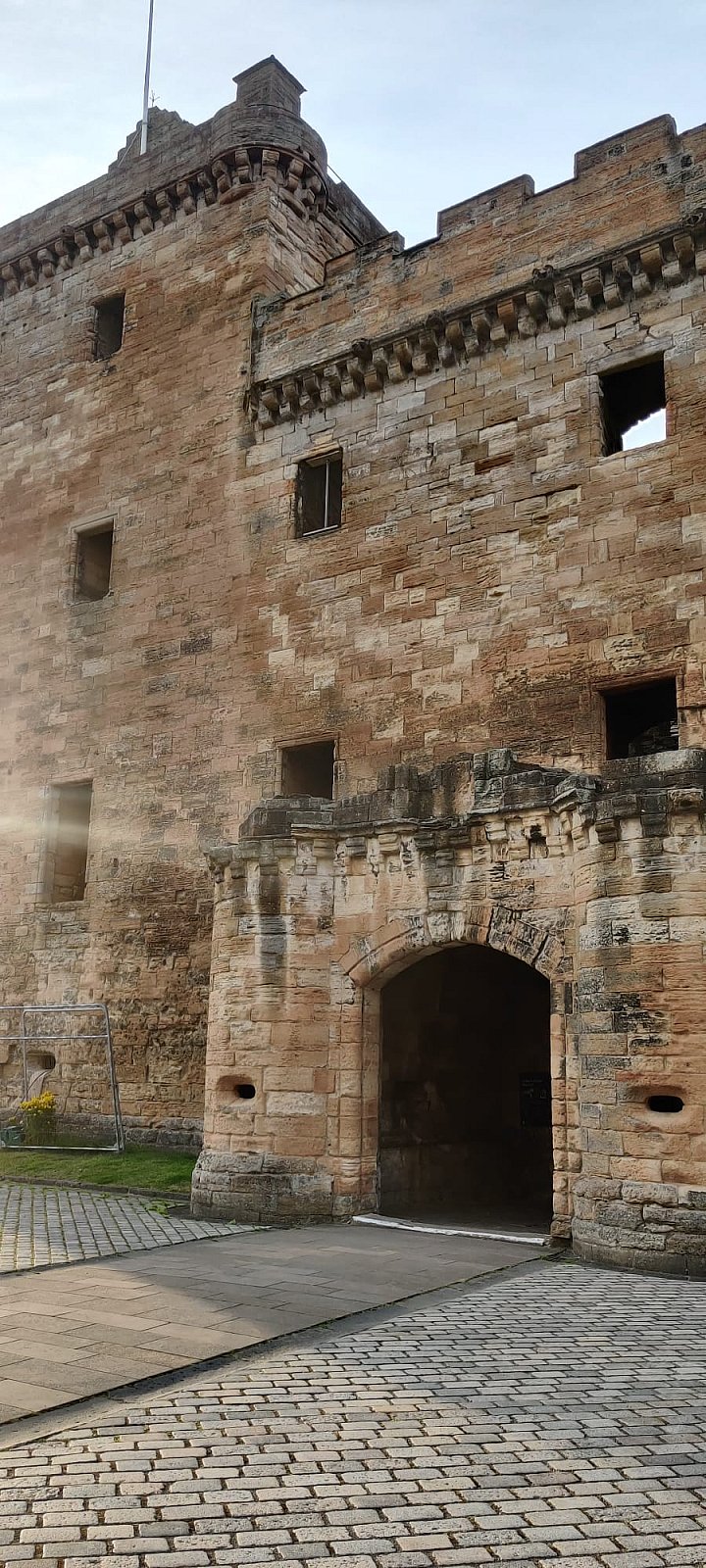
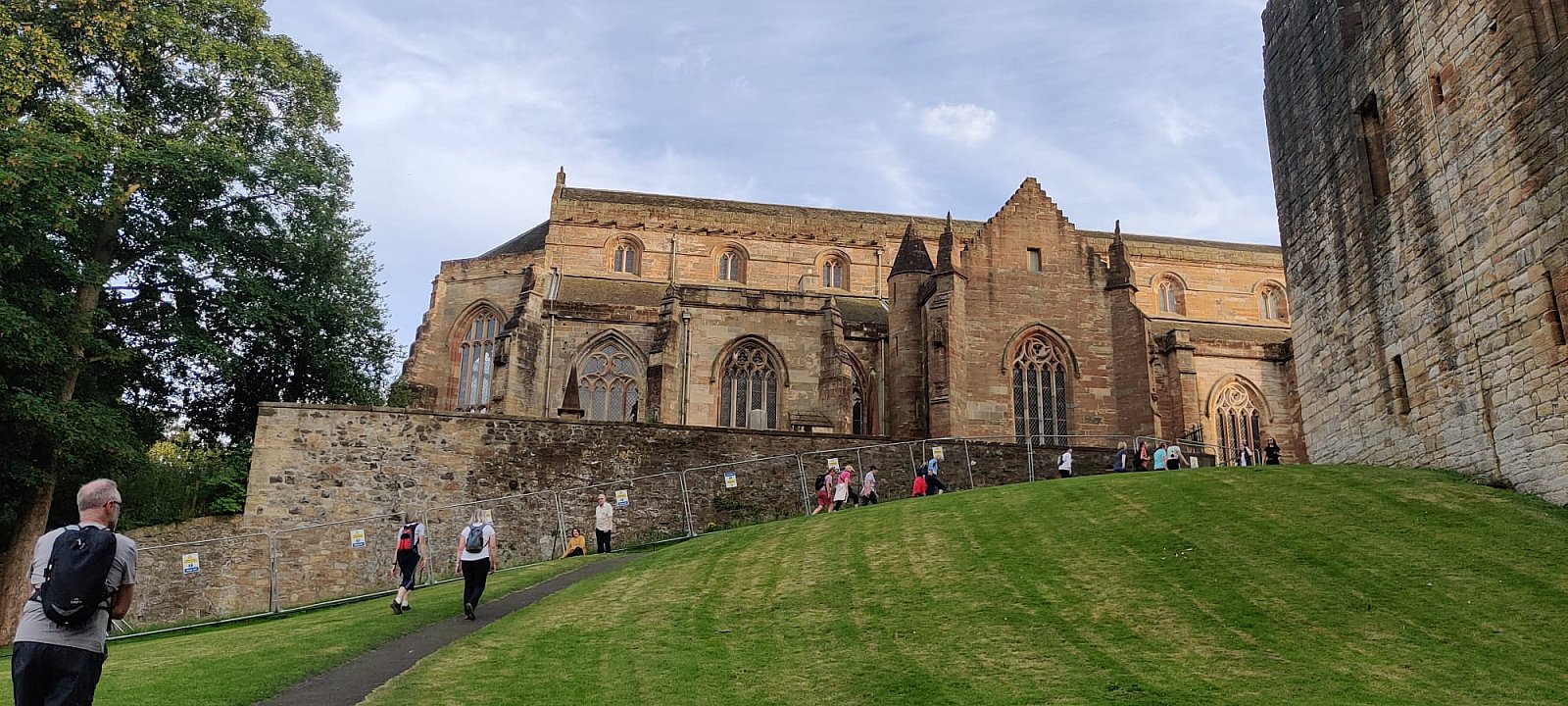
With clear skies and far-reaching views across the Bathgate Hills towards Edinburgh, the Ochils, the Campsie Fells and beyond, we travelled to Linlithgow to meet the rest of the Ramblers for an evening of local history, hidden stories and scenic waterside walking.
Setting off westwards along the Union Canal towpath, we enjoyed the colourful wildflowers lining the towpath and the beautiful reflections shimmering on the water. Pausing just passed the moored barges, we took a step back in time and imagined this now-peaceful waterway bustling with activity as horse-drawn barges carried coal, bricks and other goods through the countryside. As we passed beneath the bridges, we pictured the colourful exchanges that must once have taken place when tow ropes became tangled or scraped against the stonework.
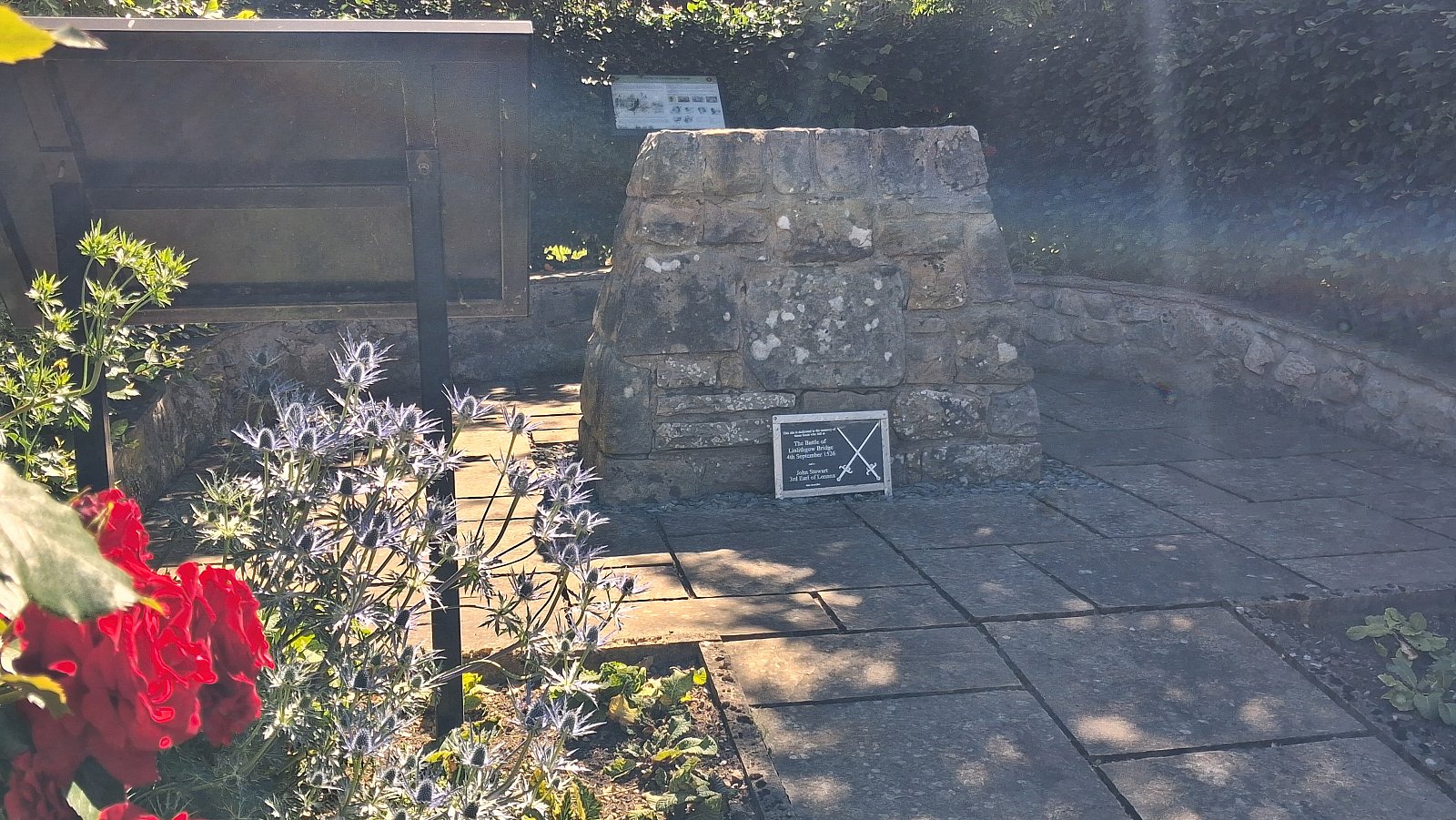
Leaving the canal, we made our way past Xcite Sports Centre to the Lennox Cairn. Here we discovered that this modest monument marks the approximate site where the Earl of Lennox lost his life during the Battle of Linlithgow Bridge in 1526 while attempting to free the young King James V from the control of the powerful Douglas family & despite having already surrendered.
Our walk continued through residential streets and along a shady lane beside the rugby ground, providing a welcome respite from the evening sun before we emerged once more into the warmth. Reaching the Mill Burn, we learned that Lochmill Paper Mill once stood nearby, employing generations of local families between 1808 and 1984 and producing printing and cartridge paper for markets across the country.
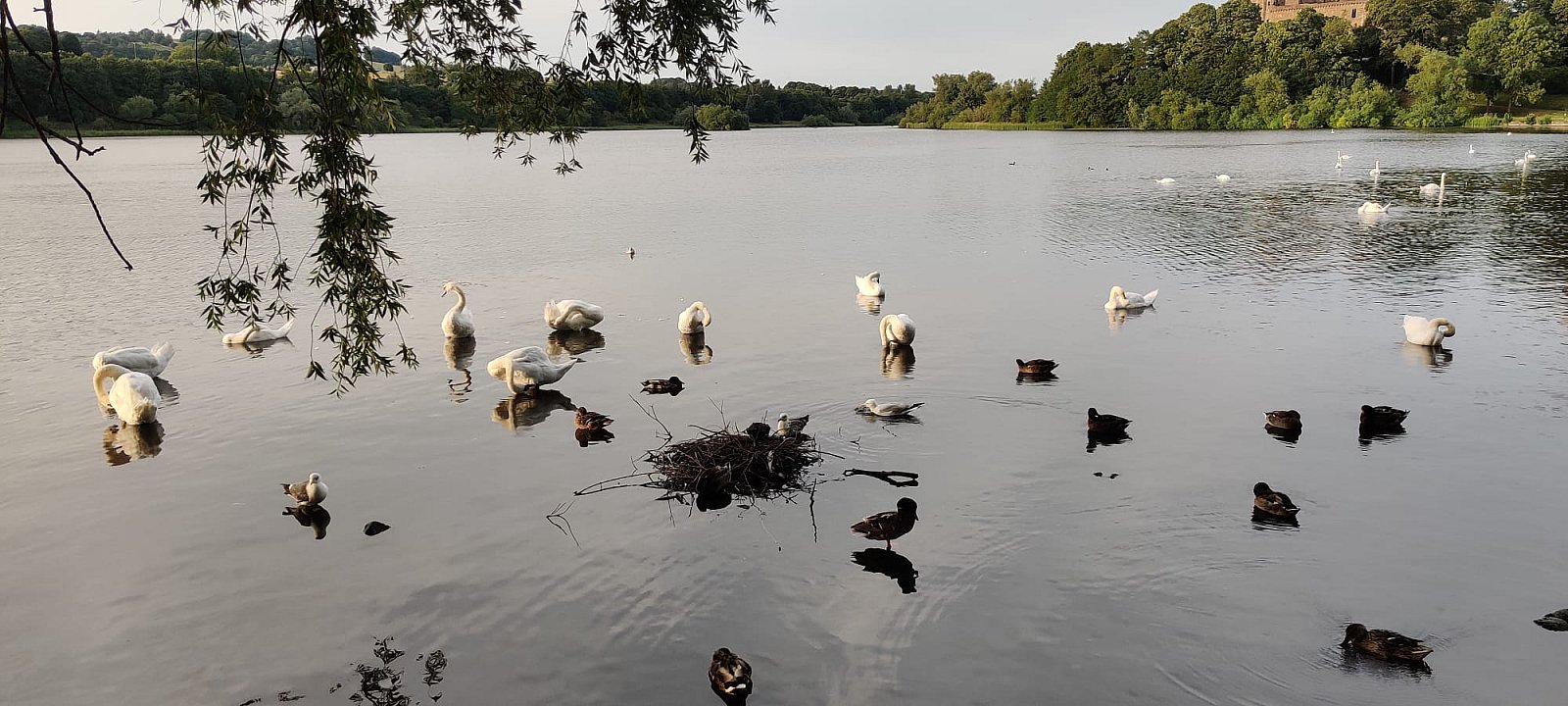
Following the burn towards Linlithgow Loch, we admired the magnificent views across the water to Linlithgow Palace and St Michael's Church, whose distinctive golden crown gleamed brightly in the sunshine. Near the old Mill Lade, which once supplied water to the mill, we heard how the burn was once famous for its abundance of eels. These were caught in traps and highly prized, supplying royal households in Linlithgow, Edinburgh and Stirling.
As we made our way around the loch, we reflected on the geological events that diverted the River Avon and helped create this natural loch, now cherished by residents and visitors alike. Many were amazed to learn that evidence of ancient crannogs has been discovered here, showing that people have lived around the loch for at least 5,000 years.
The loch has witnessed centuries of change, and no visit would be complete without hearing one of Linlithgow's most famous legends — that of the Black Bitch. The faithful dog is said to have carried food each day to its imprisoned master on an island in the loch until both were discovered and chained to a tree, left to perish. The story remains such an important part of the town's identity that the Black Bitch still appears on Linlithgow's coat of arms.
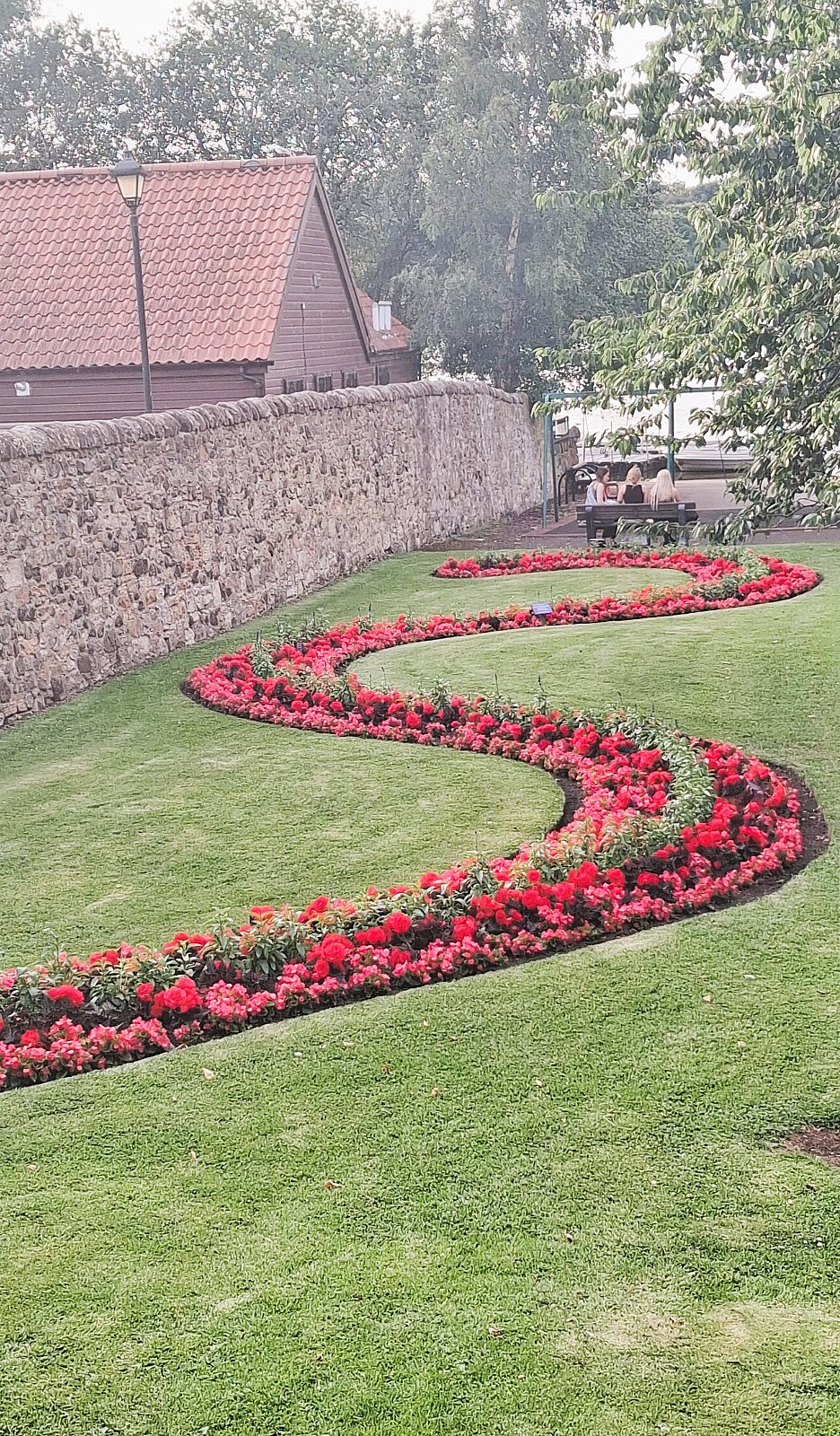
Continuing anti-clockwise around the loch, we arrived at the colourful serpentine flower bed lovingly maintained by volunteers from Burgh Beautiful Linlithgow. This led us up to the Black Bitch statue on the High Street, where photos were duly taken before we admired the nearby Episcopal Church of St Peter. Tucked discreetly between larger buildings, this fascinating church is easily overlooked despite its unusual Byzantine basilica design. Built in 1928 as a memorial to George Walpole, Bishop of Edinburgh, and his wife Mildred, it is one of Linlithgow's lesser-known architectural treasures.
Returning to the lochside, we continued towards the Palace. By this stage the humidity was making itself felt and served as a timely reminder of the importance of carrying water on warm summer walks. After we had had a refreshment break we made our way past the Palace gates which now are closed in the evenings, through the Palace grounds following the path past the statue of Mary Queen of Scots & descending to the lochside before making our way through the car park by Cross House to arrive at Linlithgow Cross.
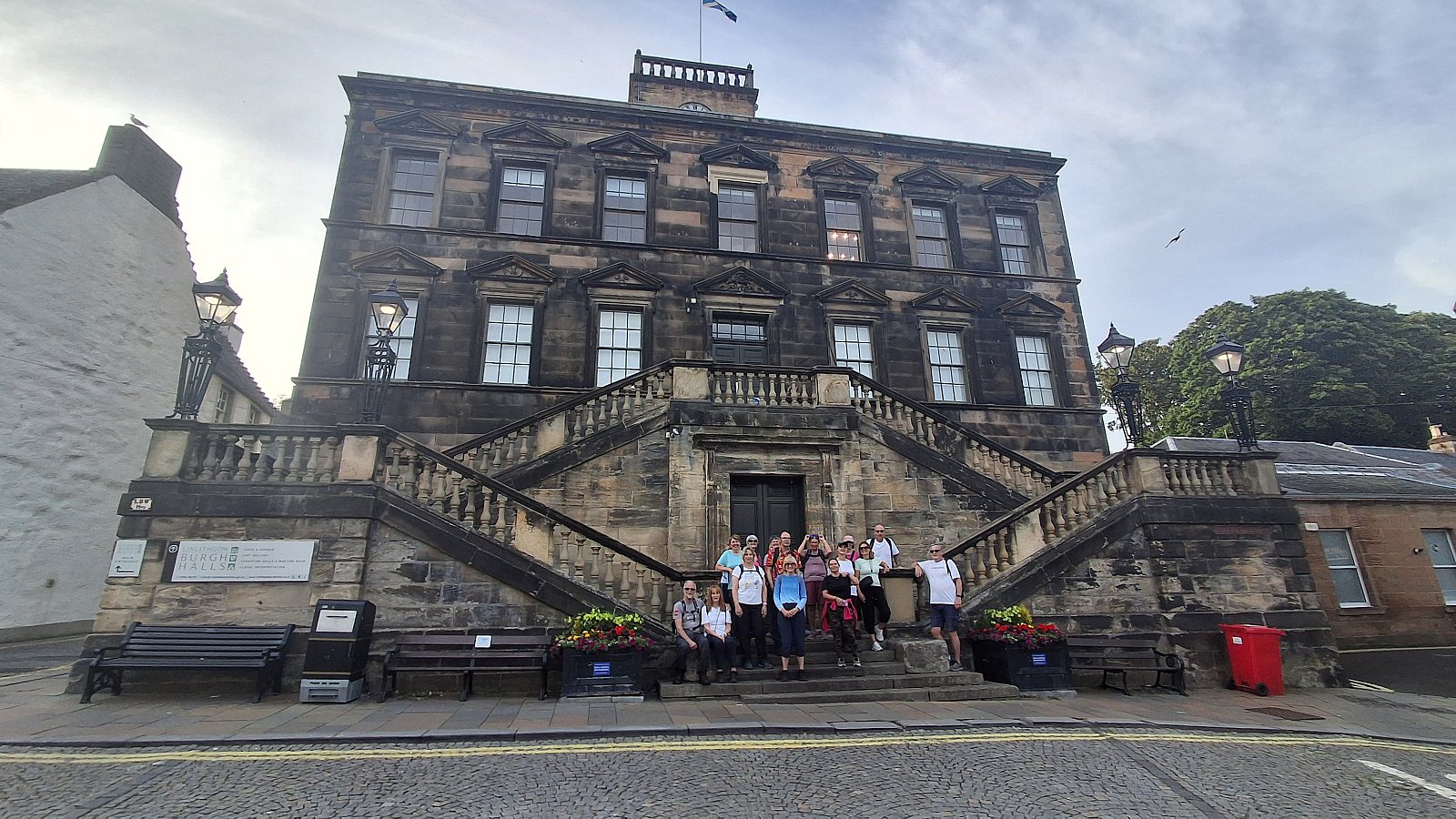
Standing before the Burgh Halls, we learned how this building was constructed to replace an earlier Tolbooth destroyed by Oliver Cromwell's forces in 1650. For centuries this was the administrative and judicial heart of the burgh, serving as council chamber, courthouse and prison.
Nearby, we admired the Cross Well, rebuilt in 1807 as an exact replica of an earlier fountain dating from 1535. The remarkable reconstruction was carried out by stonemason Robert Gray, who achieved the feat despite having only one hand. While The Cross remains at the centre of local celebrations such as the annual Marches, we also discovered its darker history as the town's principal place of punishment, where criminals were publicly humiliated, whipped and, on occasion, executed. Standing amongst today's cafés and shops, it was difficult to imagine the crowds that would once have gathered here to witness such spectacles.
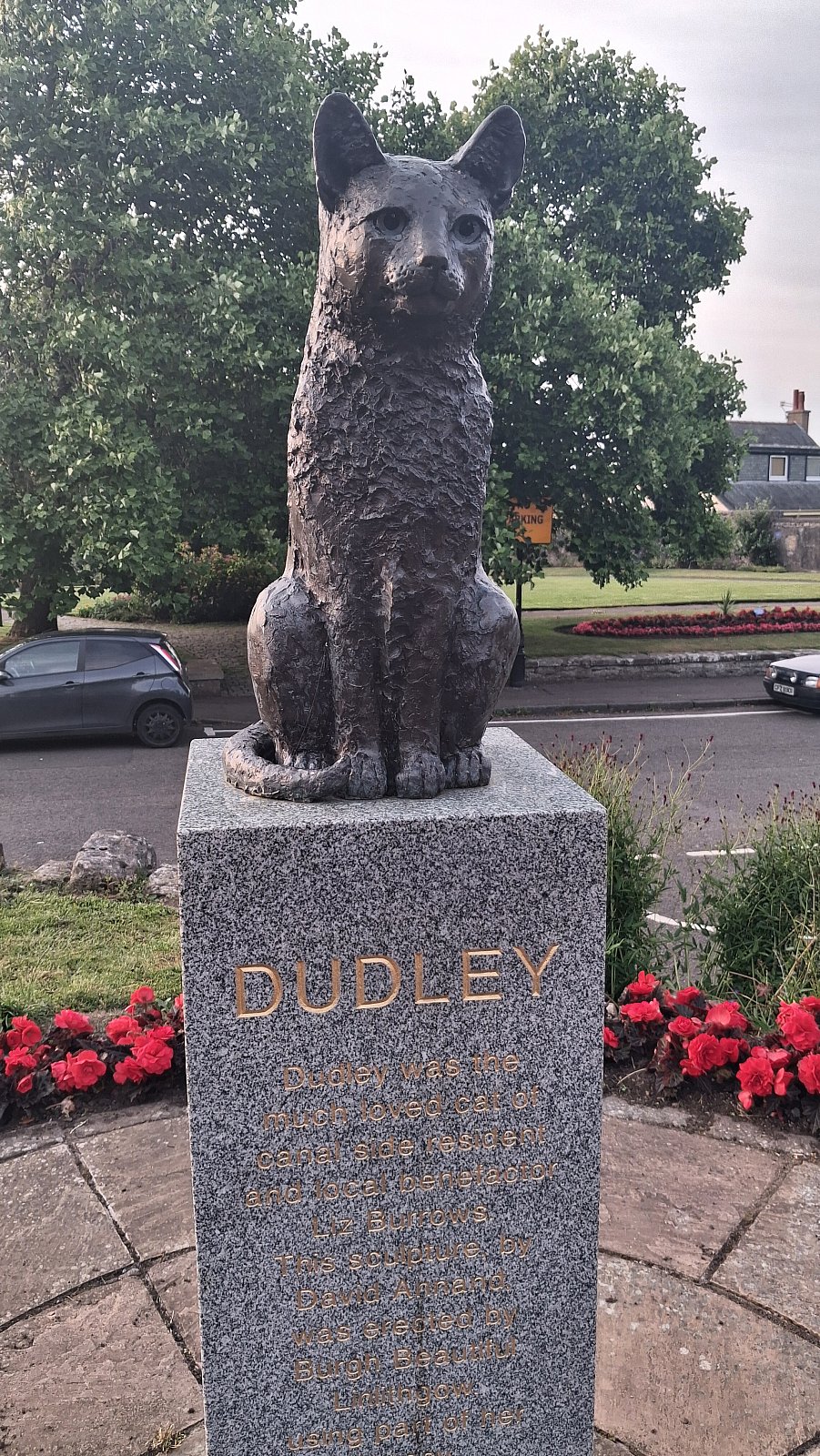
Crossing back towards the canal, we finished with the story of Dudley, the much-loved cat belonging to Liz Burrows, one of the founders of Burgh Beautiful Linlithgow and a tireless supporter of the Union Canal Society. Dudley's statue is a charming reminder of the affection local people have for their community, its characters and its history.
Our route then followed the canal westwards once more, bringing us back to our cars after a lovely evening spent walking, chatting and discovering more about the fascinating history of the area we are fortunate to call home. Photo credit – Ina G & Nat C
Our next evening walk will take place on Thursday 6th August. Look out for details appearing soon on our website, along with many more opportunities to enjoy walking with the group.
Natalie C