Even the hot temperatures & sea fog rolling in couldn’t stop our members from meeting up at Oatridge College for an evening walk & the opportunity to chat to one another.
Once introductions were made & Mike was welcomed on his first evening walk with the group we headed towards the centre of Ecclesmachan village with conversation flowing amongst the group. So many of us drive through the edge of this quiet village on our way to the Forth or M9 unaware of its connections to medieval knights, a famous surgeon, Edinburgh’s skyline, wartime bombs & a healing well. The group were excited to discover more…
Passing the old school which is now the village hall we made our way to St Machan’s Church & discovered how a church has stood here since the 6th century & would have looked vastly different, its links to the Knights Templar & how armies swept through West Lothian in the 1440s burning farms, driving away livestock & devastating settlements.
The son of one of the ministers of the Church, Robert Liston was born next door at the manse in 1794 & went on to become one of the most remarkable – and terrifying – doctors in the world. Known as ‘the fastest knife in the West End’ he performed amputations at incredible speed in a time before anaesthetics when speed made a difference in terms of pain & survival. He also performed the first surgical operation in Europe using modern ether anaesthesia. With the patient feeling no pain, medicine would never be the same again!
Crossing over the road towards the newer cemetery the group were surprised to learn that not only are there a lot of war graves but also that more than 500 people are thought to be buried there in unmarked graves – most belonging to patients from the nearby Bangour Village Hospital whose bodies were never claimed by relatives.
The land on which Binny House stands was given to a local peasant called William Binnock by Robert the Bruce as a reward for helping recapture Linlithgow Castle from the English in 1313. The estate was named after him although the house we know today was built centuries later by a naval captain.
Looking up to the hill above the bend in the road, Tar Hill, we learned that hidden on its lower slopes is the Bullion Well where, during the Victorian period, people travelled to partake of its waters believing them to have healing properties.
Nearby was the location of the old Binny sandstone quarry, one of six quarries in the parish. Once one of Scotland's most important building stone quarries, it produced the distinctive freckled Binny Stone, prized by architects because it was easy to carve yet remarkably durable. After the Union Canal opened in 1822, huge blocks of stone could be transported economically to Edinburgh where they were used in many of the capital's finest buildings. It was fascinating to discover that landmarks including the Scott Monument, the National Gallery, the Dome in george Street, The Royal Observatory on Calton Hill and even the fountain at Holyrood Palace all were built with Binny Stone. It was incredible to think that this quiet West Lothian village quite literally helped build Edinburgh's famous skyline.
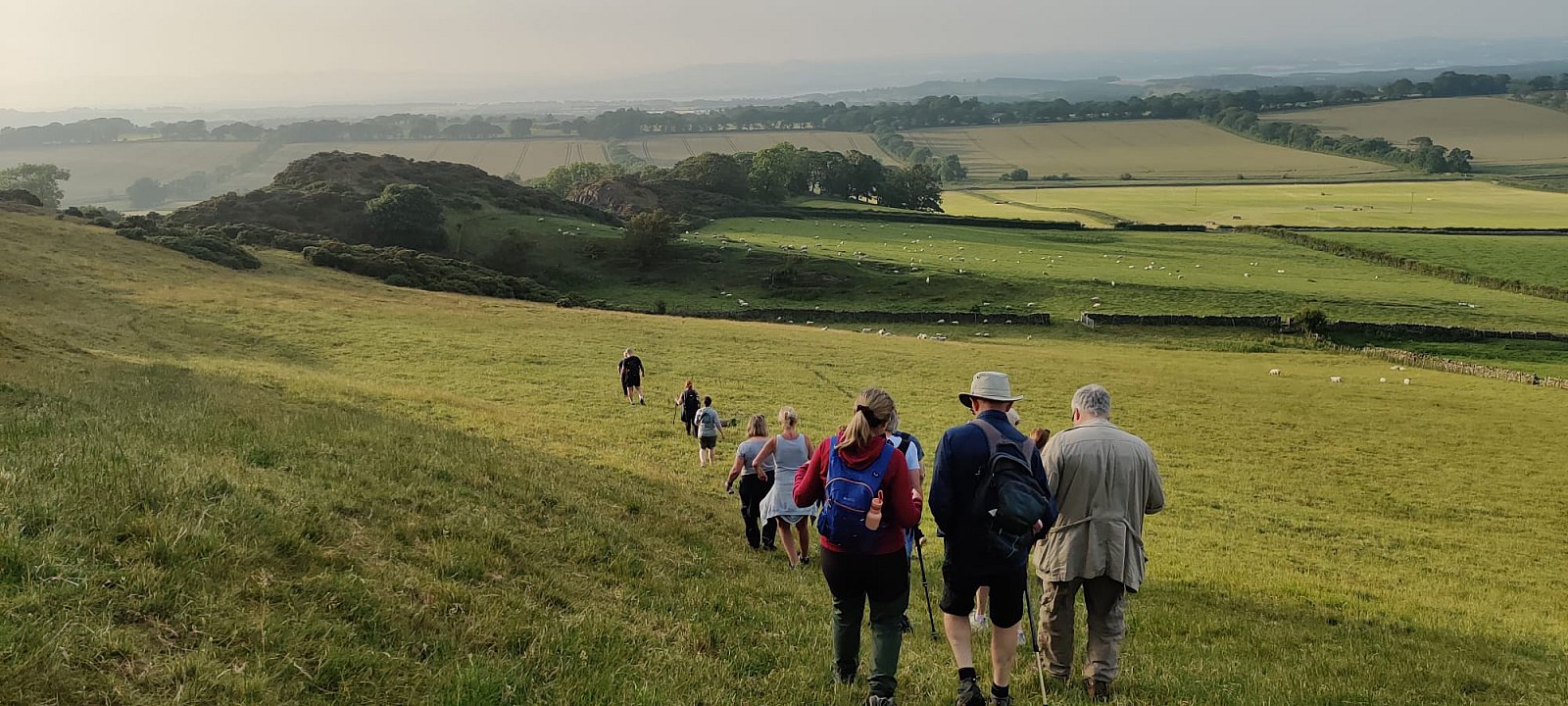
Retracing our steps up through the village we made our way through Oatridge College campus where future farmers, engineers, conservationists, horticulturalists & animal-care specialists are trained. We admired the beautiful flowerbeds & animals as we passed & turning between barns made our way uphill to meet a road. A short walk along the verge brought us to a signpost pointing the way to Binny Craig between gates beside a watchful flock of inquisitive sheep & up a stony path before descending to the base of the hill.
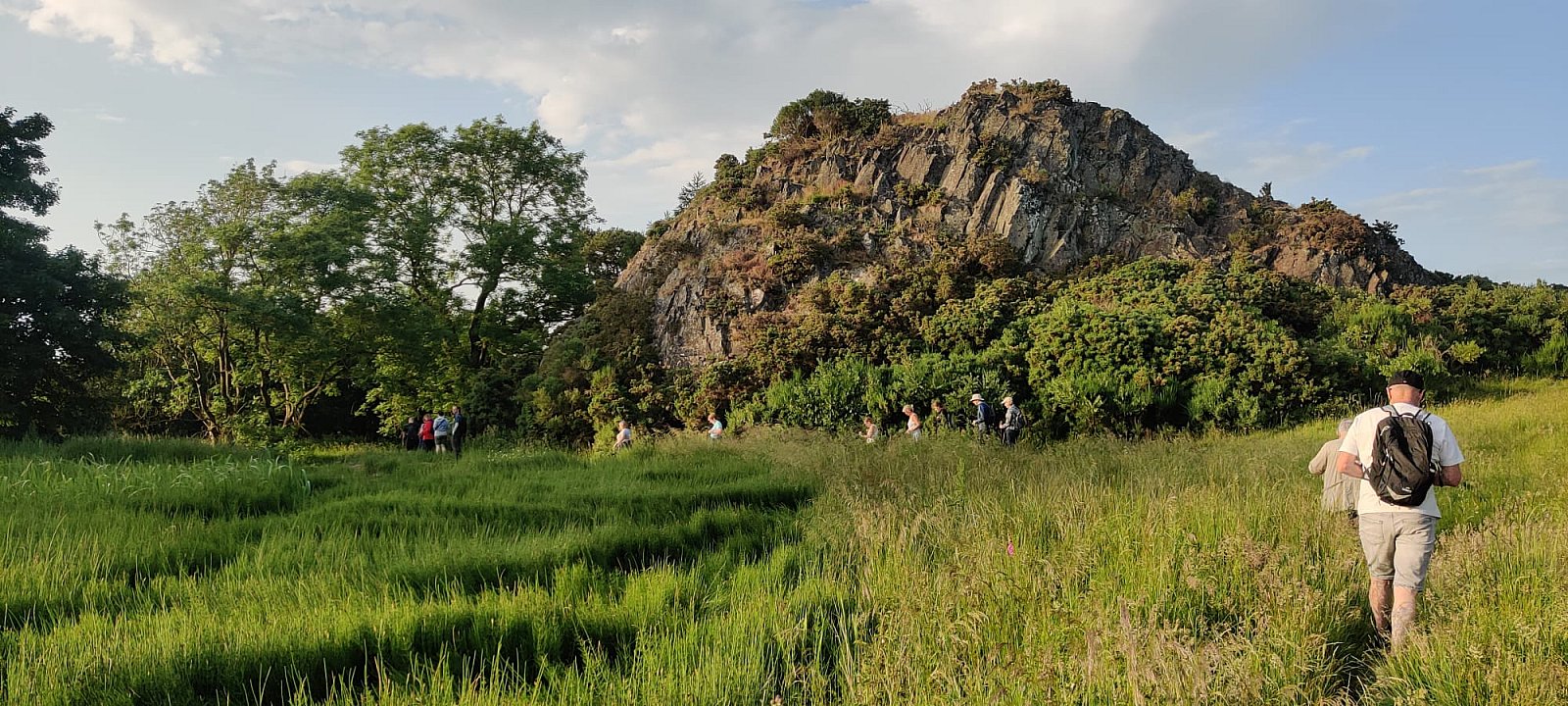
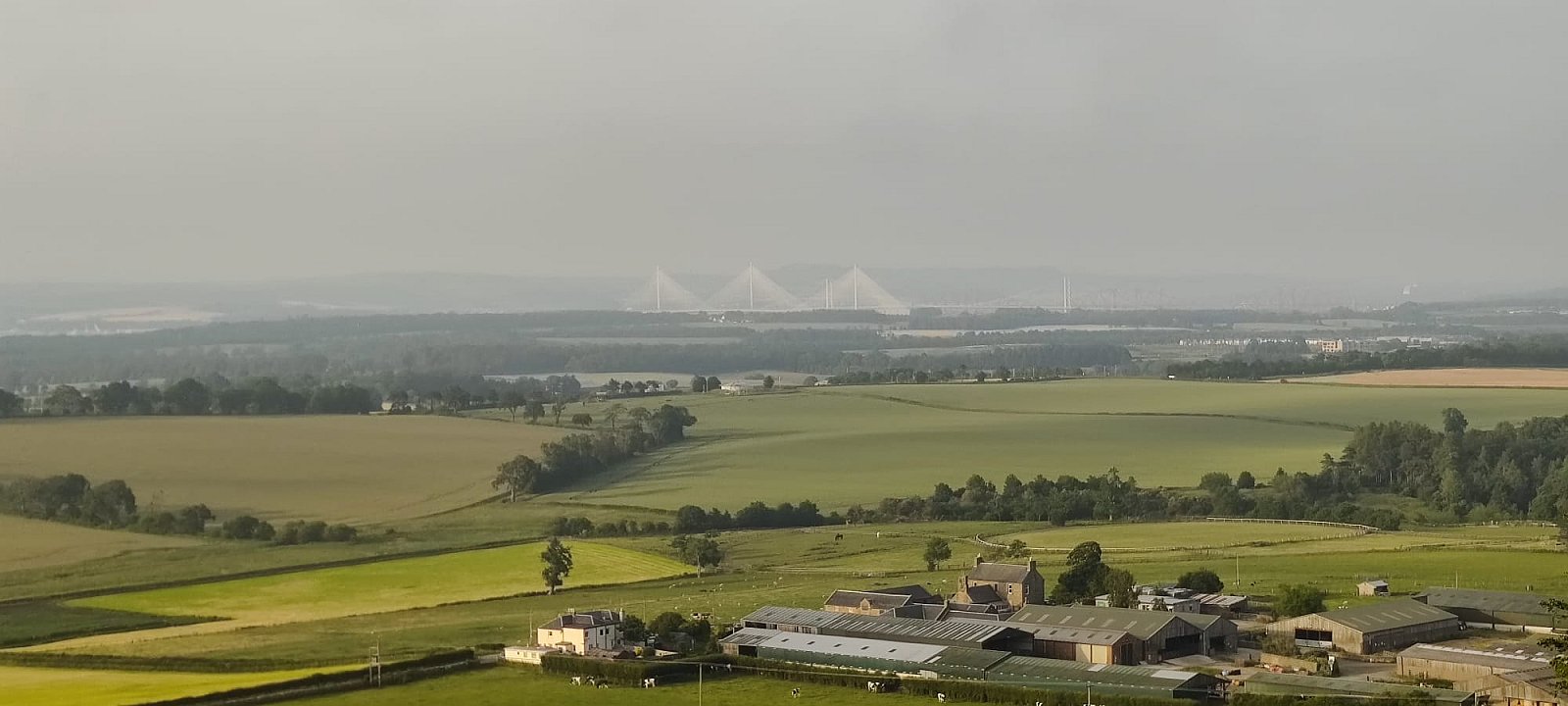
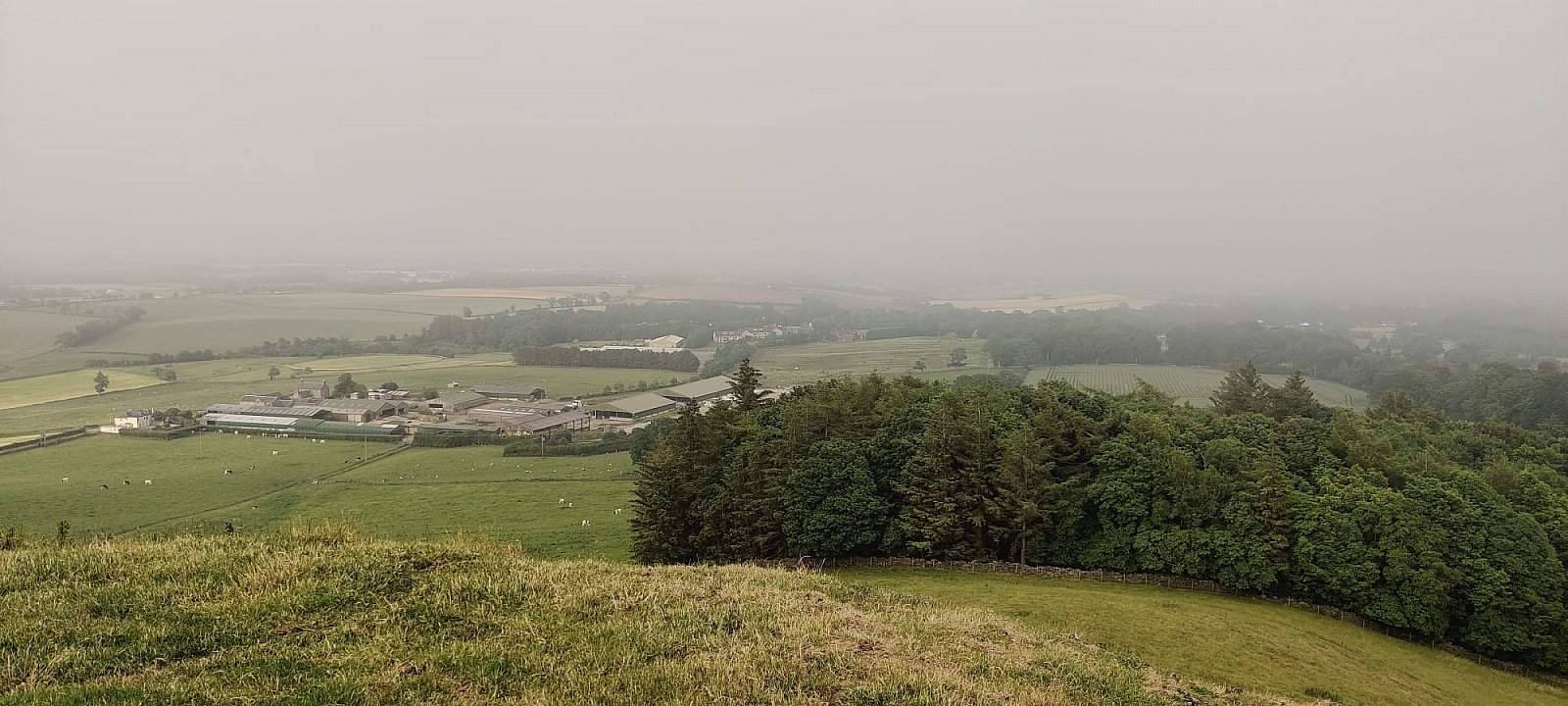
Fortunately, the sea fog had started to clear & the top of the hill & trig pillar were visible. Just in case the view of the hill disappeared again we took the opportunity to pause, catch our breath & take a group photo with the hill in the background. Deciding it was safe to proceed, all but two of us made our way steadily up the hill, opting for the easier path rather than the steeper one. Pausing at the top, we had a drink to cool ourselves down & watched as the views opened up & more landmarks appeared as the sea fog continued to roll back.
It was interesting to learn how the hill had been shaped by the Ice Age, forming a classic crag-and-tail formation similar to the rock formations beneath both Edinburgh & Stirling Castles. This landmark, much admired from all across West Lothian, also played a vital role in Scotland’s early warning system with the lighting of beacon fires to signal danger. These messages could be passed across Scotland from hill to hill in a time long before telephones, radios or organised postal services.
Looking down to the east of the hill the group were surprised to discover that a bomb intended to destroy the Forth Bridge during the Second World War missed its target & landed here instead, creating a crater known locally as the Bomb Hole. We were all grateful the German bomber missed its intended target & the much-loved Forth Bridge continued to stand.
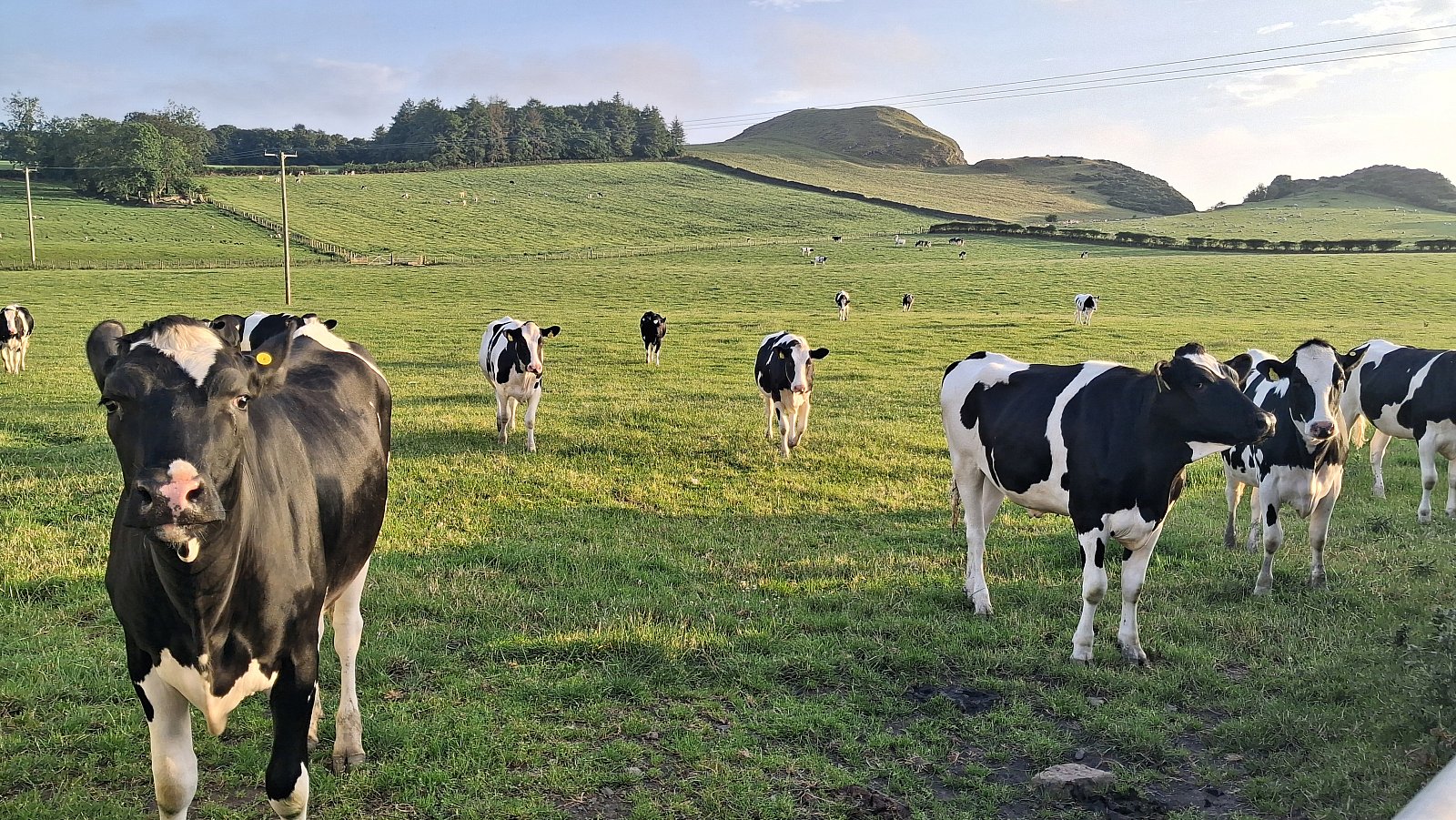
Our route took us around the base of Binny Craig & along the edge of a small marshy pond beside Hangingside Wood. A perfect habitat for amphibians & other aquatic species, although we didn't spot any, and we took care to ensure our feet stayed dry, especially as the grass was long & the path hugged the water's edge. Climbing over a stile we made our way down a country lane to reach the outskirts of Oatridge Campus once more & a field of inquisitive cows who came running across to greet us.
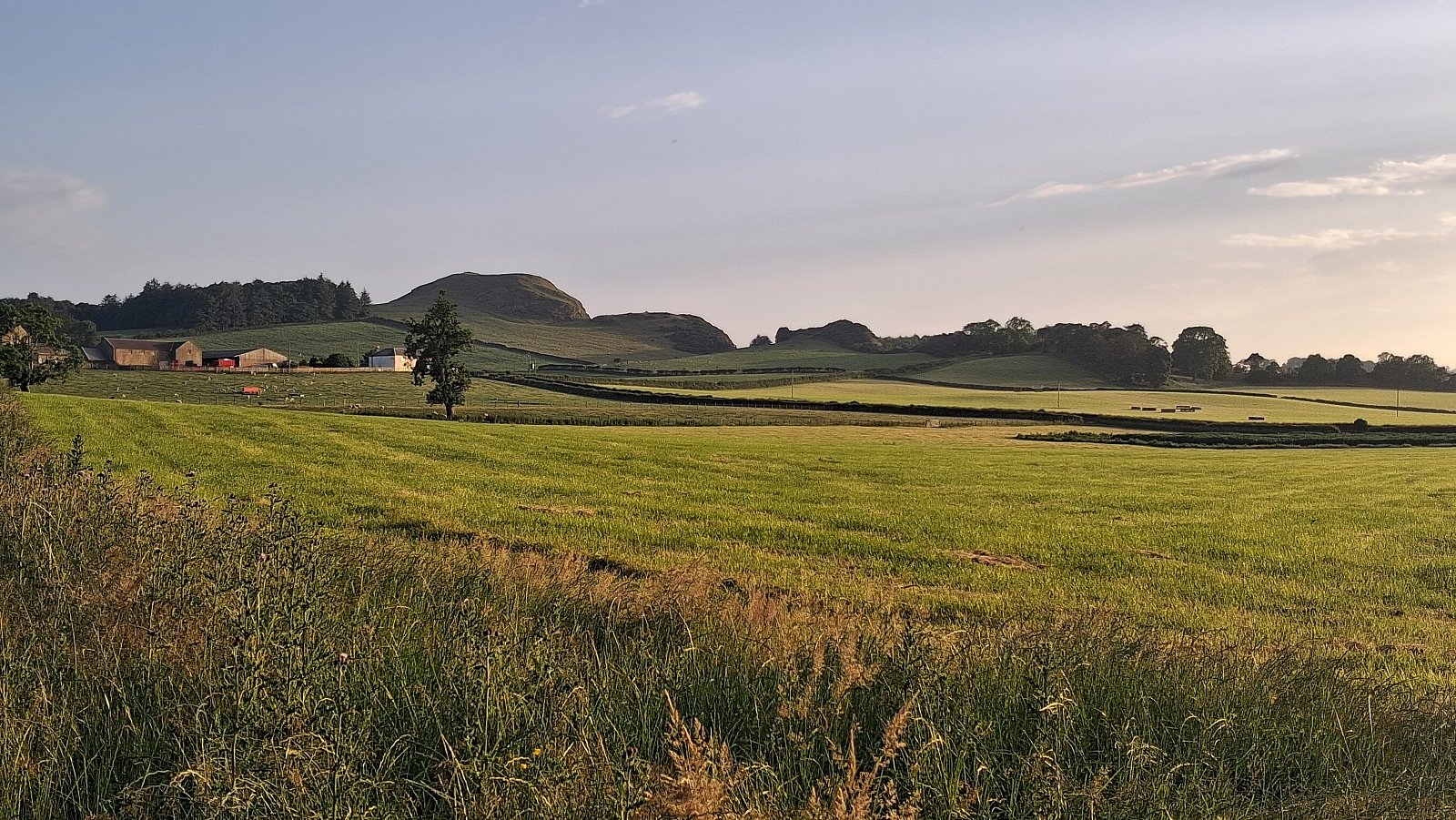
Following a track between fields we spotted a hare who, alerted to our presence, ran through the field at speed before disappearing into the hedge. Looking back we were treated to clear views across the fields to Binny Craig now bathed in sunshine.
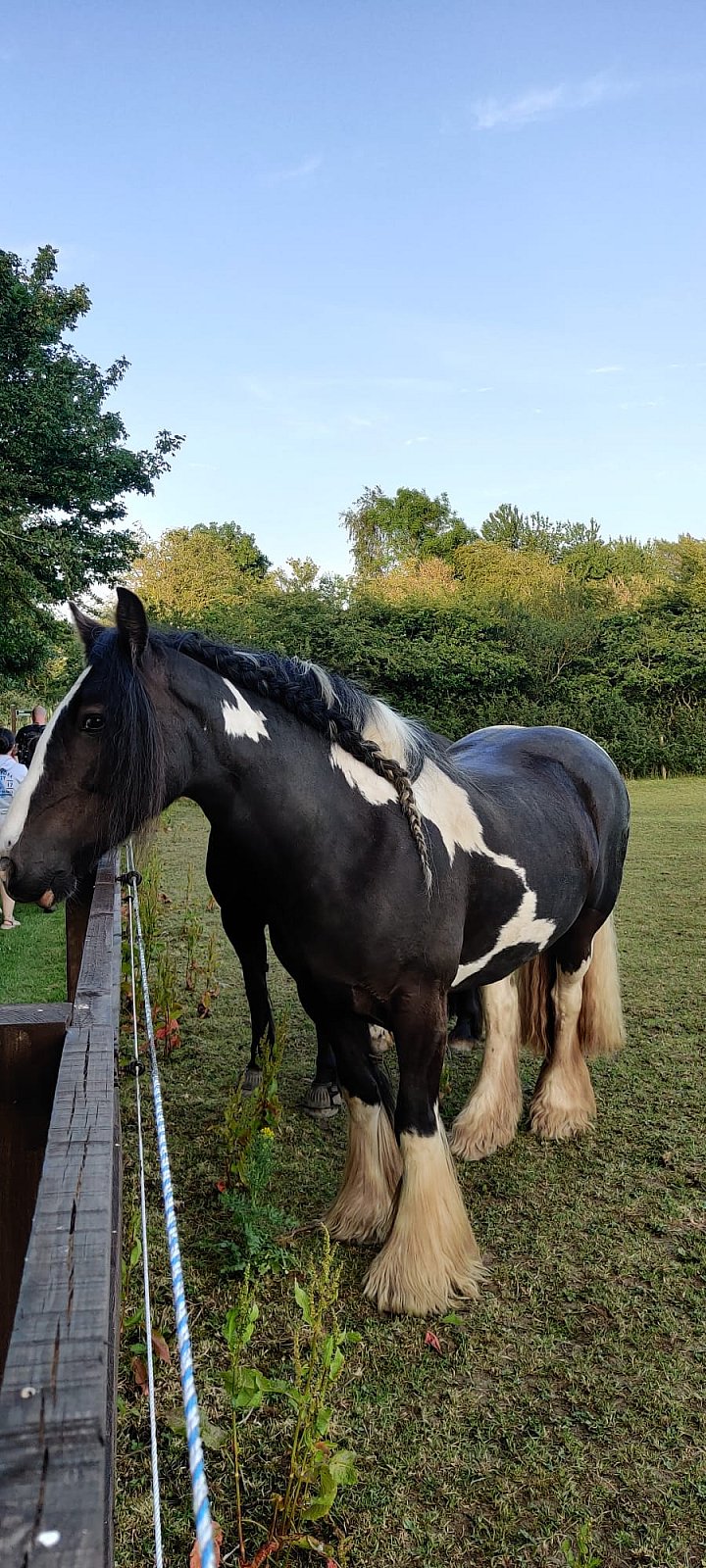
Continuing along the path at the back of the Scottish National Equestrian Centre we admired the many horses in the fields before heading through shady woodland beside Ecclesmachan Burn where we appreciated the cooler air before arriving back at our cars.
We all agreed it had been a lovely evening with a varied walk enlightening us on its surprising history, beautiful countryside, lovely views & the challenge of a little hill climb, all enjoyed in great company amongst friends. Photo credit: John M, Ina G & Nat C.
Our next evening walk is on Thursday 9th July & details of this along with many other walking opportunities with the group can be found on our website.
Natalie C