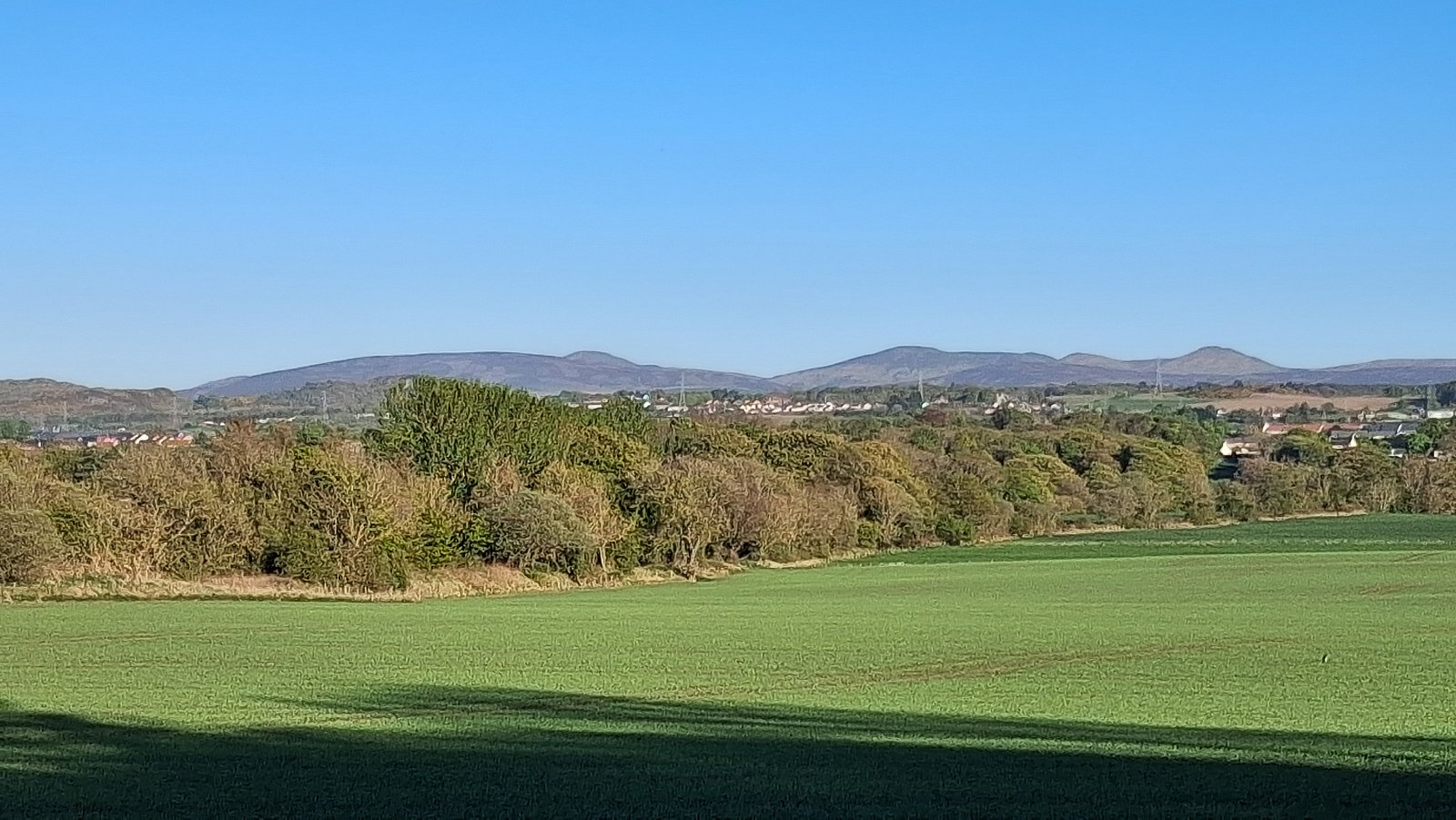
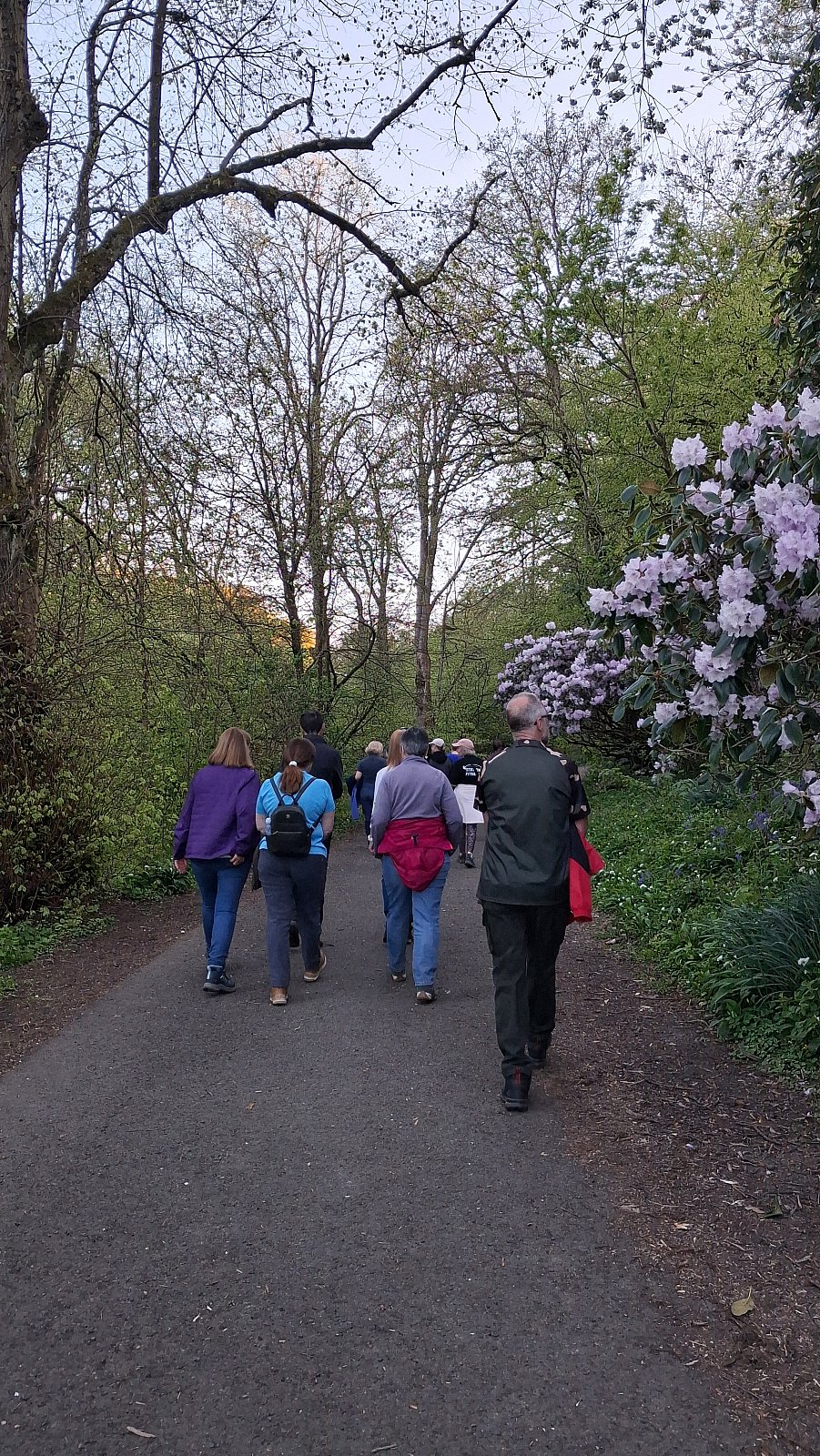
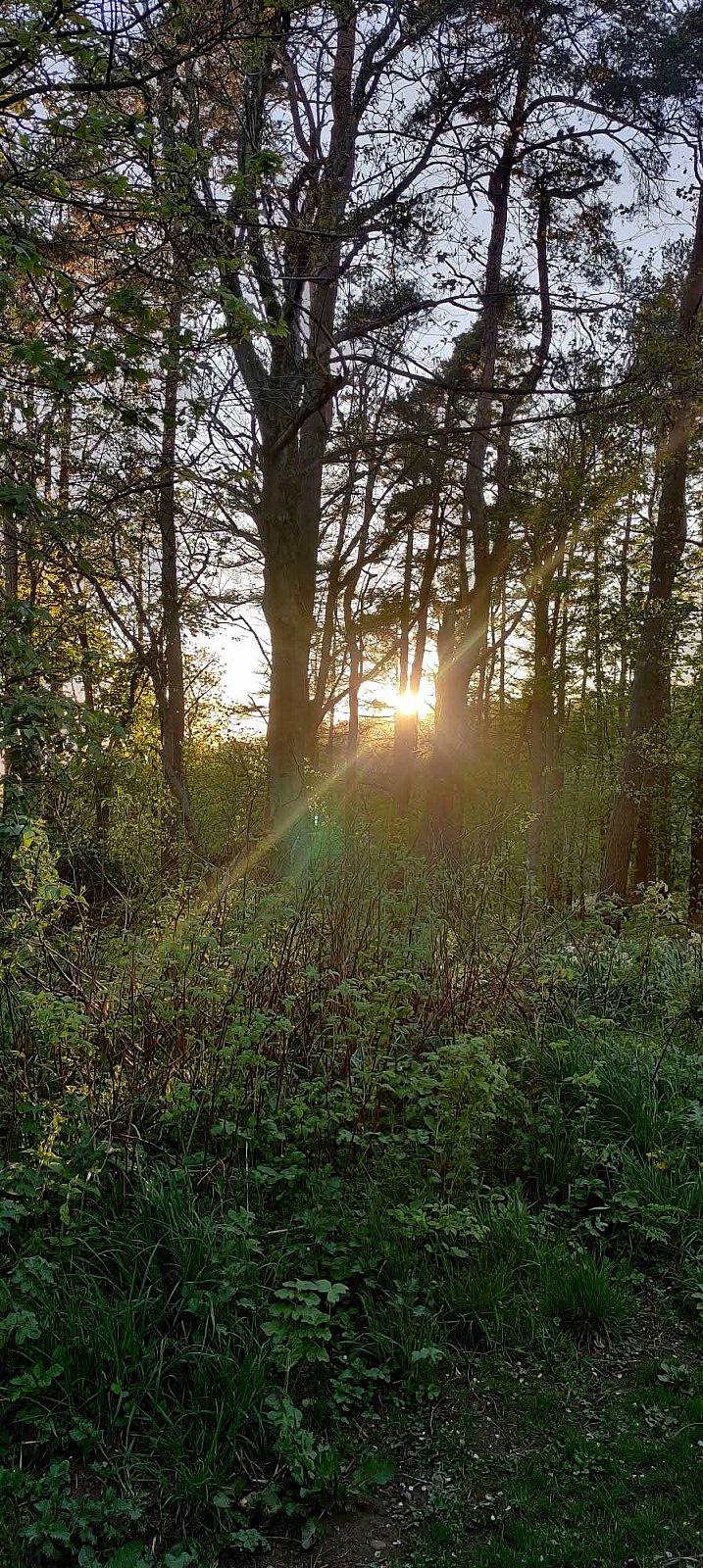
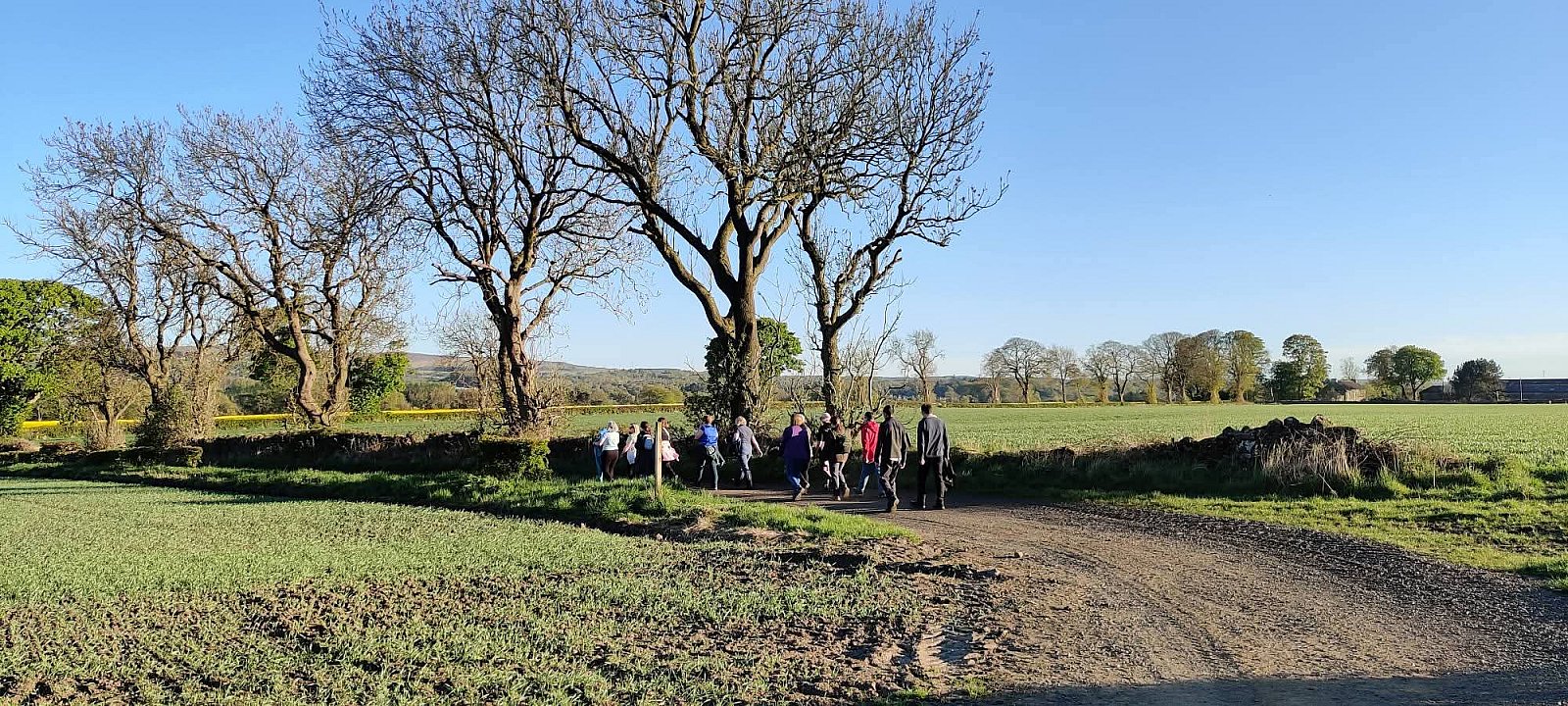
On Thursday evening, our group gathered in East Calder for what turned out to be a truly memorable walk through Almondell & Calderwood Country Park. We were incredibly fortunate to be treated to a beautiful sunny evening, with clear views stretching across the countryside towards the Pentland Hills.
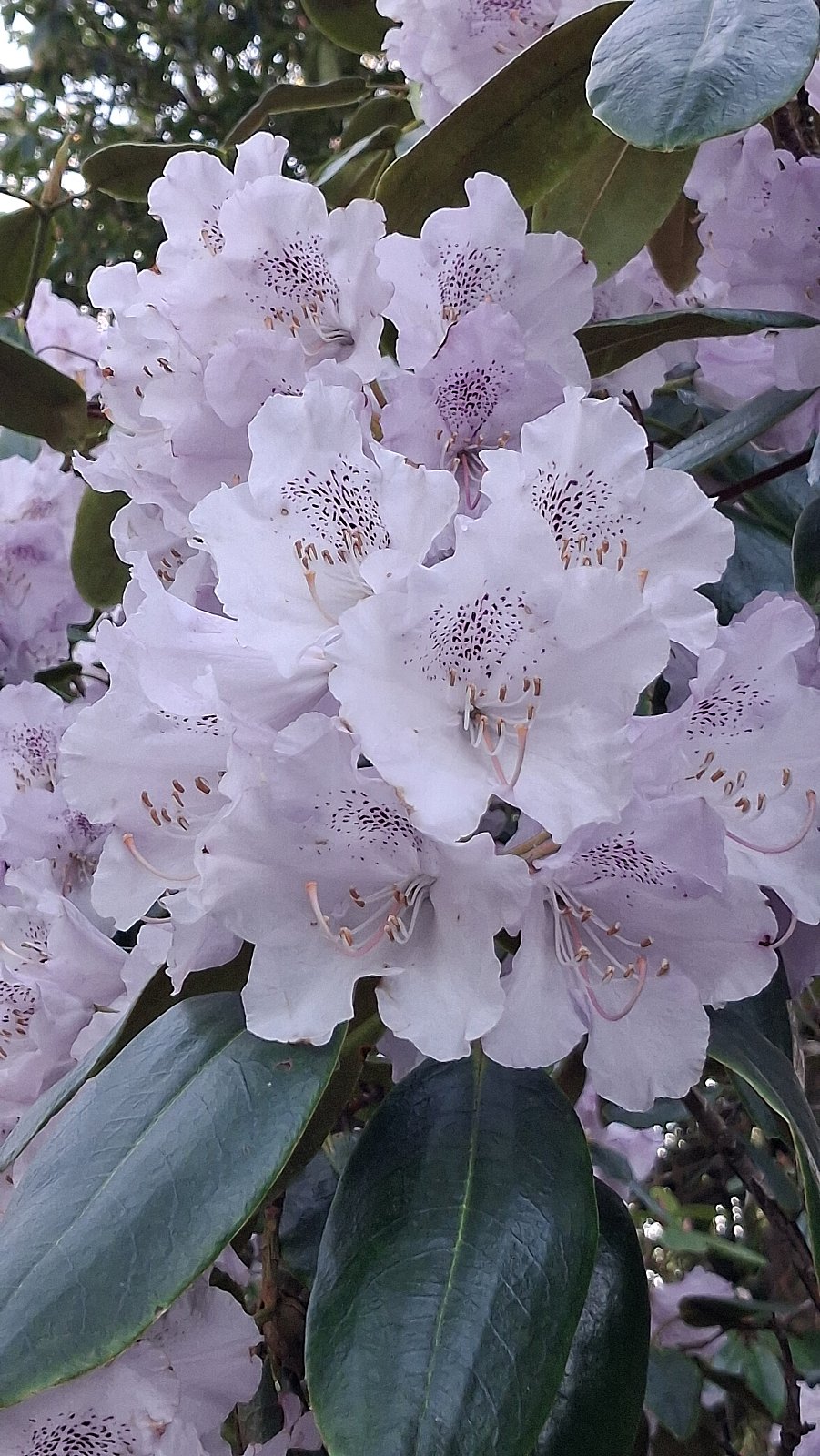
From the outset, there was a real sense of appreciation for being outdoors together. The bright yellow rapeseed fields added vibrant colour to the landscape, while the scent of wild garlic lingered along the woodland paths. As we made our way through the park, the gentle sound of water flowing over the rocks in the River Almond provided a calming backdrop, accompanied by an ever-changing display of spring wildflowers and the first blooms of rhododendrons.
Before setting off, we reflected on the rich history of East Calder. Now a quiet village, it was once a bustling market town and an important stop for cattle drovers travelling between Edinburgh, the Highlands and Falkirk. The village developed along the historic Great Turnpike Road, effectively the 18th-century equivalent of today’s M8 connecting Edinburgh and Glasgow. Later, the limestone quarries, arrival of the railway & the shale oil industry in the 19th century brought rapid growth & shaped much of the area we explored.
As we entered the country park, we stepped into what was once the grand estate of Henry Erskine, dating back to the late 1700s. Thanks to a successful community campaign in the 1960s, this landscape was preserved from development & officially became a country park in 1971, something we were all quietly grateful for as we enjoyed its beauty.
Along the route, we passed several fascinating features that brought the area’s past to life. The impressive Camps Viaduct, with its nine arches rising high above the river, once carried trains serving the local oil industry & now provides a striking path for walkers. Nearby, the remains of the Camps Limestone Quarries remind us of a time when this was the largest limestone quarrying area in Scotland. In its 19th-century heyday, the site was a hive of activity, with lime produced here even used in the construction of Edinburgh’s New Town.
We also noted the quietly functional Almond Feeder Aqueduct still currently temporarily closed but which has carried water to the Union Canal for over 200 years & crossed the elegant Naysmith Bridge, originally designed to impress visitors arriving at the estate. Deeper within the park, we followed paths through “The Dell,” part of Erskine’s original 18th century garden design.
There were also a few more unusual stories shared along the way. The former Almondell House, once a grand 50-room mansion, was lost after its roof was removed in the 1950s to avoid taxes & was It was officially ‘blown up’ by the Territorial Army in June 1969 as a training exercise in the use of explosives! The nearby Kirkhill Pillar, engraved with calculations for a scale model of the solar system, offered a glimpse into the ambitions of the past. Meanwhile, the Mandela Bridge, a much more modern structure & great place to play a game of ‘Pooh Sticks’ from was flown in by helicopter in the 1970s and later named in honour of Nelson Mandela.
Throughout the evening, conversation flowed as easily as the river beside us. Despite many in the group having walked here before, there was a shared sense of discovery, new paths explored, new stories learned & a renewed appreciation for a familiar place.
It was one of those evenings that reminds us just how lucky we are: good company, beautiful surroundings & a landscape rich in both nature & history close to home. Photo credit – Ina G & Nat C
Our next evening walk is on Thursday 14th May & details of this along with many more walking opportunities with the group can be found on our website.
Natalie C