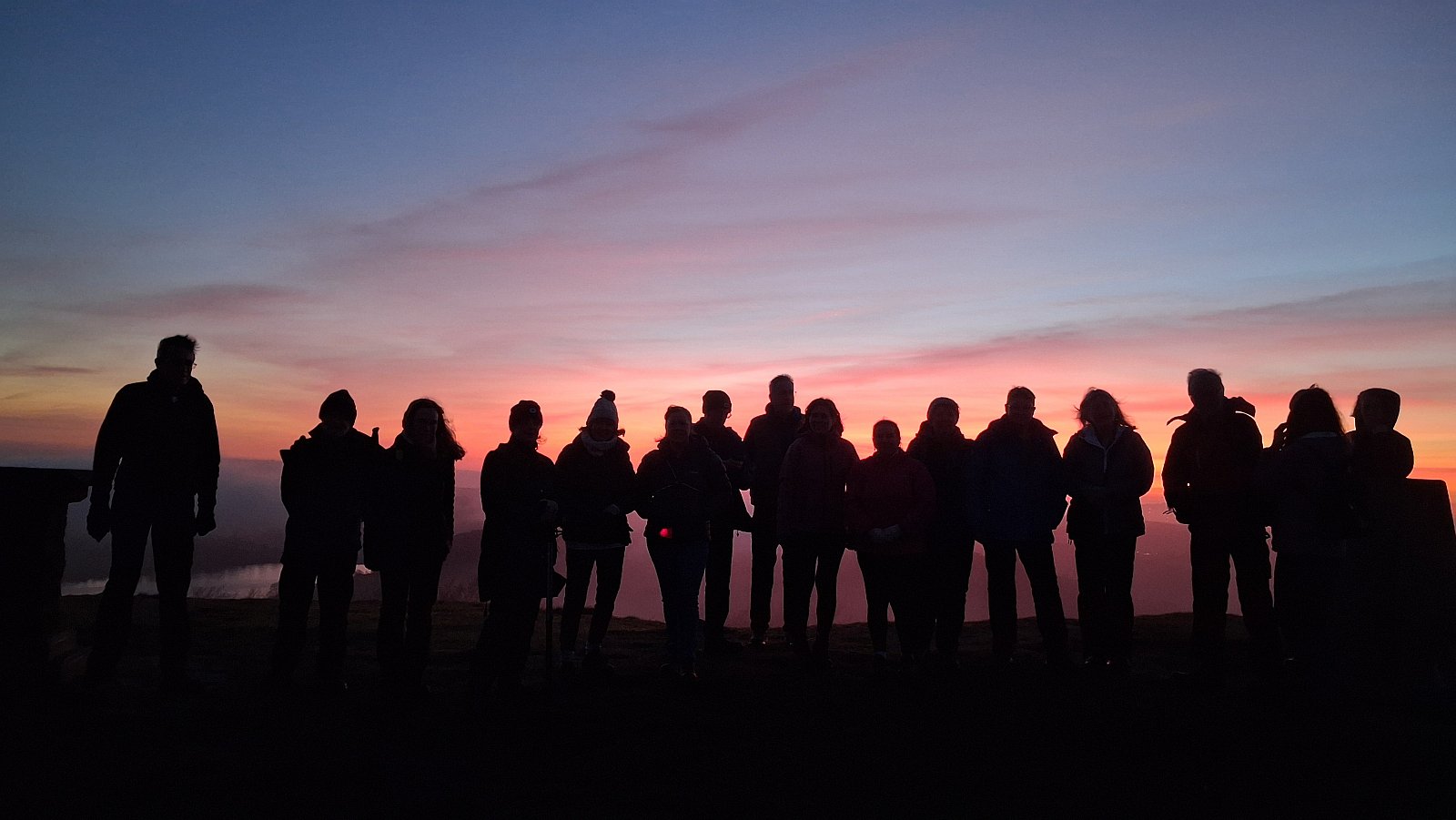
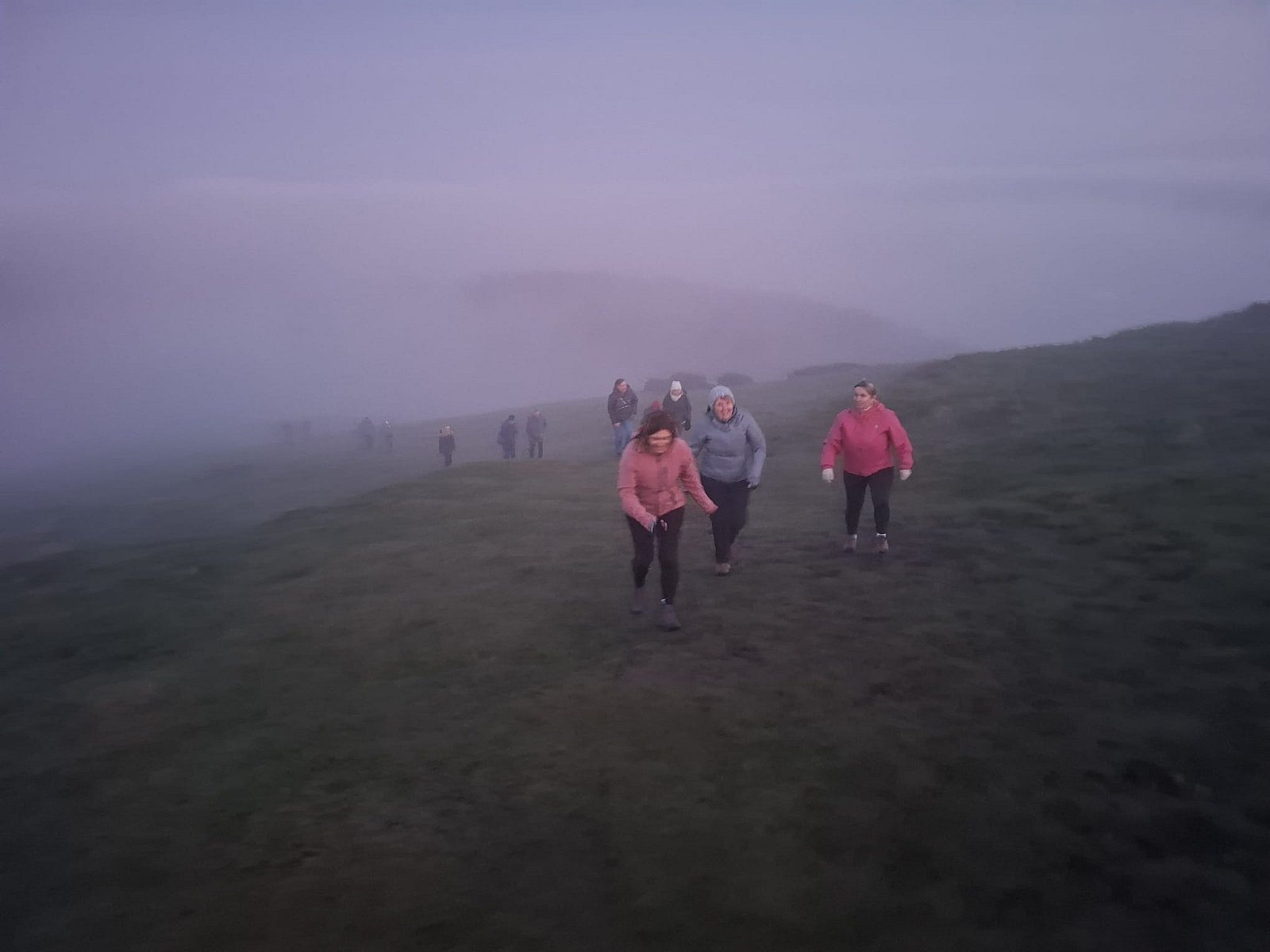
After a day bathed in glorious sunshine, the eighteen Ramblers who gathered for this evening’s walk were full of anticipation for clear, far-reaching views from the top of Cockleroy Hill. However, as we made our way to the start, a creeping harr rolling in from the Forth steadily swallowed the landscape & spirits dipped just a little.
But the hill had other plans for us.
Looking up, we spotted a soft pink glow filtering through the mist at the base of Cockleroy & with renewed optimism the group set off, climbing steadily towards the summit in the hope of catching the sunset. As we gained height, it became clear that the fog clung to the lower slopes, leaving the summit floating above it, creating a magical sight resembling a cloud inversion. Features of the surrounding landscape, including the mast on nearby Cairnpapple Hill, appeared like islands in a sea of mist.
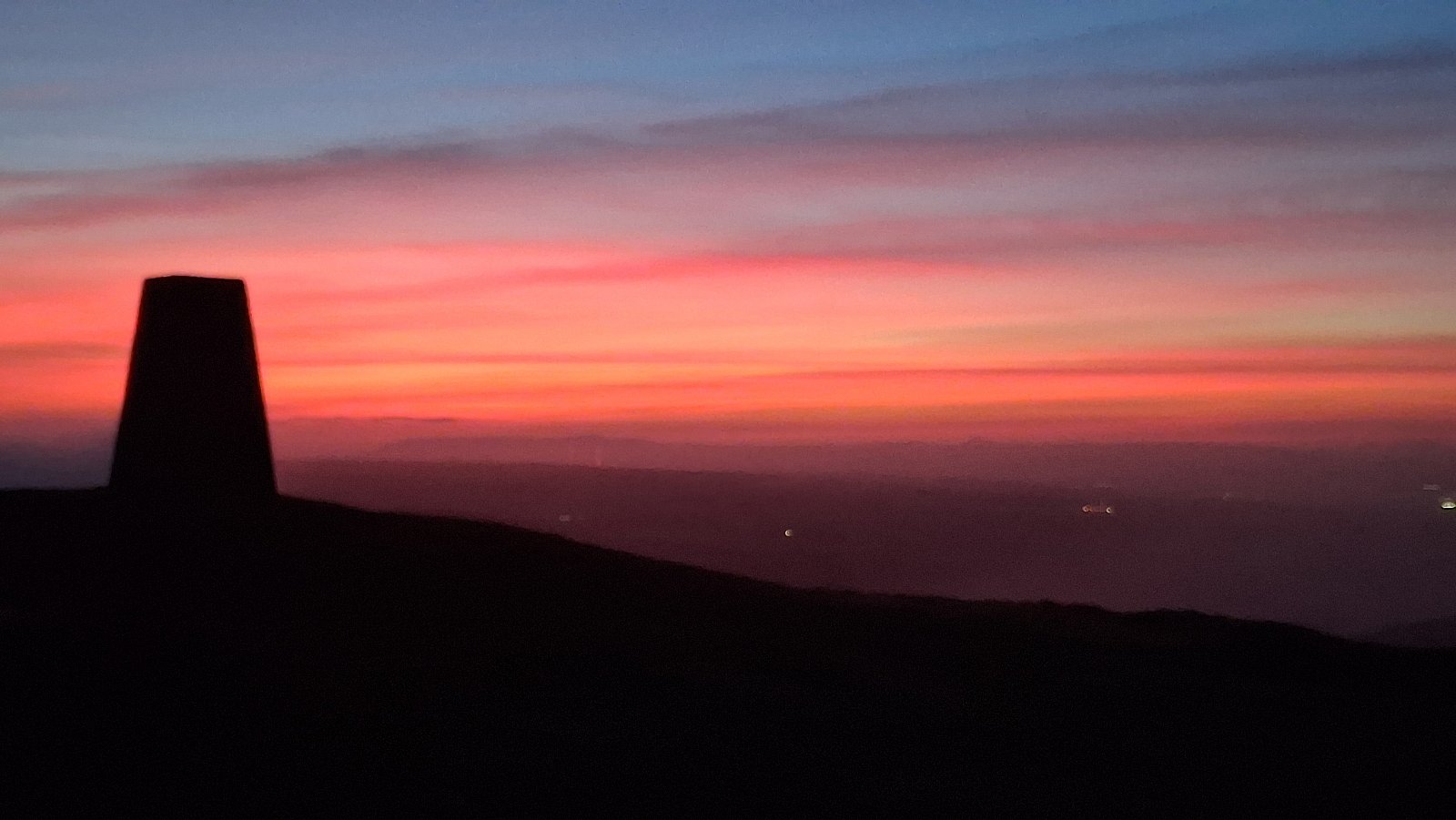
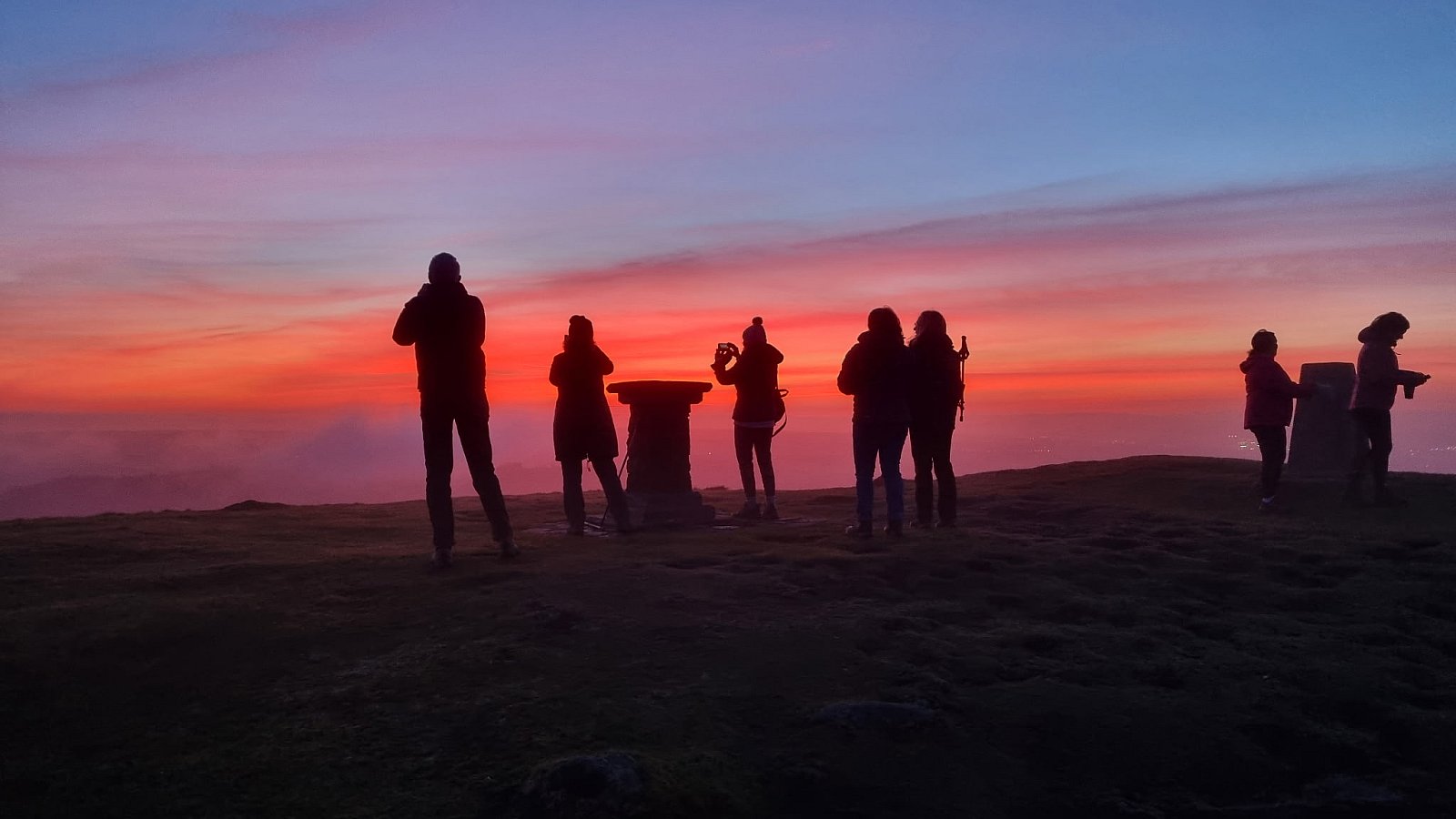
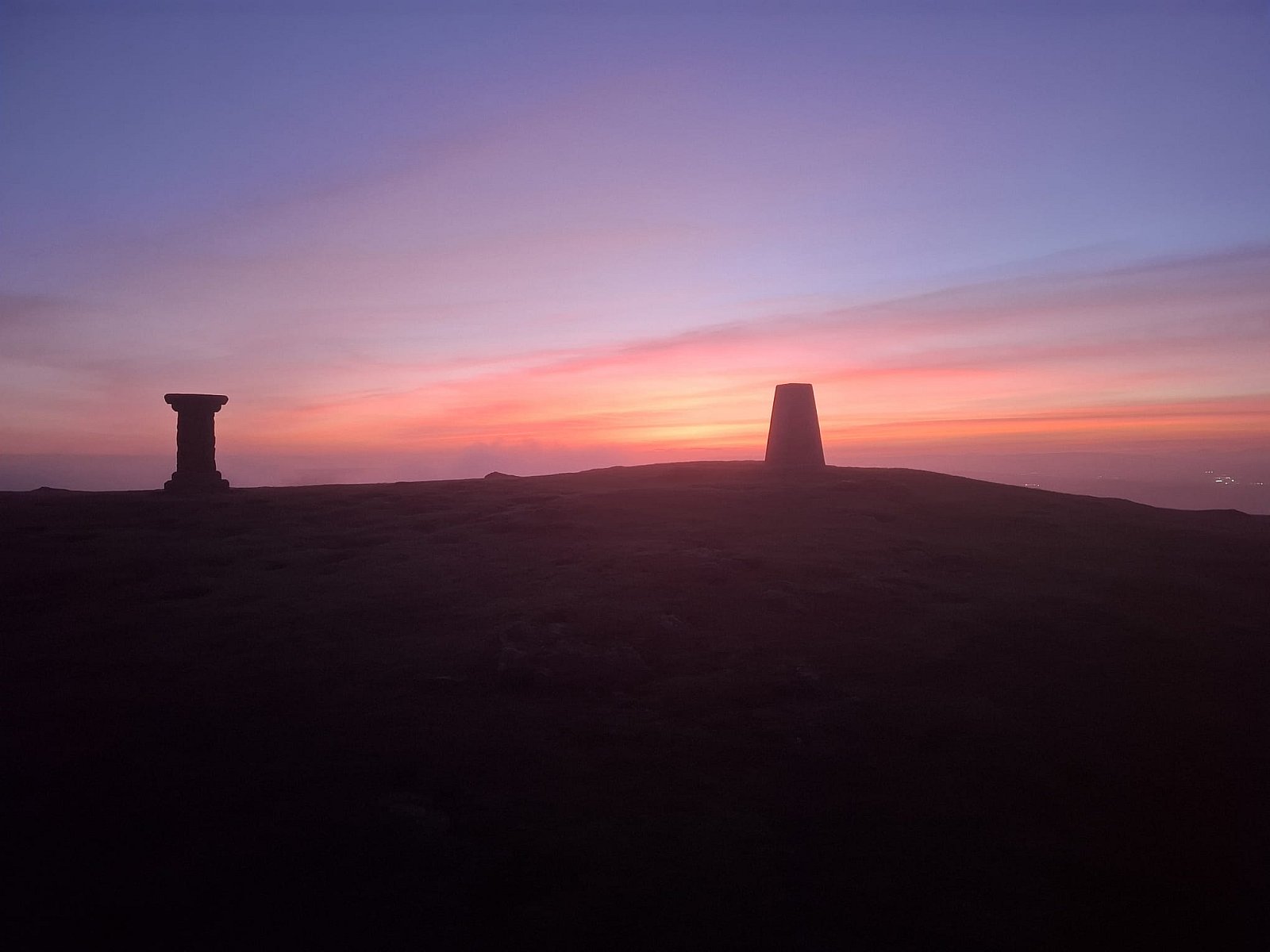
Reaching the summit, we were rewarded in the best possible way. The sky burned with rich shades of red and orange from the setting sun, a breathtaking sight that had everyone smiling & grateful to be there to witness it together. Cameras were quickly out to capture the moment before we turned our attention to the hill itself. Rising to 278 metres, Cockleroy has been known by many spellings over time, but most agree its name means “The King’s Hat” or “The King’s Crown”, a fitting link to nearby Linlithgow Palace & its royal past. Normally visible from the summit, the palace remained hidden beneath the evening’s veil of fog.
With head torches switched on, we began our descent into the mist & into Beecraigs Country Park. Now fully immersed in the fog, navigation required a little more care & we stayed close together as we followed the winding woodland paths. Along the way, we encountered a couple of frogs on the path which we relocated to safety & keeping a watchful eye out for anymore as we continued on.
Before long, we reached the loch & followed its edge anticlockwise, passing the site of the former trout farm. A climb up a flight of steps brought us to the dam wall, where we paused to catch our breath & reflect on the loch’s history. In the early 1900s, Linlithgow faced a serious water shortage, leading to the creation of this reservoir. Work began in 1913 but was delayed by the outbreak of the First World War. German prisoners of war were brought in to assist with construction until 1917, after which labourers & conscientious objectors completed the work. The reservoir finally opened in 1920, five years later than planned & served the area until 1972, when water began to be supplied from Loch Lomond.
Continuing, we passed fields that were once home to red deer, introduced here in 1977 with just 22 hinds & 2 stags from which the herd grew. The landscape we walked through has changed dramatically over time. Before the First World War, this area was largely open farmland and rough grazing, with only sparse tree cover. It was only after timber shortages during the war that large-scale planting began, mainly with pine & spruce, both to shelter the reservoir & supply timber for industry.
The country park we enjoy today was formed from four farms: Beecraigs, Whitebaulks, Balvormie & Hillhouse. These names together with stone from their buildings can be found throughout the park. Over the years, the park has continued to evolve, from the relocation of the Visitor Centre, closure of the trout farm & changes in wildlife management. Ongoing forestry work is reshaping the park once again, with storm-damaged & mature trees being felled & replaced by native broadleaf species such as oak, birch and rowan.
Our route took us to the surprise of some of the group, behind the Visitor Centre, where geology boards & rock displays reveal the area’s fascinating 300-million-year-old story. Standing proudly nearby is the Beecraigs Beacon, a ceremonial structure lit to mark major national events such as Queen Elizabeth II’s 90th birthday, Royal Jubilees, the 80th anniversary of D-Day & VE Day commemorations. From there we returned beside the camping ground & back through the woodland to our cars.
Despite the low visibility, this walk turned into a real adventure. From dramatic skies & atmospheric fog to fascinating local history & shared discoveries along the way, it was an evening full of memorable moments. Most of all, it was a reminder of how rewarding it is to be out in the fresh air, enjoying good company & the ever-changing landscape around us.
What a wonderful way to end the day. Photo credits – UT, John M & Nat C
Our next evening walk will take place on Thursday 2nd April. Details will be available on the walk programme on our website very soon so keep an eye out for this along with many more walking opportunities with the group.
Natalie C