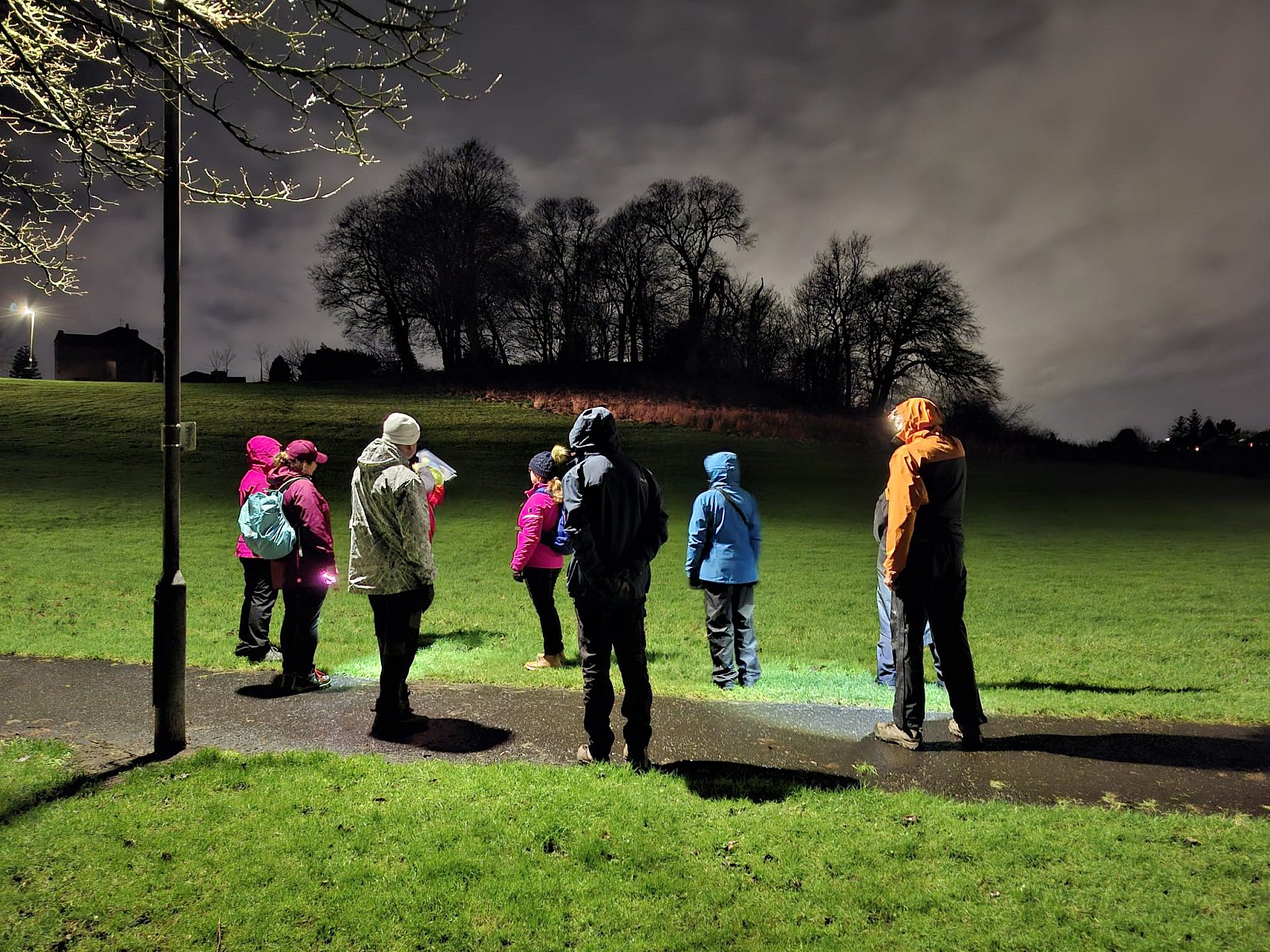
Ten Ramblers met up for a festive evening walk around the village of Mid Calder, undeterred by the forecast of light rain showers. It was a welcome break for us all from preparations for the festive season & we gladly embraced the fresh air, good company & the chance to get some steps in & burn a few calories.
Our walk followed in the footsteps of people who have passed through Mid Calder since its establishment around the 11th century. The village was once one of Scotland’s most important thoroughfares for Highland cattle drovers, who brought their cattle to markets in Falkirk and Crieff before they were transported south to England. Mid Calder was an important stopping point where drovers could rest & rehydrate at one of the many public houses in the village.
At its peak in 1840, an astonishing 150,000 cattle passed through Mid Calder during the three months from August to October, helping to support no fewer than nine public houses. One of the original inns was the Torphichen Inn, now known as the Fork & Field.
Our route took us to Cunnigar Hill, known locally as Witches Hill or Witches Knowe, which holds one of the darkest chapters in Mid Calder’s history. The hill predates the village & is believed to be a Bronze Age burial site, giving it ancient significance long before its association with witchcraft. Today it is surrounded by residential housing & feels very much part of the village, but in the 1600s it lay just beyond the village boundary – an important detail, as executions took place outside the perceived safety of the community.
It was a sobering thought to learn that during the 16th and 17th centuries, innocent women were accused of witchcraft, imprisoned, tortured until they confessed & then dragged up this hill to be put to death. We heard how two local ministers became particularly enthusiastic witch-hunters, one of whom, John Spottiswood, wrote in the parish records during the winter of 1590–91: “Most of the winter has been spent in the discovery & examination of witches & sorcerers.”
Hearing about the violence that occurred here reminded us how fear, superstition & authority combined to destroy lives. As we walked away from the hillside, we chose to remember these women not as witches, but as victims.
Our mood lifted as we made our way through residential streets towards the River Almond, enjoying the colourful Christmas lights & decorations in homes and gardens. A light snow flurry would have completed the festive scene, but instead the promised rain arrived. With hoods up, we headed through Almondvale Park, crossed back over the River Almond & walked uphill alongside Raw Strip, a shelter belt of trees. Choosing the paved path over the muddy woodland route, we soon found ourselves back in Mid Calder village.
Santa & his helpers were just finishing their drive around the village, no doubt bringing joy to many excited children catching a glimpse of him before the big day. By this point the rain was heavy & the soaked helpers were keen to head home to dry off.
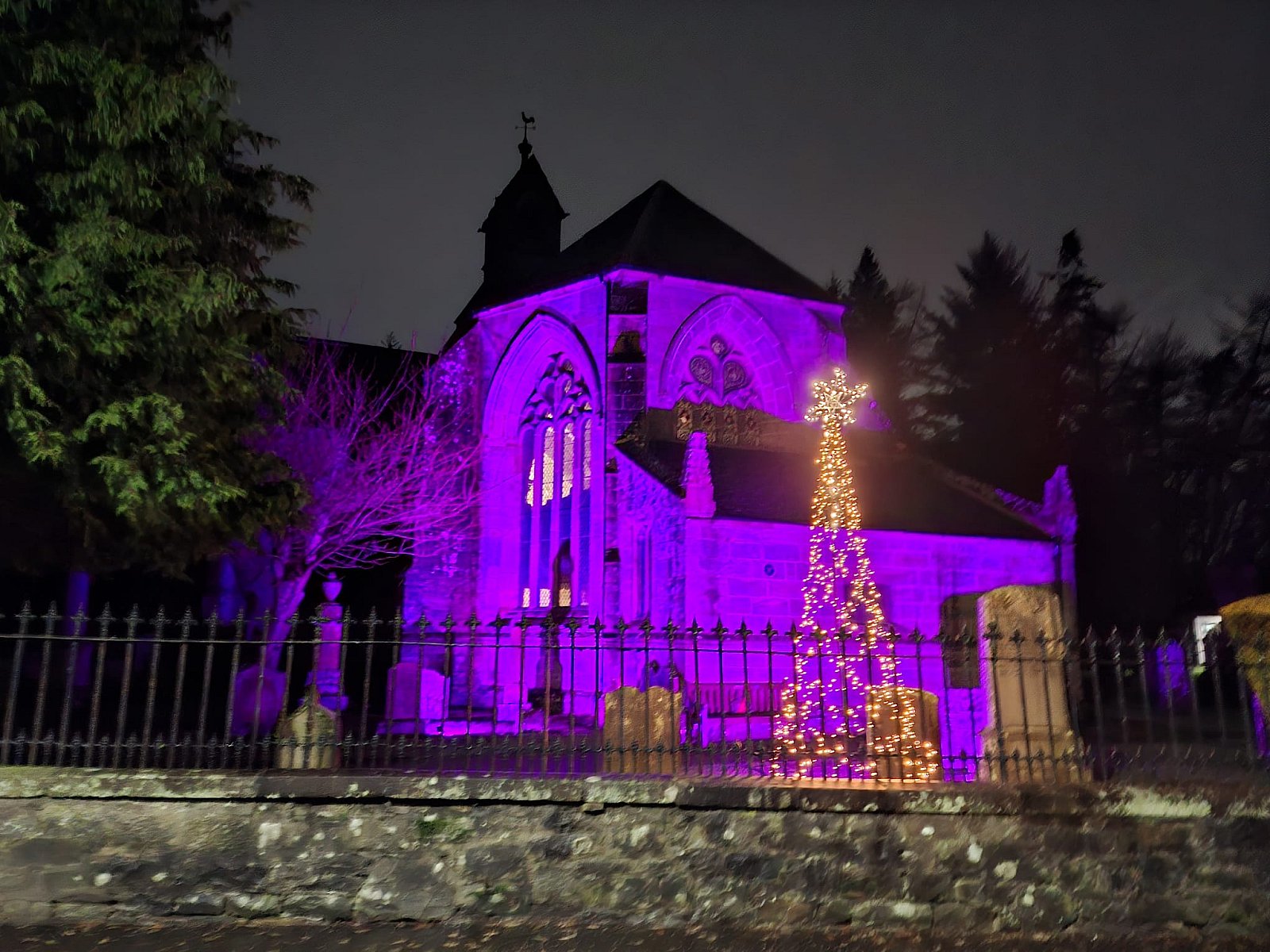
Fortunately, the downpour didn’t last long & we found shelter beneath the WW1 war memorial arch opposite the Kirk of Calder. Here we learned that the Kirk has been the spiritual heart of the village for over 800 years. Although a church has stood on this site since 1150, the building we see today dates mainly from 1541, with later additions.
Lit in purple light, the Kirk and its Christmas tree looked particularly striking. We discovered that this area was once a hotbed of local rebellion, with ministers forced to hold illegal outdoor services, known as conventicles, in the surrounding hills. In the 1630s, after local people signed the National Covenant opposing the King’s attempt to impose a new prayer book, the church was attacked. Bullet holes from this event can still be seen in the outside walls & are well worth a closer look in daylight.
Before finishing our walk, we learned about local Christmas & Hogmanay traditions. Until 1958, Christmas Day was not a public holiday in Scotland & Christmas celebrations were banned or discouraged for centuries. Instead, Hogmanay was the main winter celebration, with first-footing being the most important tradition. The first person to cross your threshold after midnight on New Year’s Day would bring gifts such as coal, shortbread, or black bun to ensure warmth and prosperity.
Passing by the village’s older houses, we imagined windows glowing with welcoming candles, chimneys carrying the smoke of burning rowan twigs to dispel bad feelings or jealousy & tables with Yule bread upon them baked with hidden trinkets to bring good fortune to whoever found them.
Our walk ended in the village centre with festive farewells for those heading straight home, while others enjoyed a celebratory drink together at the Black Bull Inn where we saw Santa again (who knew he drank in the Black Bull?) & continued the evening’s conversations. Despite the rain, we all agreed it had been a lovely evening of walking, companionship & discovery in this charming village. Photo credit - UT & Nat C
Thank you to everyone who joined us on our evening walks in 2025. We wish you all a Merry Christmas & look forward to seeing you on evening walks next year.
Evening walks will return in 2026, with our first walk taking place on Thursday 8th January. Details of this walk together with many more opportunities to test out any new walking gear you may be lucky to receive or that you treat yourself to in the New Year sales, can be found in the Walks Programme on our website.
Natalie C