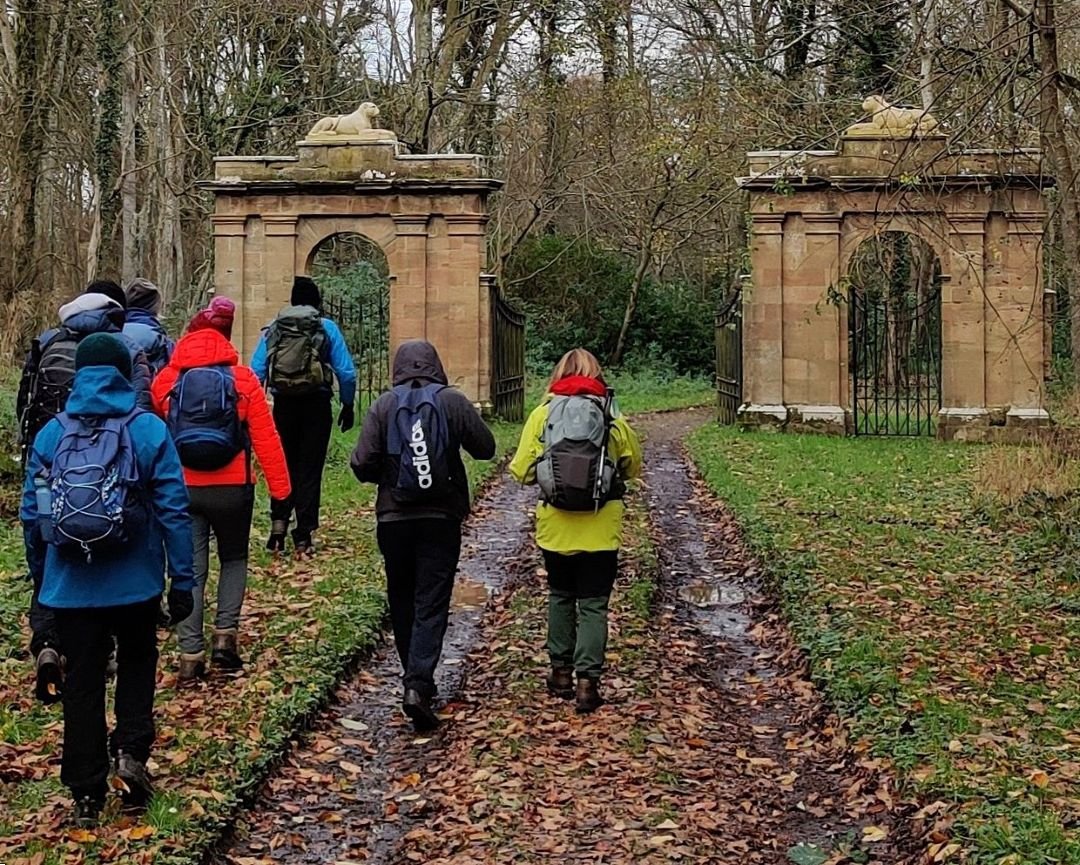
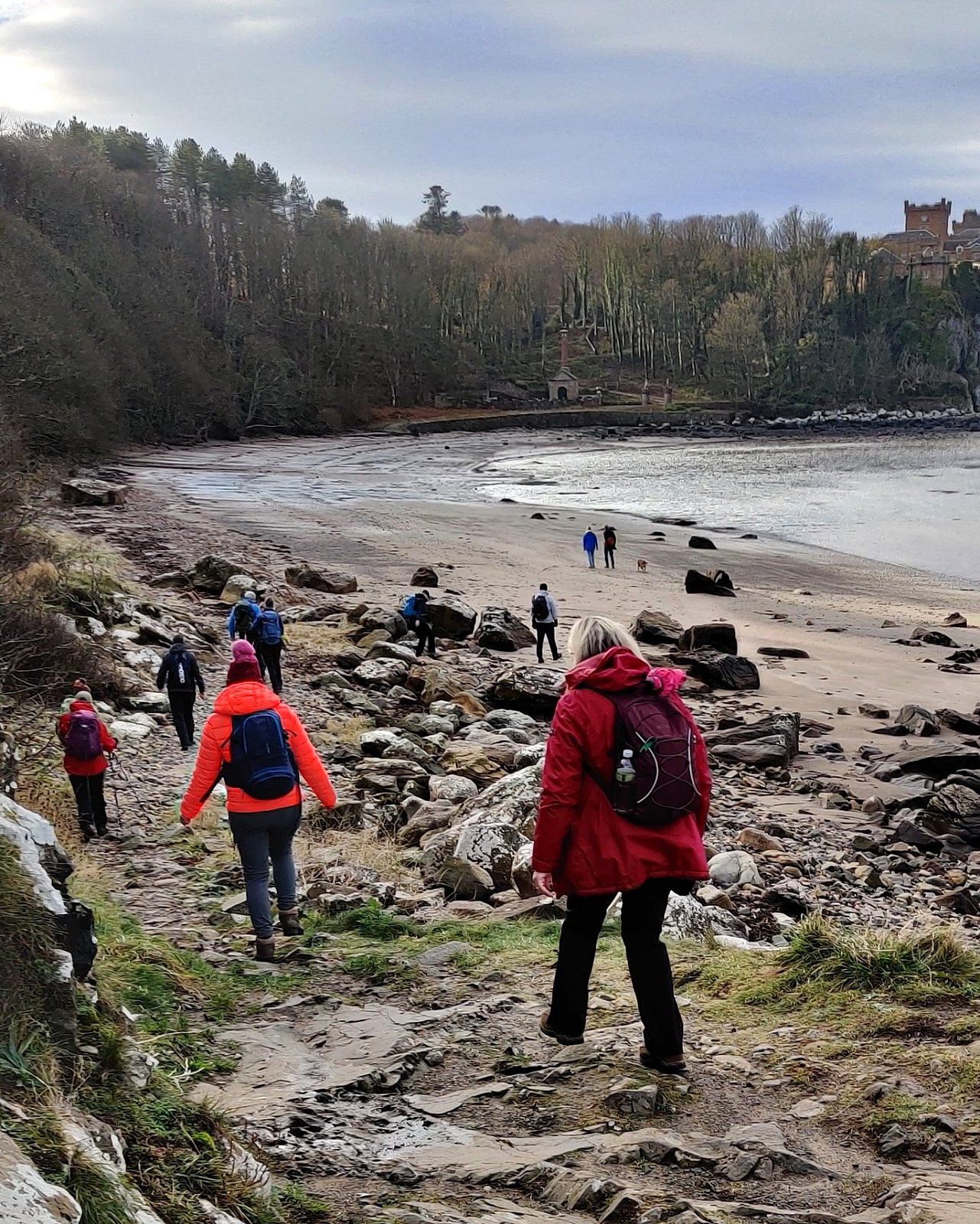
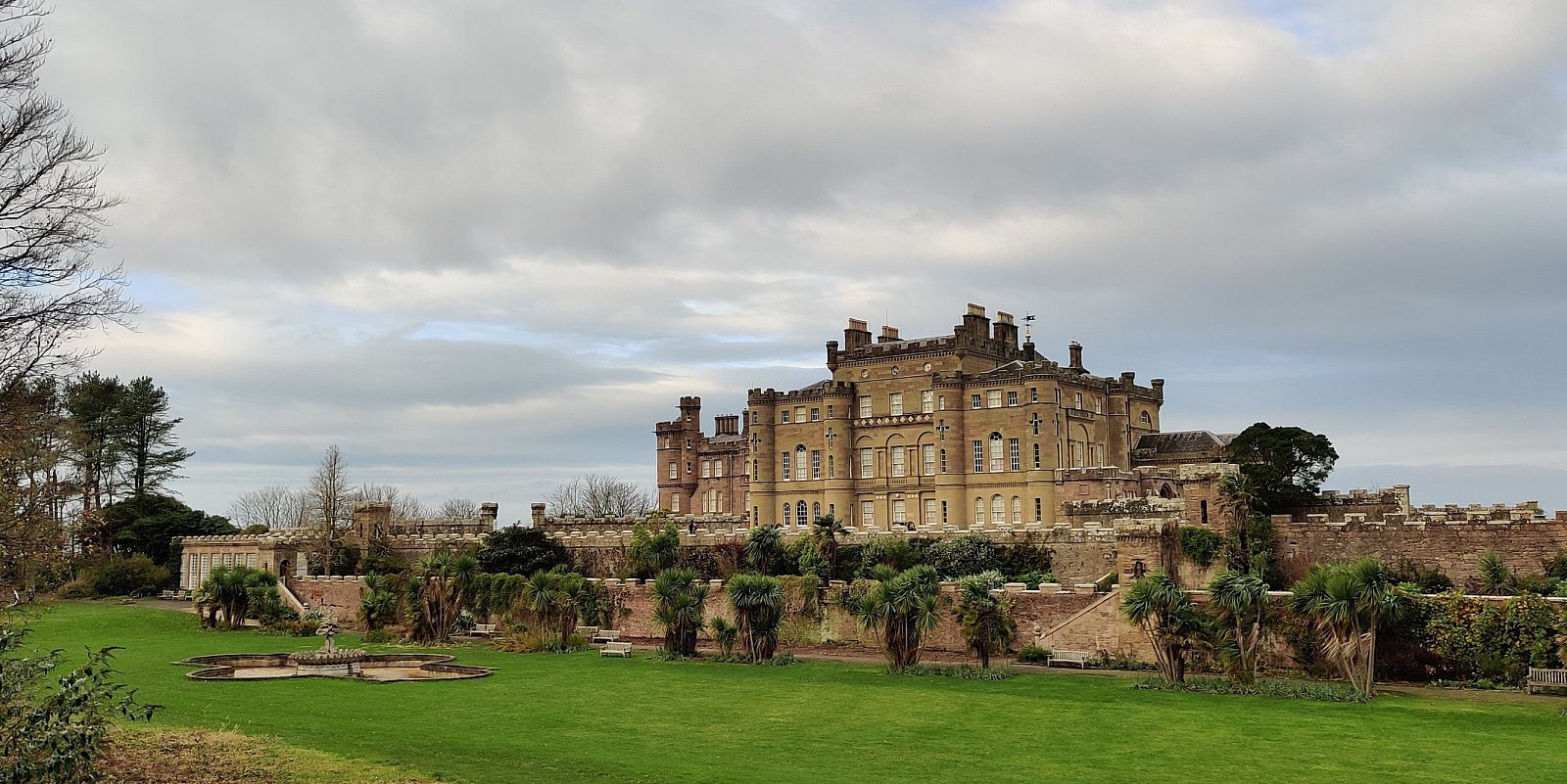
Twelve ramblers arrived at Maidens on Saturday morning. Storm Claudia had swept through the previous day, and upon our arrival, we were greeted with a broken cloud cover and a moderate easterly breeze. The first section of the walk took us along the shore road to Hogston and then along a track through fields to the woodland of the Culzean Country Park. The woods provided welcome shelter from the breeze. Following woodland paths and tracks, we passed the Walled Garden and an Orangery, before stopping to admire Culzean Castle.
Robert Adam designed Culzean Castle for the 10th Earl of Cassillis. Construction commenced in 1777. During the first half of the nineteenth century, the open, agricultural landscape and heathland were replaced with a well-forested, enclosed landscape, a large pond stocked with fish and swans, carriage drives and paths, an enlarged walled garden, and new estate buildings.
Continuing on woodland paths, we passed the Visitor Centre and headed out on a track to Bowmanhill Cottage. As we passed from the woods into open farmland, stunning views opened up across Culzean Bay of Arran and the Isle of Bute, and up the coast to Croy. Far away to the west, Kintyre was just visible. As soon as we reached the beach, we stopped for an early lunch. The tide was falling, and we were entertained by oystercatchers and dunlin feeding along the shoreline.
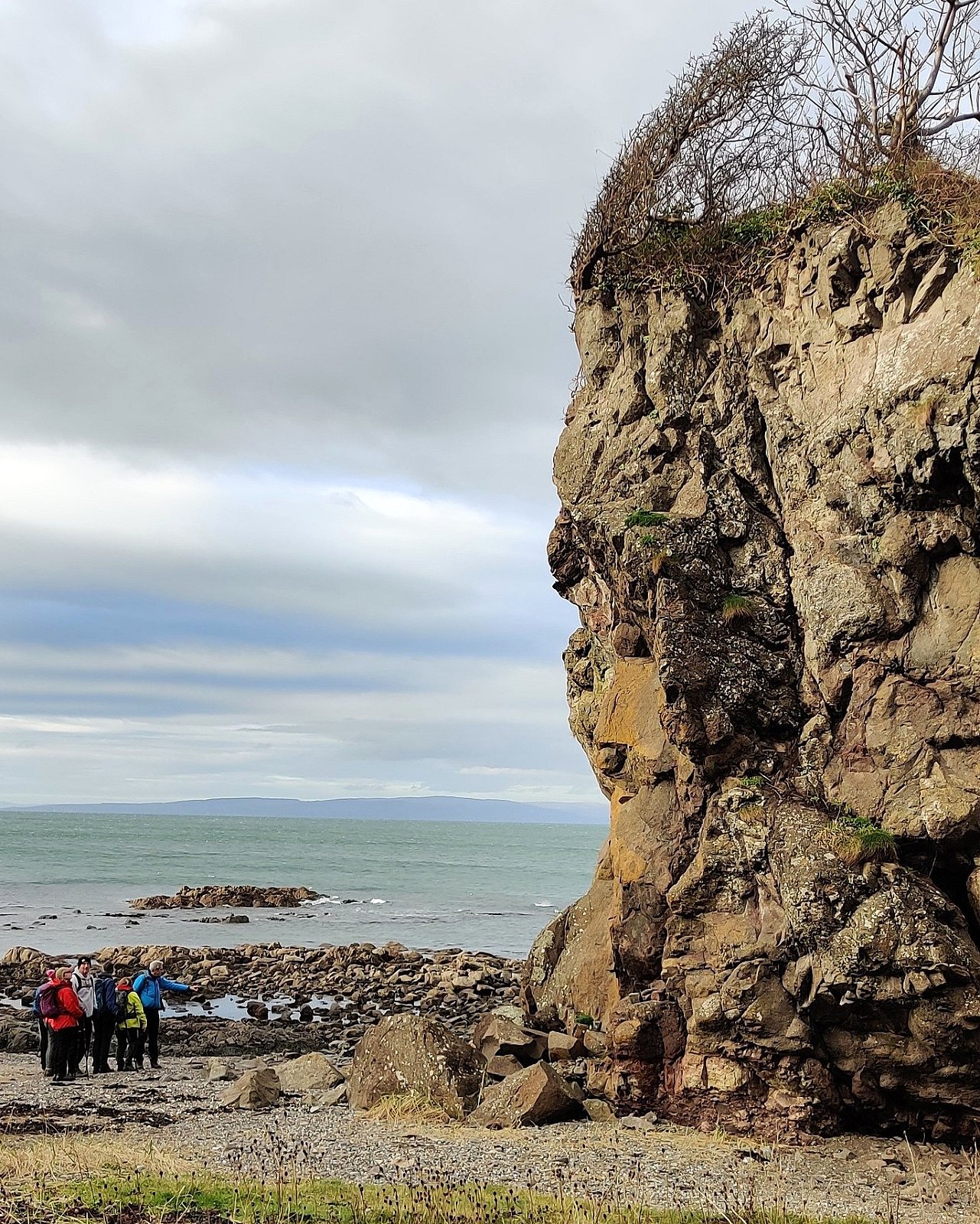
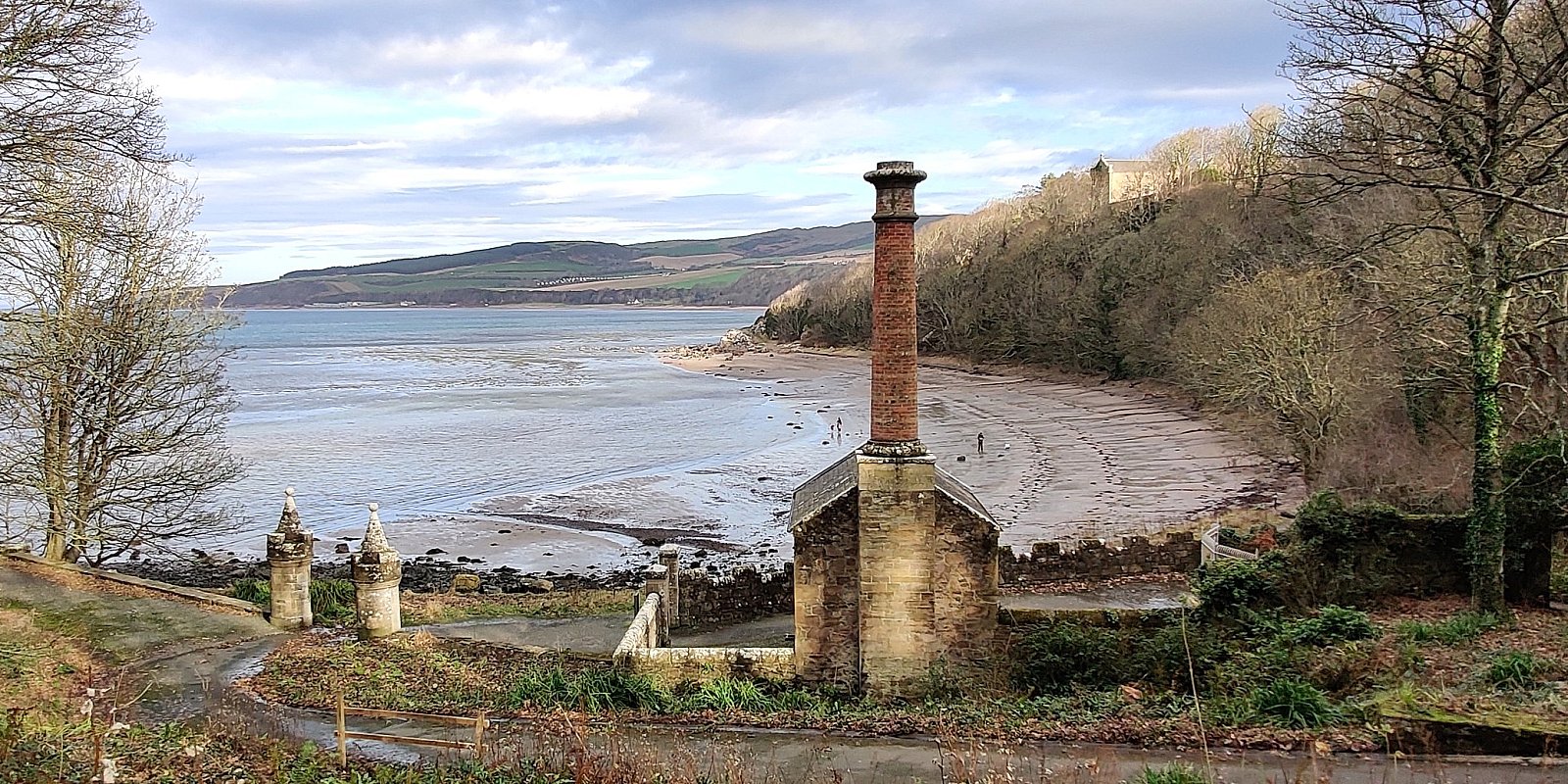
Walking down the beach to Culzean Castle, we passed the red sandstone cliffs of Swallow Craigs. The sandstones are Early Devonian in age (427 - 393 million years old) and were deposited in lakes, rivers and coastal marine environments. The cliffs are set back from the existing beach behind a narrow wave-cut platform that represents a raised beach resulting from post-glacial sea-level changes and isostasy (crust rebound) following the melting of the ice sheets at the end of the last glacial period. At the southern end of the beach, we took the zig-zag path up the cliff, passing the Gas House, which was built around 1830 and used to produce coal gas for use in the Castle.
The weather improved throughout the day, and we enjoyed fine views of Arran and Goat Fell from the Castle promenade. Our route took us past the castle and back down onto the beach by the boathouse. Culzean Castle sits on a prominent cliff formed of andesite of Early Devonian age (~415 million years old). The andesite has been intruded as a sill into unconsolidated, wet sediments. Evidence for this can be seen on the foreshore where the lower surface of the sill rests on sandstone, which in places protrudes into it, and the andesite has a pillow structure due to rapid cooling. In places on the foreshore, a distinctive rock called peperite (resembling ground pepper) that has a speckled or breccia-like appearance can be seen. The peperite was produced by disintergating magma intruding and mingling with the unconsolidated wet sediments. The coastline between Maidens and Durnfoot, near Ayr, is classified as an SSSI on account of its geological and biological features.
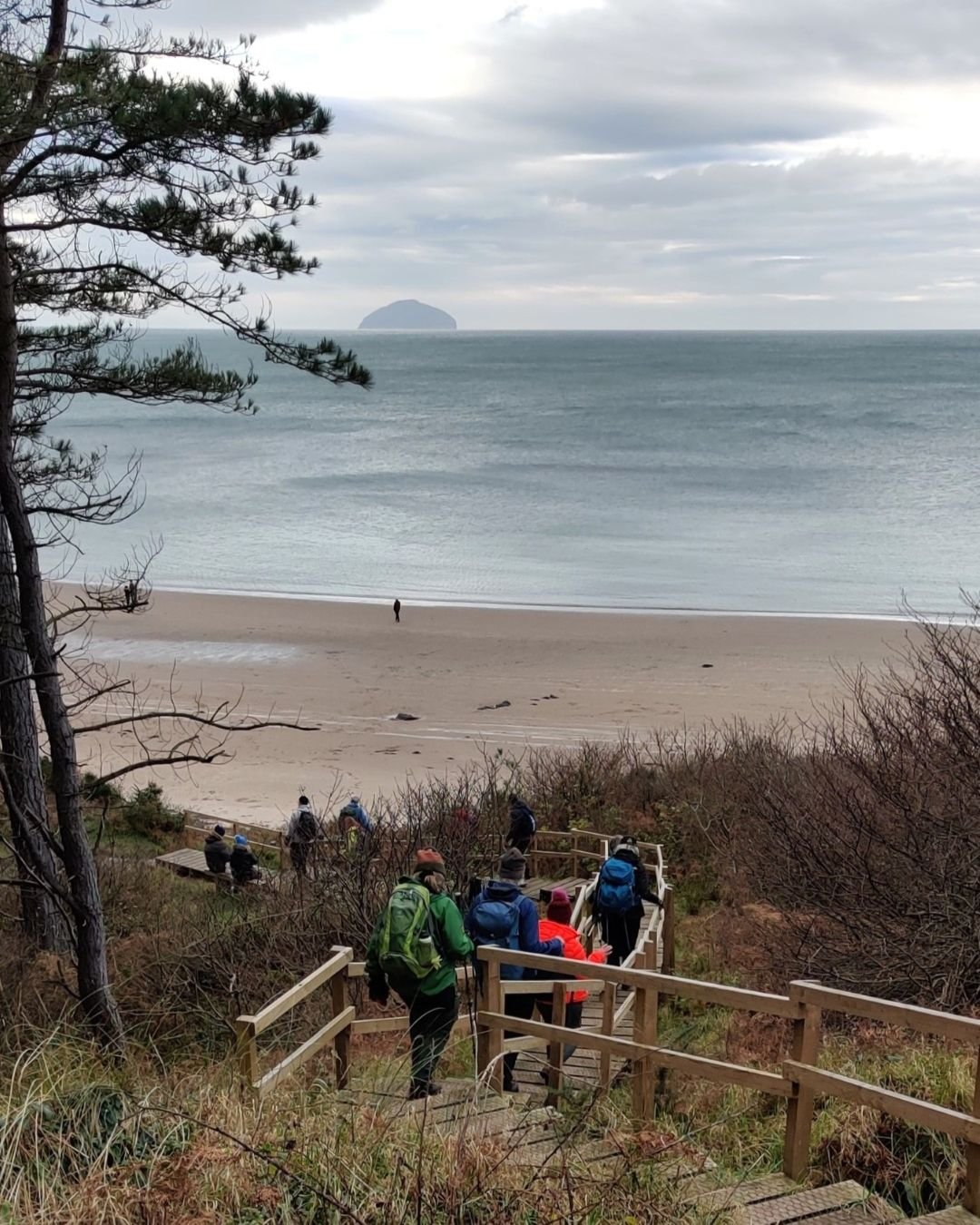
We returned to Maidens via a fine cliff walk and Maidenhead Bay beach. The path wanders through woodland close to the cliffs and offers splendid views of the rugged coastline and Ailsa Craig (Gaelic: 'fairy rock'), a small island 14 miles to the southwest.
Ailsa Craig is formed mainly of microgranite that was intruded into weaker rocks that have been eroded to leave the prominent 338 m high landmark. The microgranite has been quarried for the production of world-famous curling stones for well over one hundred years. All of the curling stones used in the 2022 Beijing Winter Olympics were extracted from the Aisla Craig quarry.
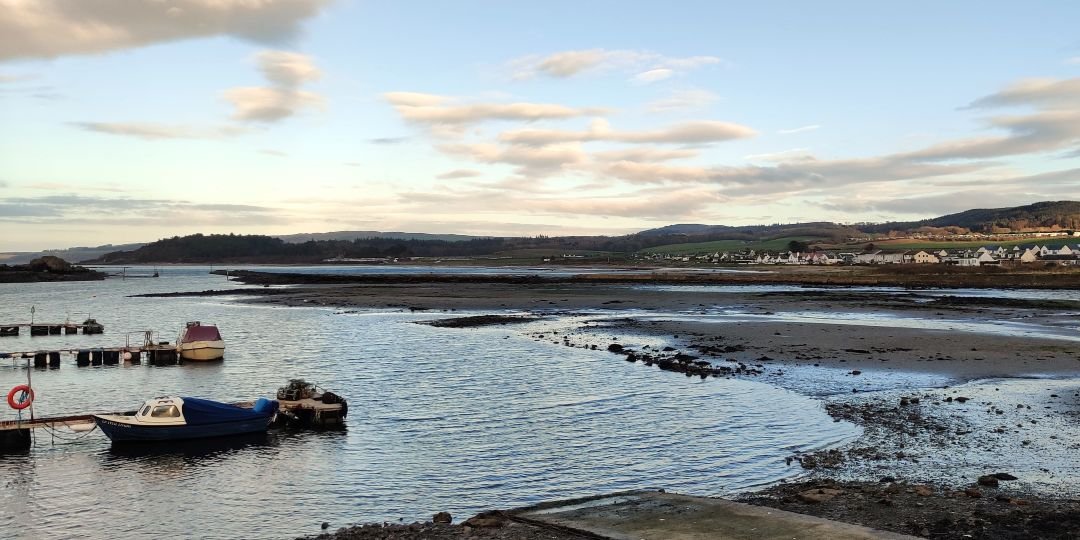
Maidens is a small fishing village that has been used as a haven for at least 350 years. To round off the day, we headed to Ropes Bistro near the haven for a well-deserved coffee.
TerryC
Photos: InaG, TerryC