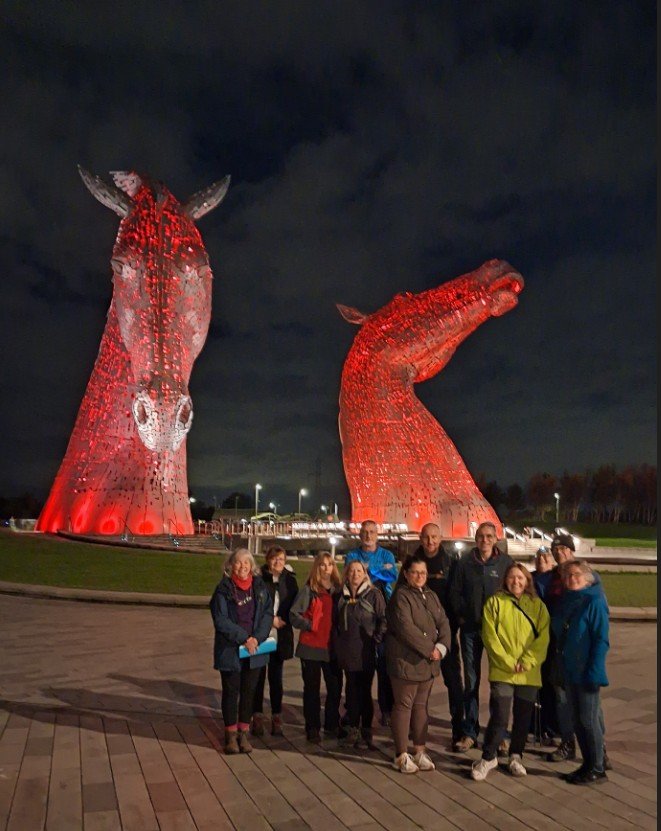
It was a lovely mild and dry evening for our walk — and Catherine’s first with the group!
Setting off from Falkirk Stadium, we made our way to The Helix Park, which we discovered stretches over 350 hectares (around 865 acres) of green space between Falkirk and Grangemouth. Once derelict industrial land, this area has been completely transformed into a living, breathing landscape that reconnects 16 local communities through its vast network of paths.
Walking around the lagoon and alongside the wetlands, we were treated to the sights and sounds of wildlife that has returned to the area. We watched swans settling on the lagoon for the night, some tucking their heads beneath their wings — though, as swans are light sleepers, a few were no doubt keeping a cautious eye on us as we passed by!
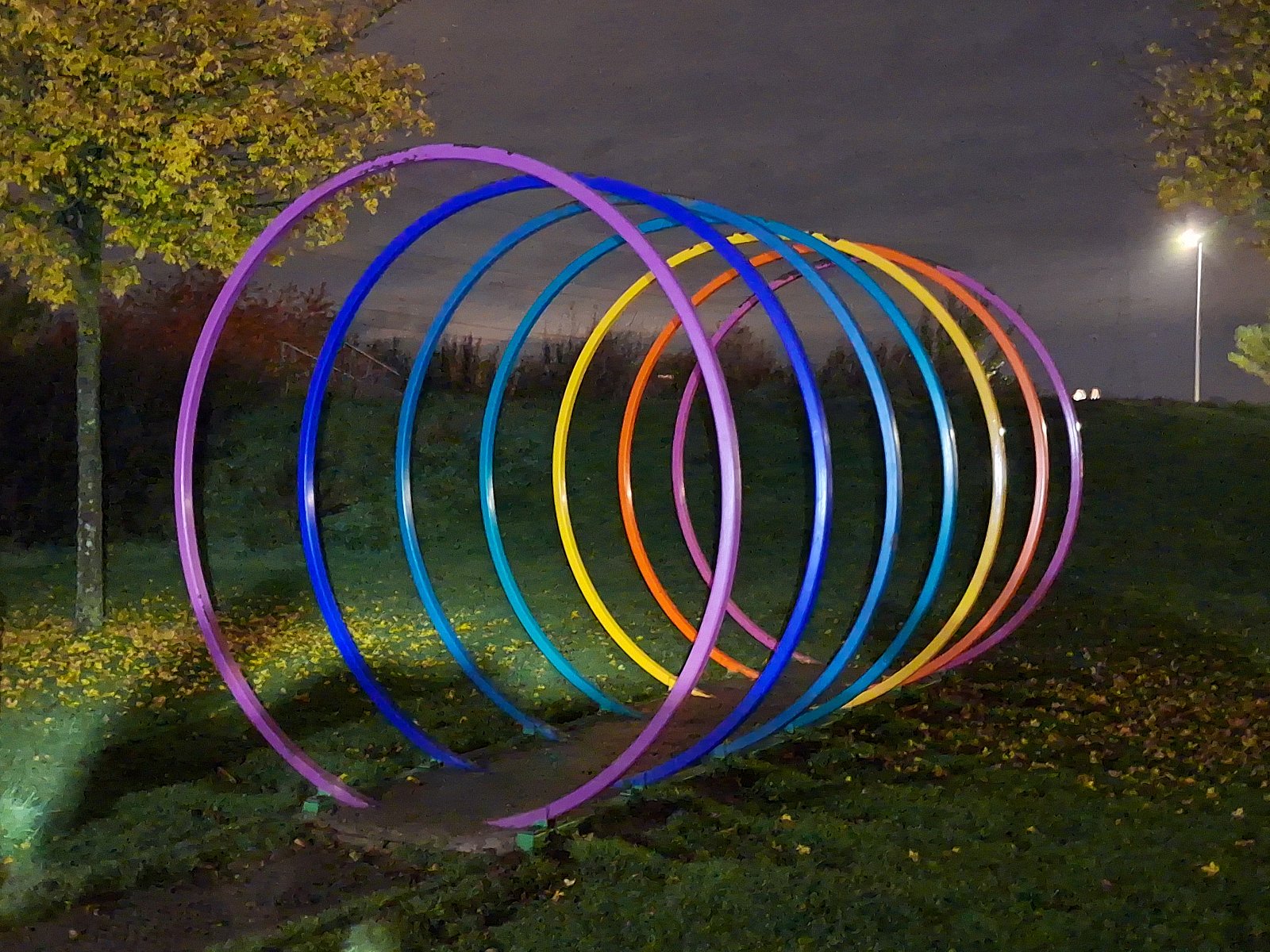
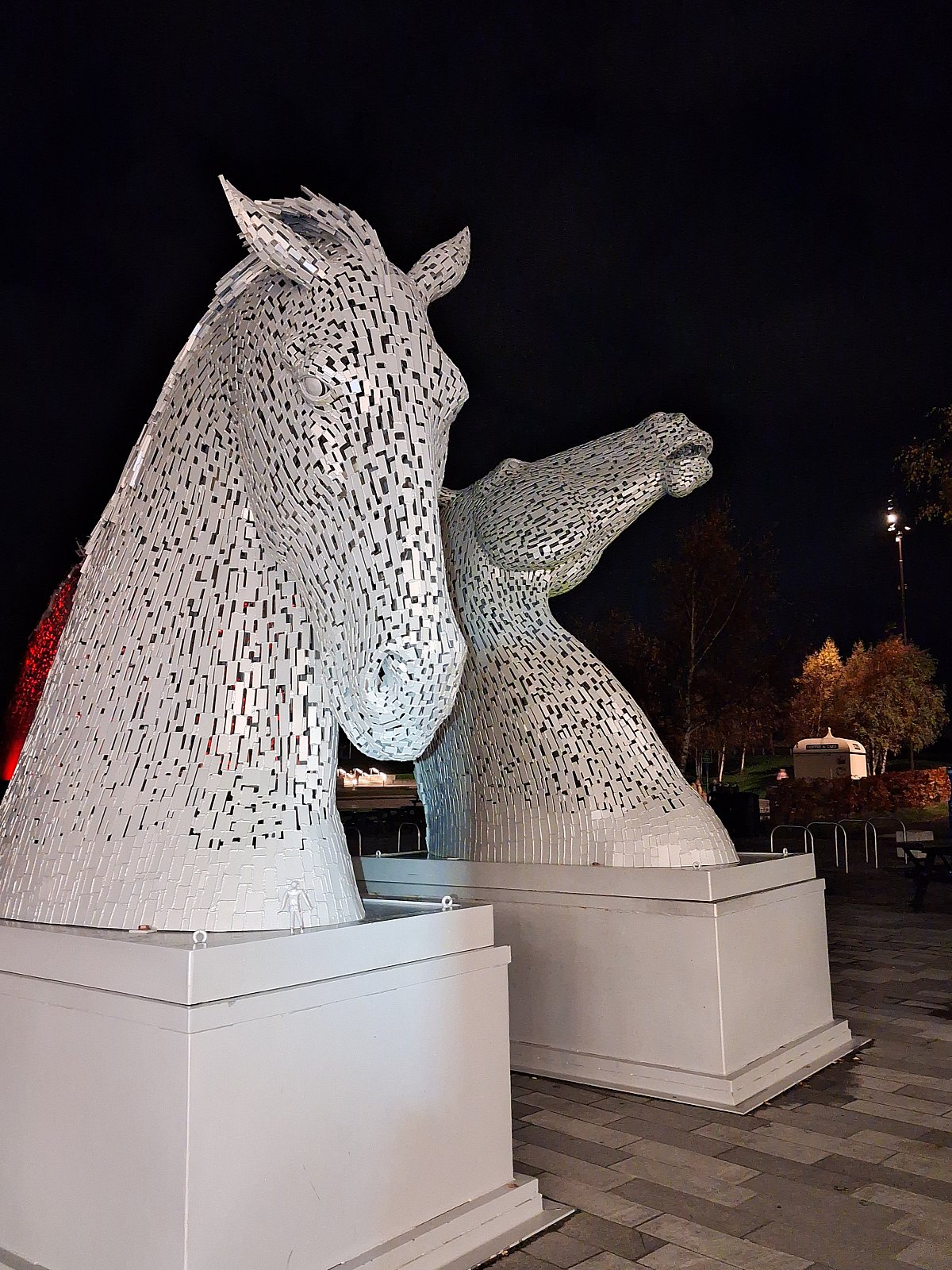
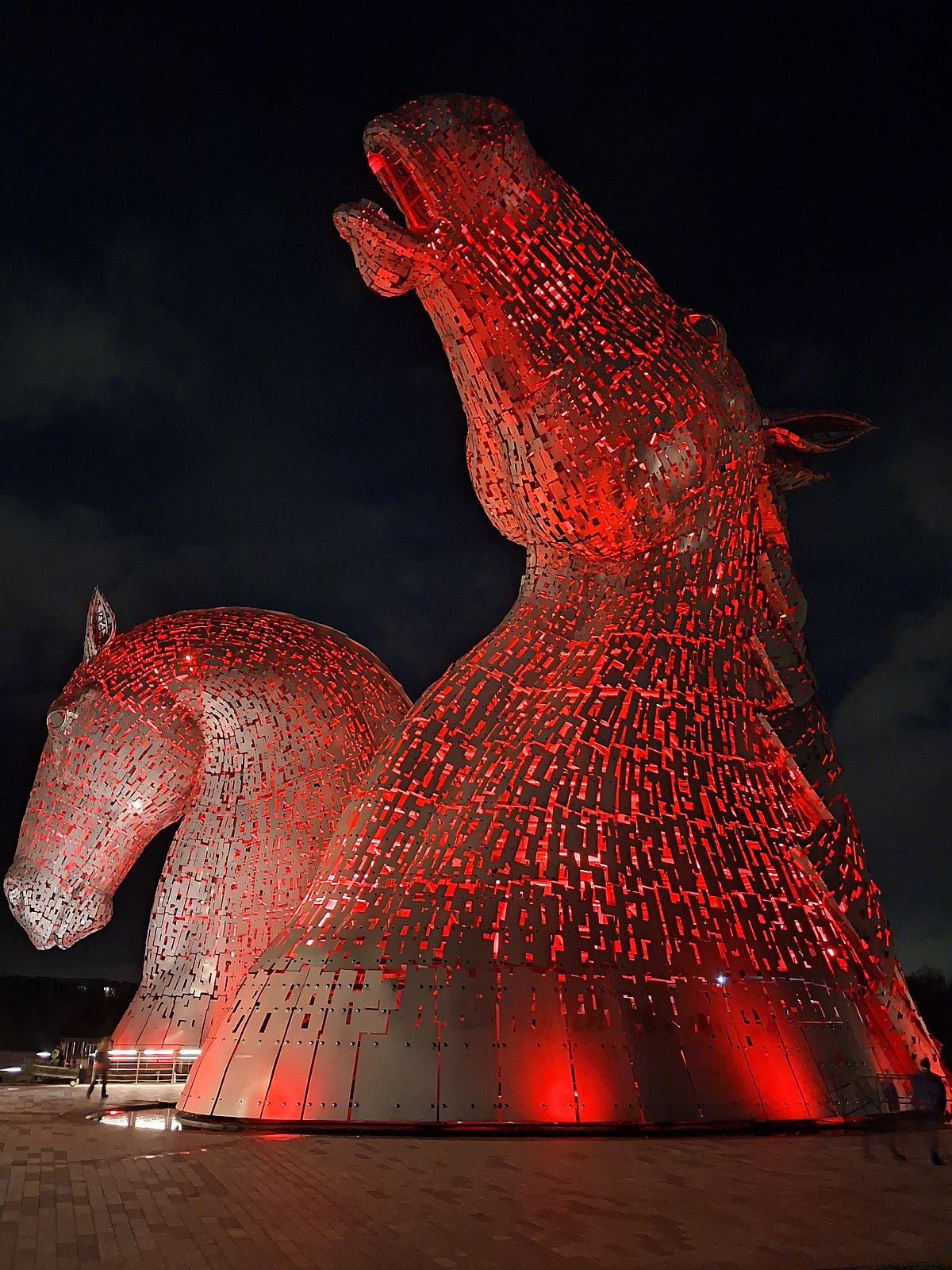
Passing some of the park’s new colourful sculptures, we soon arrived at the Kelpies, beautifully illuminated under the darkening sky. These majestic giants are truly the jewels of Helix Park, and on this evening, they glowed red in honour of the upcoming Remembrance Day.
While admiring these striking sculptures, we learned that when they were unveiled in 2014, not everyone was immediately impressed — The Guardian newspaper famously described them as “a pile of horse poo”! Thankfully, like the twelve Ramblers on this walk, the public had other ideas. The Kelpies quickly became an instant hit, attracting huge crowds, international attention, and making their creator Andy Scott a household name.
Each Kelpie stands 30 metres tall and weighs over 300 tonnes, making them the largest equine sculptures in the world. The pair are named Duke & Baron, after the two real Clydesdale horses they were modelled on. Positioned beside the canal, they were inspired by the powerful working horses that once hauled barges along Scotland’s waterways and powered the industries that built this region.
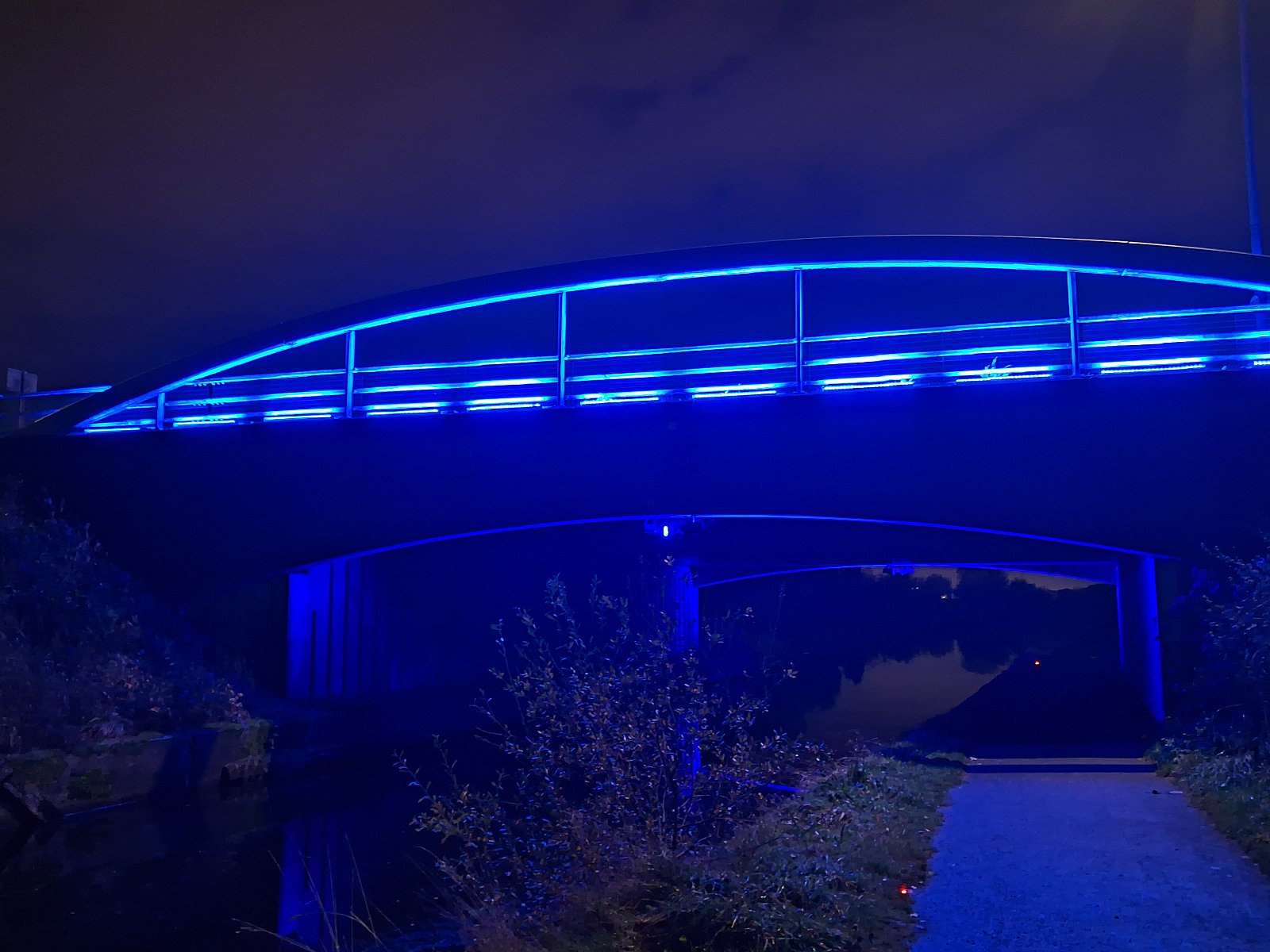
After everyone had the chance to wander around and take in the Kelpies up close, we crossed the bridge over the Queen Elizabeth II Canal, the final piece of the £85 million Millennium Link Project, which reconnected the Forth & Clyde Canal to the tidal River Carron — completing a sea-to-sea route once more from the Atlantic to the North Sea.
Leaving the illuminated Kelpies behind, we switched on our headtorches and followed the River Carron, the longest river in Stirlingshire, towards Abbotshaugh Community Woodland. Along the way, we discovered that the river has been central to Falkirk’s story for centuries, even lending its name to the famous Carron Company, which by 1814 was the largest ironworks in Europe.
We also heard the local legend that the River Carron once “ran red with blood” during ancient battles between the Romans, Picts and Scots — earning it the title “the birthplace of the Scottish nation.”
Our route continued through the peaceful woodland, before rejoining the Forth & Clyde Canal for the final stretch back to the Kelpies. From there, a short walk through Helix Park brought us back to our starting point at Falkirk Stadium.
It was a lovely evening among friends — discovering more about this fascinating area and marvelling at the illuminated Kelpies up close. Together, the Helix, the canal and the Kelpies tell a story of transformation: turning forgotten land into a space where people, nature and imagination can thrive once again. Photo credit - Nat C
Our next evening walk will be on Thursday 20th November, and details of this, along with many more walking opportunities with the group, can be found in the Walk Programme on our website.
Natalie C