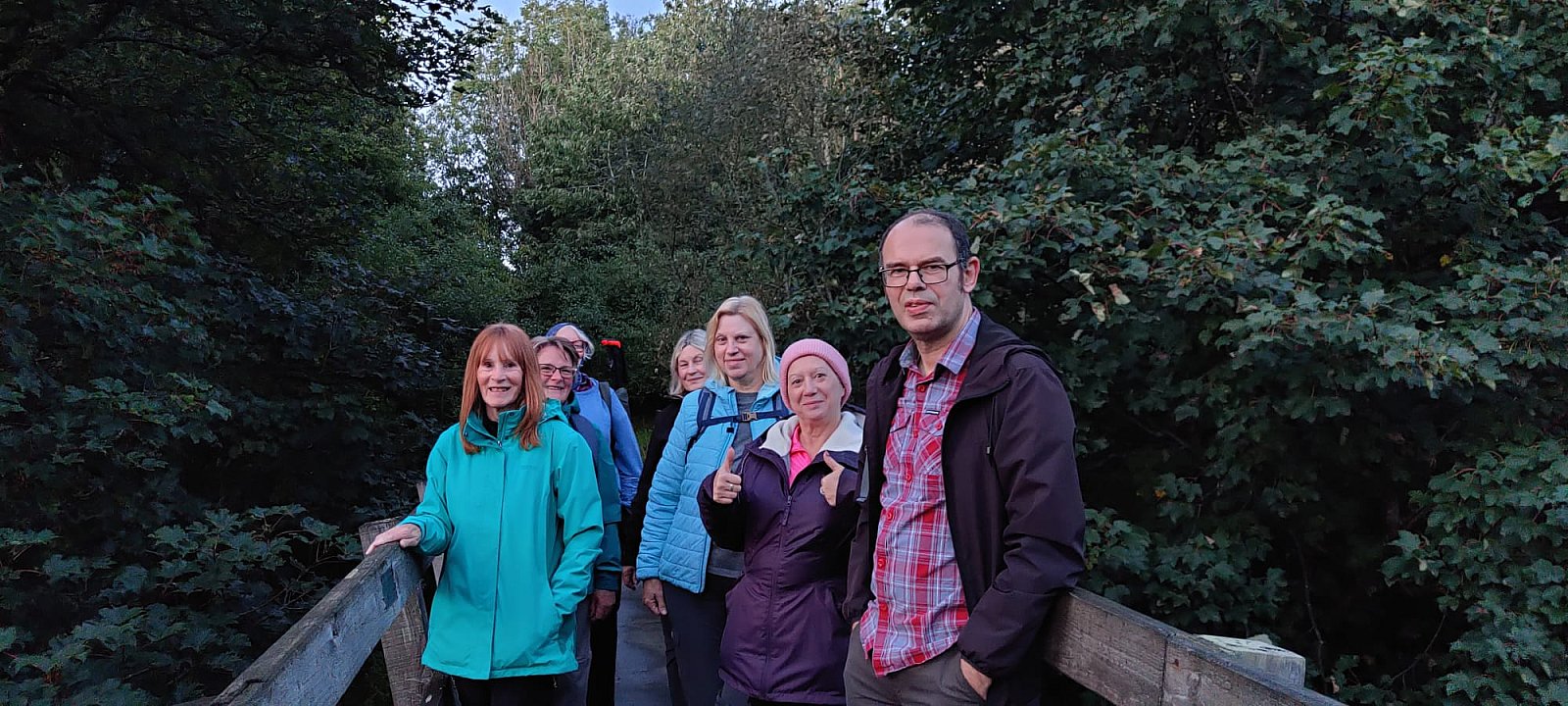
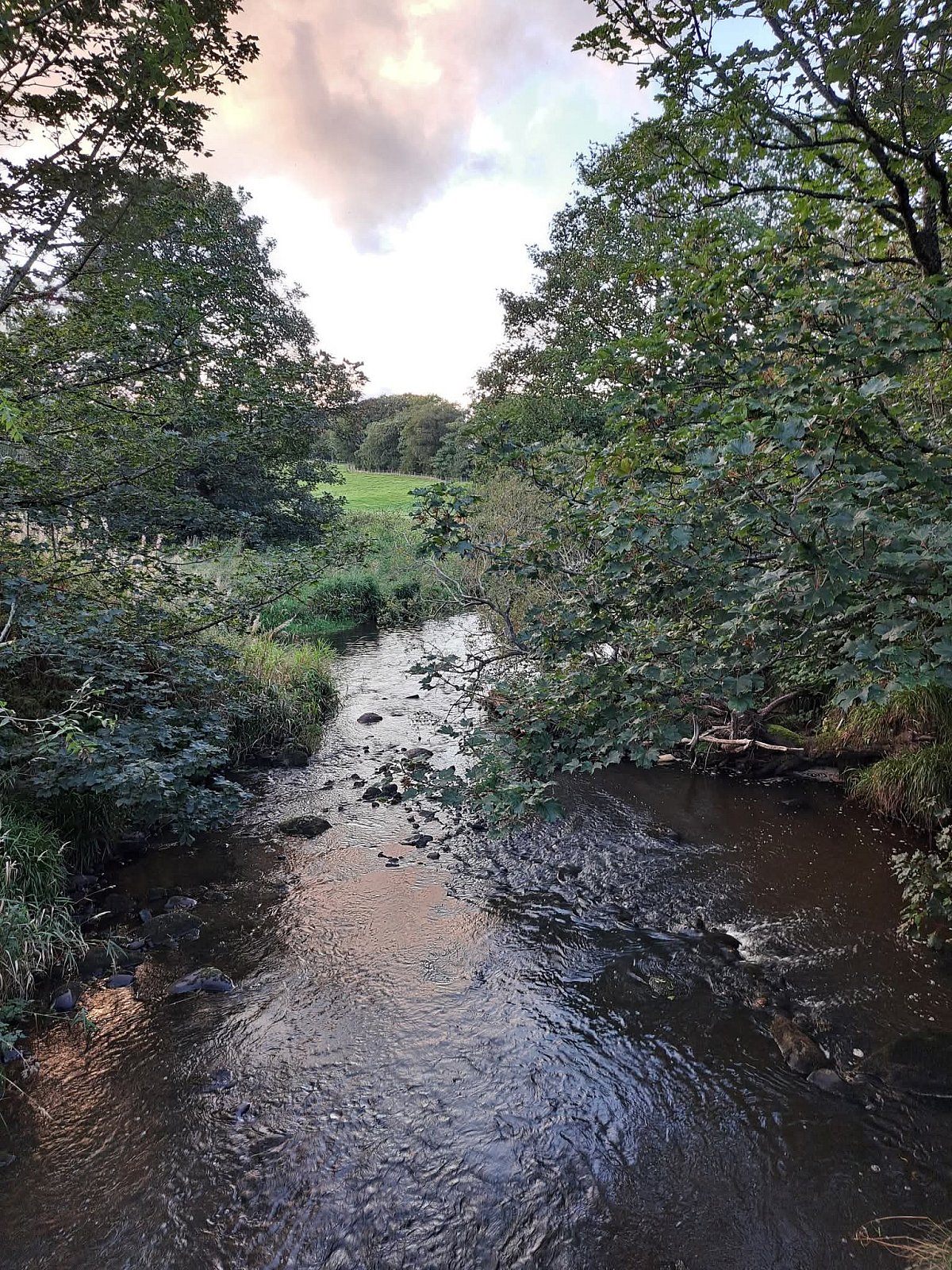
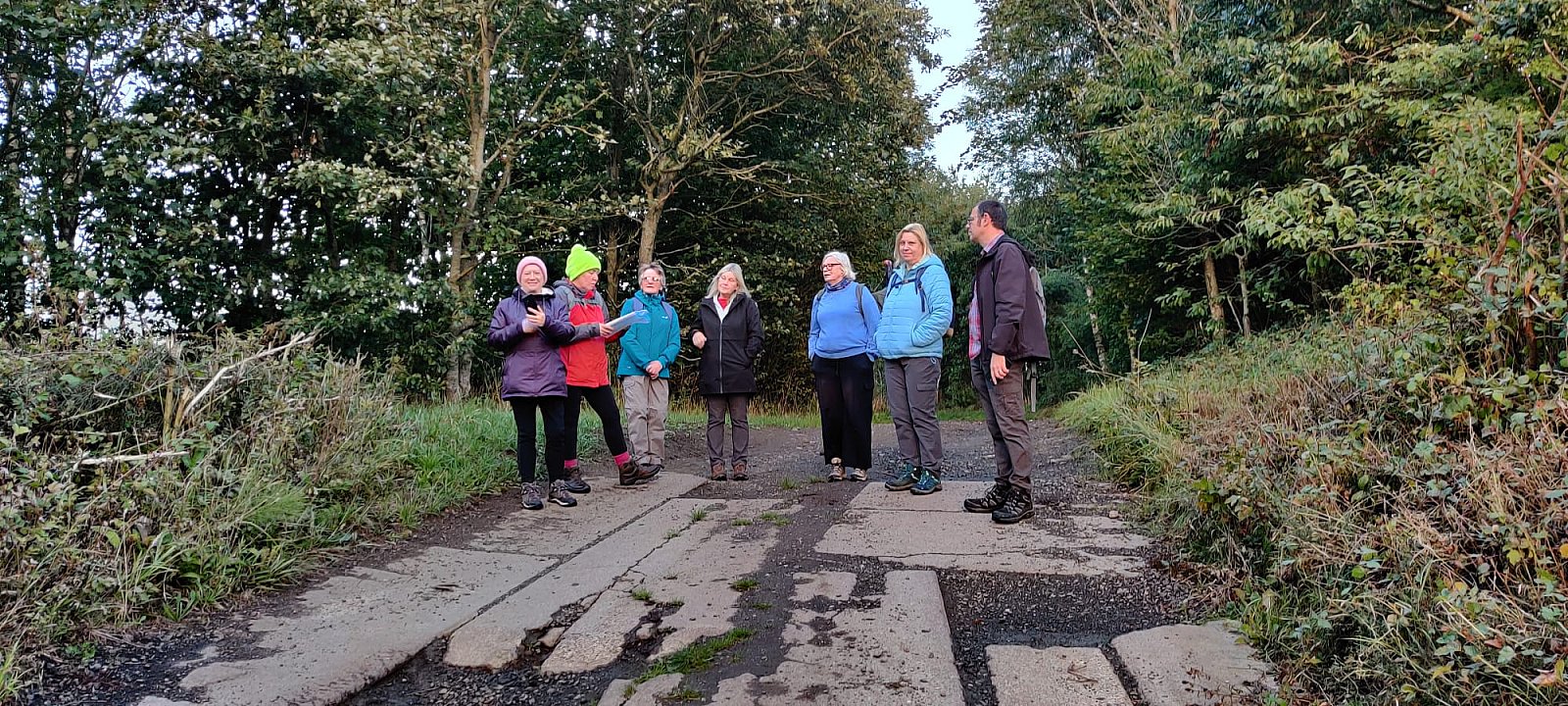
As the sun dipped low on the horizon, eight Ramblers set out for an evening walk beside the River Almond, following paths that for centuries have carried schoolchildren, workers & families. With the first hint of autumn in the air, we traced the river’s course & learnt how it has changed & adapted over time, shaped by industry, then restored to nature, now supporting a rich array of wildlife. Hedgerows, quiet pools & the river itself make this area a haven for birdwatchers & before long the redwings, fieldfares, and mistle thrushes will be back to feast on the berries.
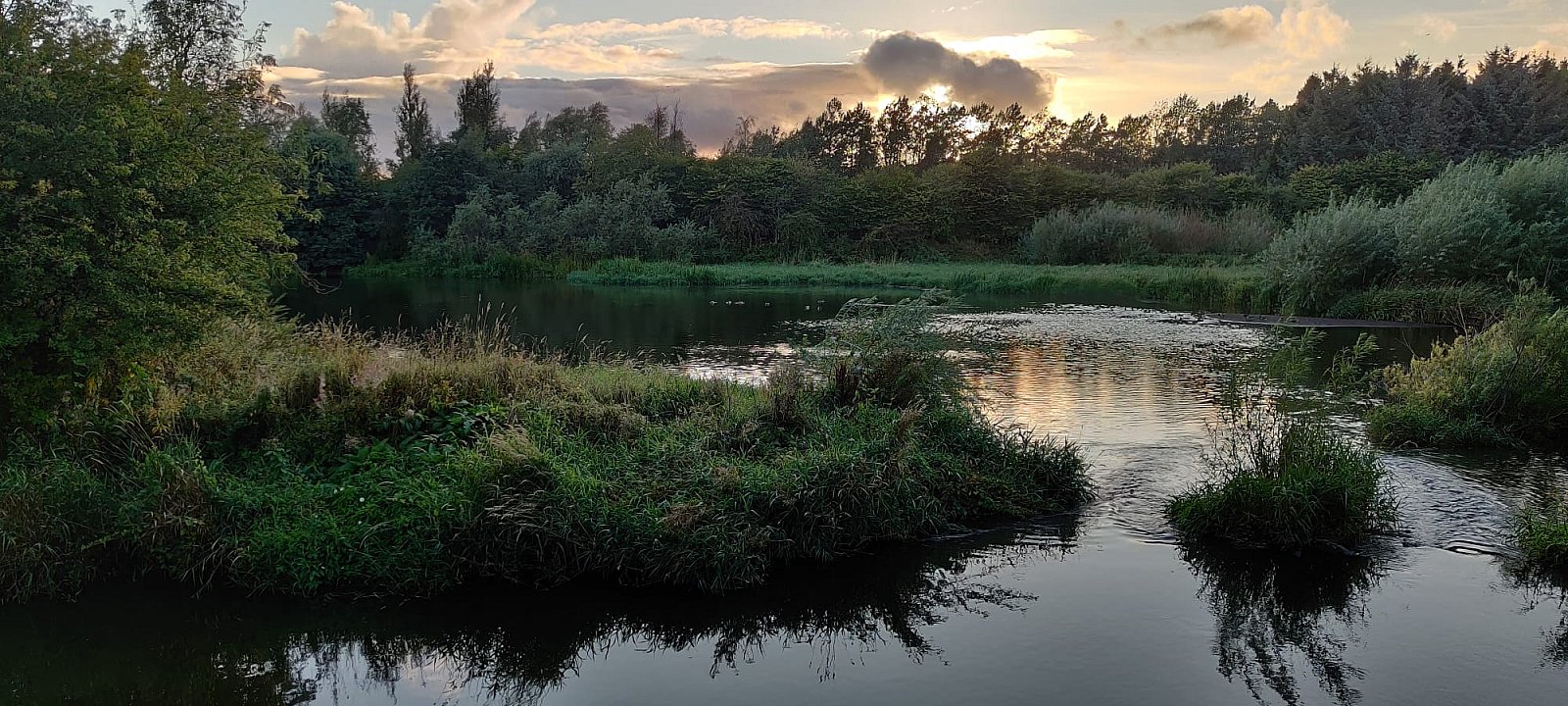
The Almond Pools glistened in the fading light, their surfaces reflecting the colours of the setting sun. Hard though it is to imagine, these are not natural features but the legacy of open-cast shale mining during & after the Second World War. The river was once diverted to make way for quarrying & when the mine closed in the 1950s, the land was restored, leaving behind these peaceful waters.
Looking across the landscape, the striking profile of the Five Sisters Bing drew our eyes. We learned how these distinctive ridges owe their shape to Westwood Oil Works, which operated from 1941 until 1962. Unlike older, more irregular bings, the Westwood works used new mechanised conveyor belts to deposit waste shale in carefully controlled patterns, creating the iconic fan-shaped ridges that remain today. This was the last shale oil plant built in West Lothian & its closure marked the end of the Scottish shale oil industry. Since then, nature has slowly reclaimed the site, transforming an industrial scar into a thriving ecological habitat.
Beneath this industrial monument, legend says, lies the buried remains of Westwood House, once a grand Victorian mansion. Built for Robert Steuart, upon his death it passed to his son, Captain Robert Steuart, who was a prominent local figure & became known not only for his public service but also for his tireless walking exploits. He was said to think little of walking from Livingston to Linlithgow to carry outhis public duties, if transport could not be found! After his death, the house declined, eventually sold to the Oakbank Oil Company in the 1940s and finally engulfed by the growing bing.
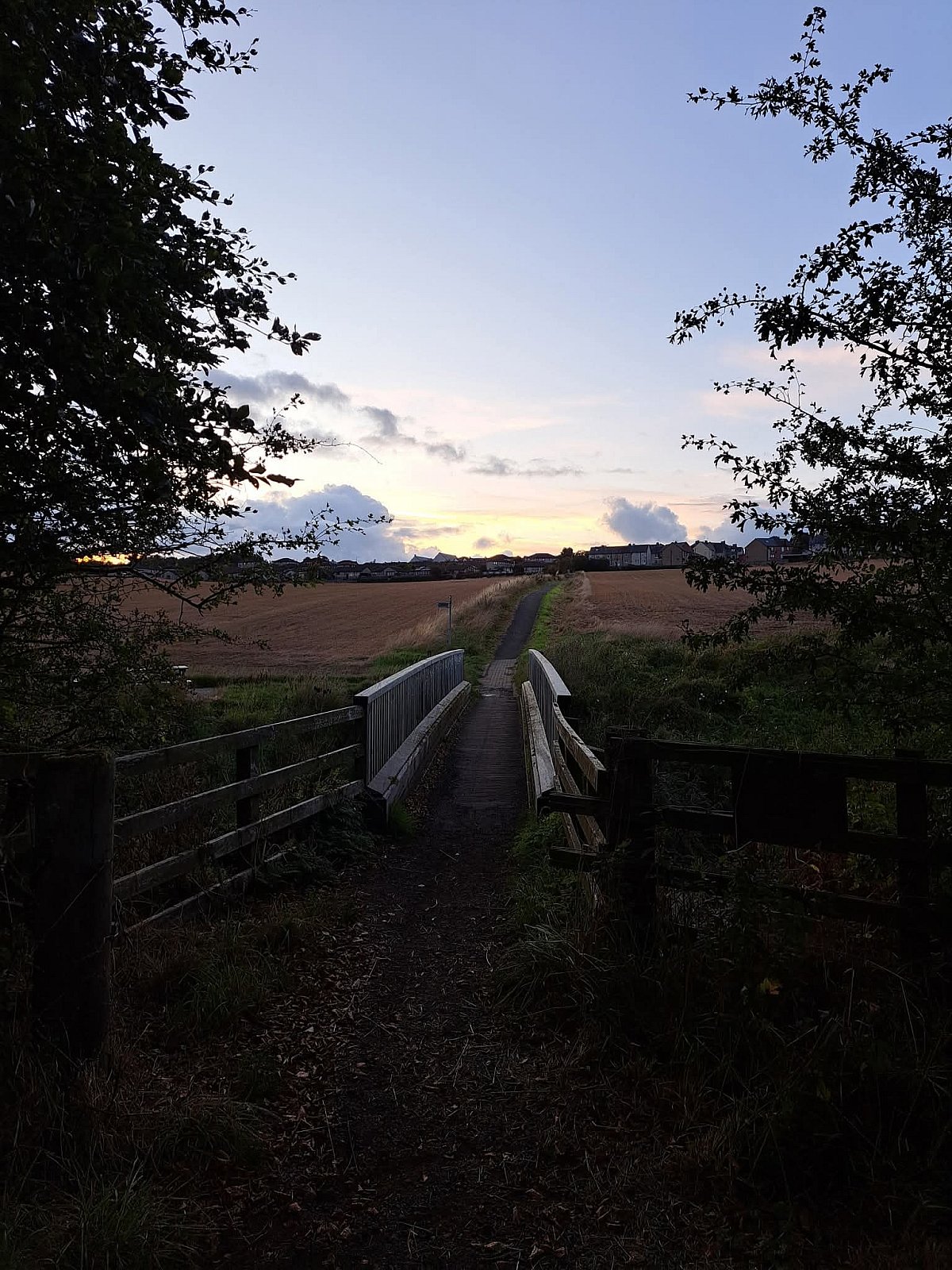
Our route continued towards Seafield, a village born of the shale oil industry in the 1880s. We paused at the river crossing, built in the 1890s thanks to funds raised by the villagers themselves so they could more easily reach work, school & family.
Turning from Seafield, we followed a tree-lined lane through the former Easter Breich farm, once part of the Livingston estate of the Earl of Rosebery. The old barns & byres have long since become private homes, but in the surrounding fields we were thrilled to spot a pair of deer bounding gracefully across the open ground.
Reaching the old turnpike road, now the A7015, we learned that it was laid out in the late 18th century to link Livingston with Hamilton. From there we left the traffic behind & rejoined quiet paths, skirting Easter Breich Community Wood. Created by local people just 25 years ago, this thriving woodland now provides shelter for deer, otters, birds & countless other creatures.
As dusk deepened into night, we donned our headtorches for the final stretch, following the Almond’s winding course back to our starting point. The rain held off, the company was warm & the stories we uncovered reminded us once again how much history, natural & human, is layered into the landscape around us. Photo credit – Ina G & Trisha C
Our next evening walk will be on Thursday 9th October & details of this will appear soon in our walk programme on our website so please check for this being updated soon.
Natalie C