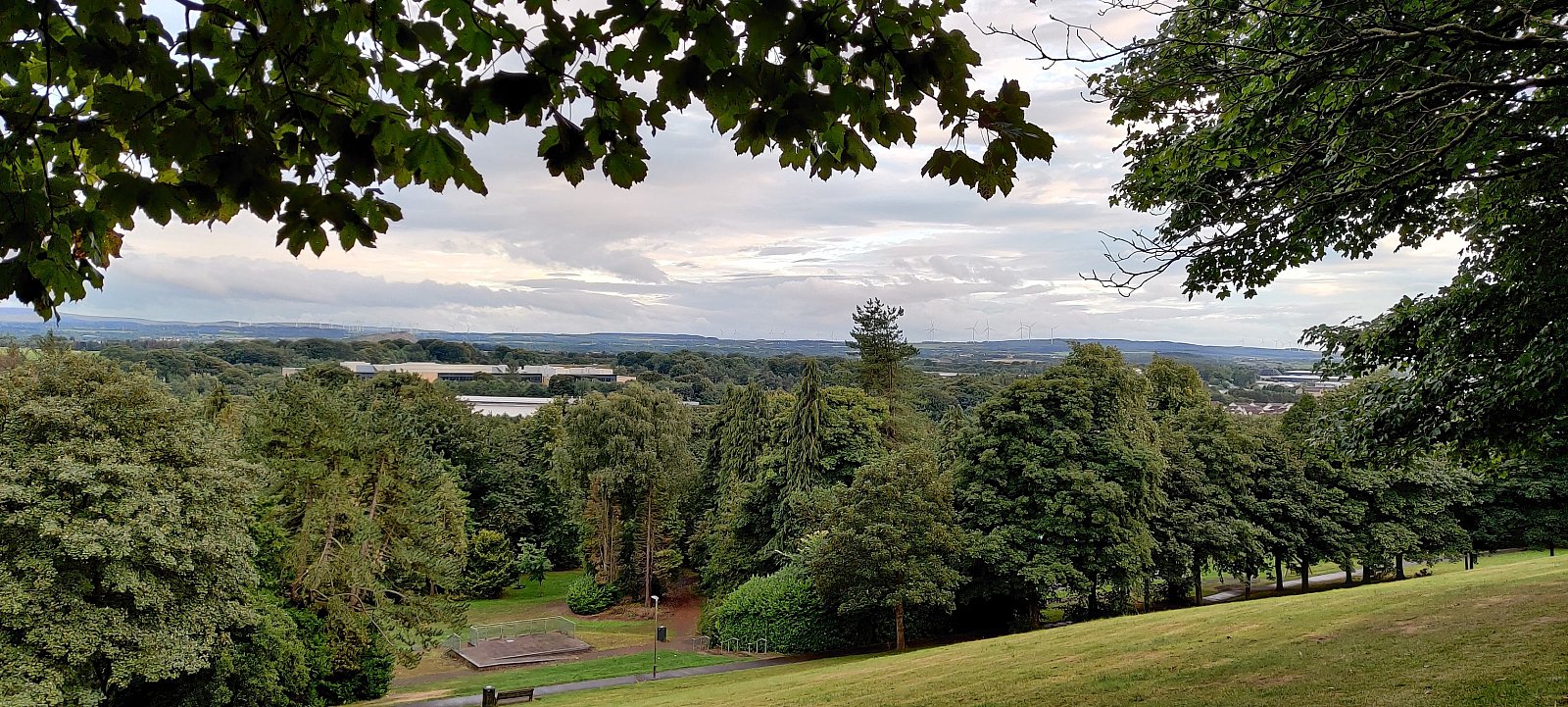
Fortunately, the rain stopped just in time for our evening walk around Bathgate. With the evenings drawing in, we were eager to make the most of the light and soon found ourselves climbing to a couple of high points in the town. From there we paused to admire the wide views stretching west across the West Lothian countryside and southeast towards the Pentland Hills, before heading back down towards the town centre where the glow of the streetlamps was waiting for us. As we walked on, we were delighted to find the trees near the McLagan Fountain lit up with sparkling white lights, adding a little extra magic to the evening.
Stories from Bathgate’s past accompanied us throughout our walk. We heard how James Young Simpson, who remarkably went to Edinburgh University at the age of just 14, later became Queen Victoria’s midwife and discovered the power of chloroform as an anaesthetic. We also learnt that in earlier times, having a lamp outside your house was not just practical but symbolic — a sign of influence and authority in Bathgate, marking the Provost’s home so it could be found at any hour. At the site of a rediscovered well, once beside a small Roman Catholic chapel during the Reformation, we paused again to imagine how it would once have served the community. And the story of the Old Bathgate Academy gave us another glimpse of the past — built with the fortune of a man who never forgot his roots, yet, despite his wish for a free school, fees were charged there for its first 56 years.
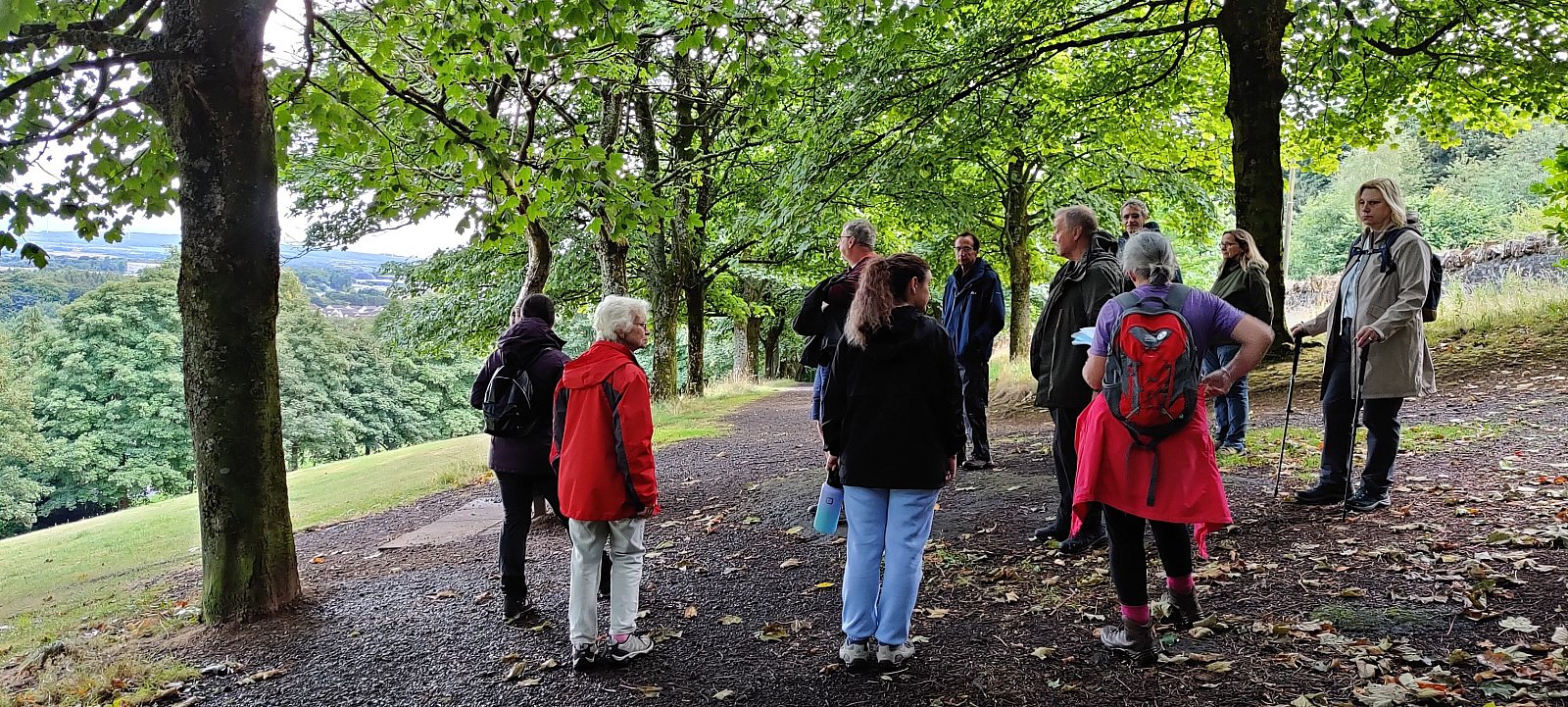
As we climbed a small hillside, the views opened up once more, this time accompanied by tales from the nearby former East Kirkton Quarry. Millions of years ago a volcanic lake there trapped and preserved creatures in stone, and in the 1980s fossil hunter Stan Wood unearthed the famous “Lizzie the Lizard,” once thought to be the ancestor of all reptiles, birds, and mammals. Lizzie now rests proudly in the National Museum of Scotland, but her story began right here in Bathgate.
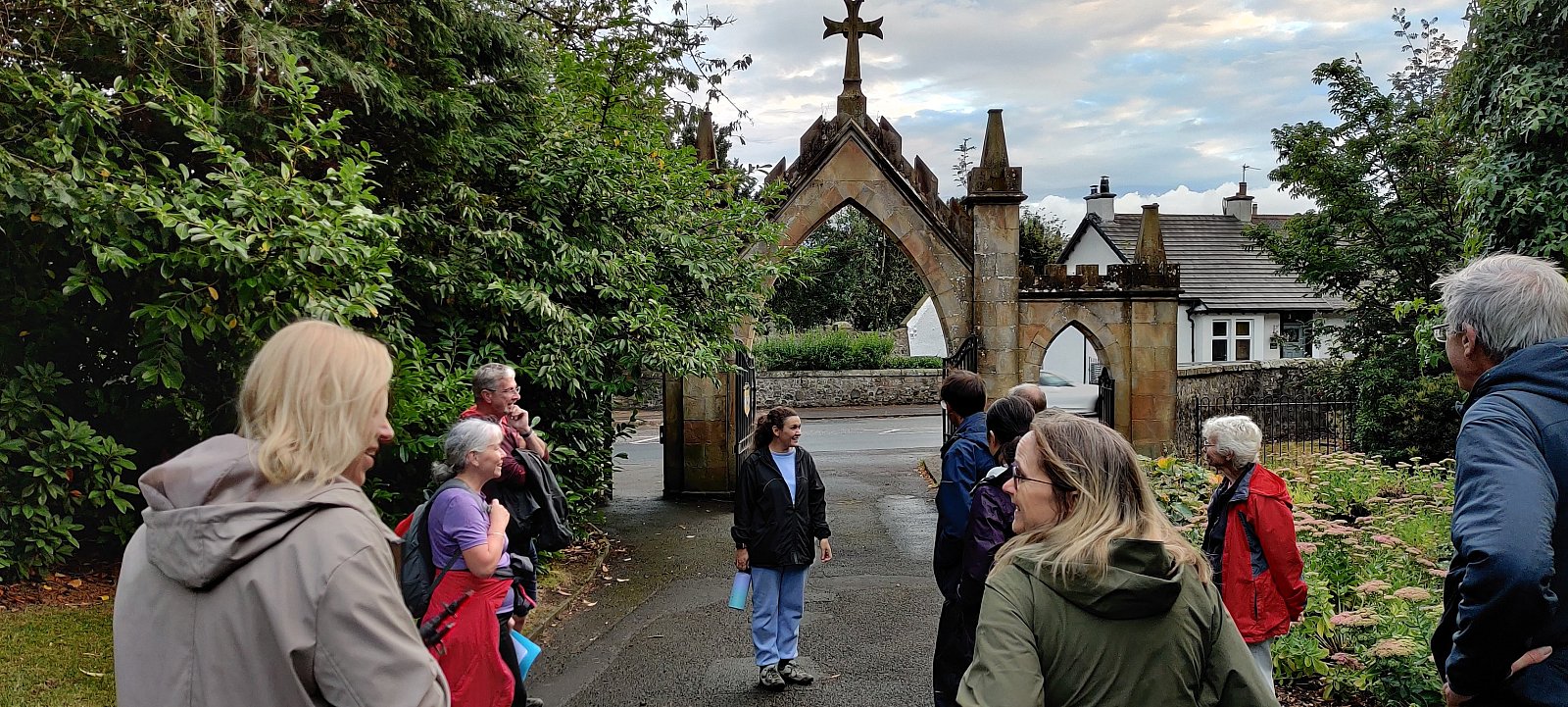
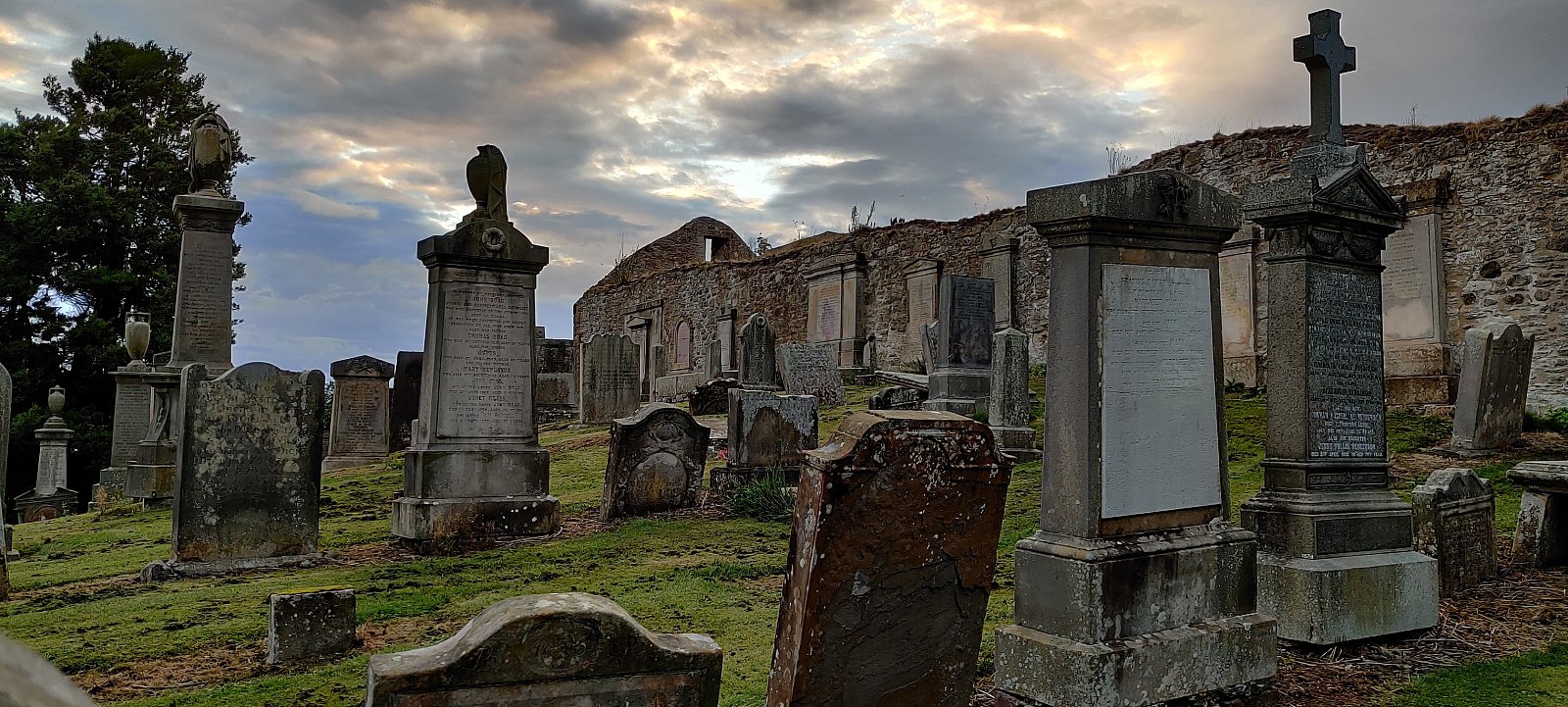
From there we made our way down into Kirkton Park, which was once a private estate with a mansion house as far back as 1599. The town purchased the land in 1914, and although the First World War delayed its transformation, it finally opened to the public in 1927. Before we left the park, we passed through the Stewart Gates, gifted by the Stewart Society to honour Bathgate’s royal heritage. Here, Dave shared memories from his youth of being warned not to linger in the area after dark for fear of the ghostly White Lady drifting from the Old Kirkyard across the road. We didn’t meet her this evening, but perhaps another night…
Back in the centre of town we walked past Bathgate Golf Club, on the site of the former Bathgate Castle. Though little survives today, it was once the setting for a marriage that shaped Scottish history: in 1315, Marjorie Bruce, daughter of Robert the Bruce, married Walter the High Steward, beginning the Stewart royal dynasty. Not far away, at the McLagan Fountain, we discovered another pivotal story. Far more than a decorative Victorian feature, it marked a turning point in Bathgate’s public health. In the 1800s, when summer droughts dried up wells, outbreaks of cholera spread through the town. Only with the completion of Petershill Reservoir in 1878 was Bathgate guaranteed a safe, reliable water supply, an event so important it was celebrated with a town procession and a school holiday.
The evening brought more tales of Bathgate’s industry and community spirit. At the site of Livingstone’s Hosiery Factory we learnt of a remarkable woman who began knitting in 1887 to support her family while her husband was ill, eventually building a thriving business that employed 500 women by 1922. At the Regal Theatre, opened in 1938 with the film The Adventures of Robin Hood, we admired the striking Art Deco style that still makes it a landmark, nearly ninety years on. And at the Bennie Museum, housed in former weaving cottages, we learnt about how important the weaving industry was in Bathgate & discovered how local volunteers — and even schoolchildren — saved the buildings from demolition. The children helped scrub roof tiles, signing their names on the back before they were replaced. Those hidden signatures remain in the rafters, a secret reminder of the town’s pride and community spirit.
By the time we returned to our starting point, we had walked not only through Bathgate’s streets but through centuries of its history. From fossils to royal dynasties, from industry and innovation to ghostly legends, we were reminded that Bathgate is a town that has constantly changed while always remembering its roots. It was a fascinating and enjoyable evening — and with so many more stories still waiting to be told, there’s every chance we’ll return again for another walk into Bathgate’s past. Photo credit - Ina G & Nat C
Our next evening walk is on Thursday 11th September & details of this & many more walks can be found in our walk program on our website.
Natalie C