We had a lovely sunny evening for our walk in the Bathgate Hills, which promised clear views from the higher points along the route.
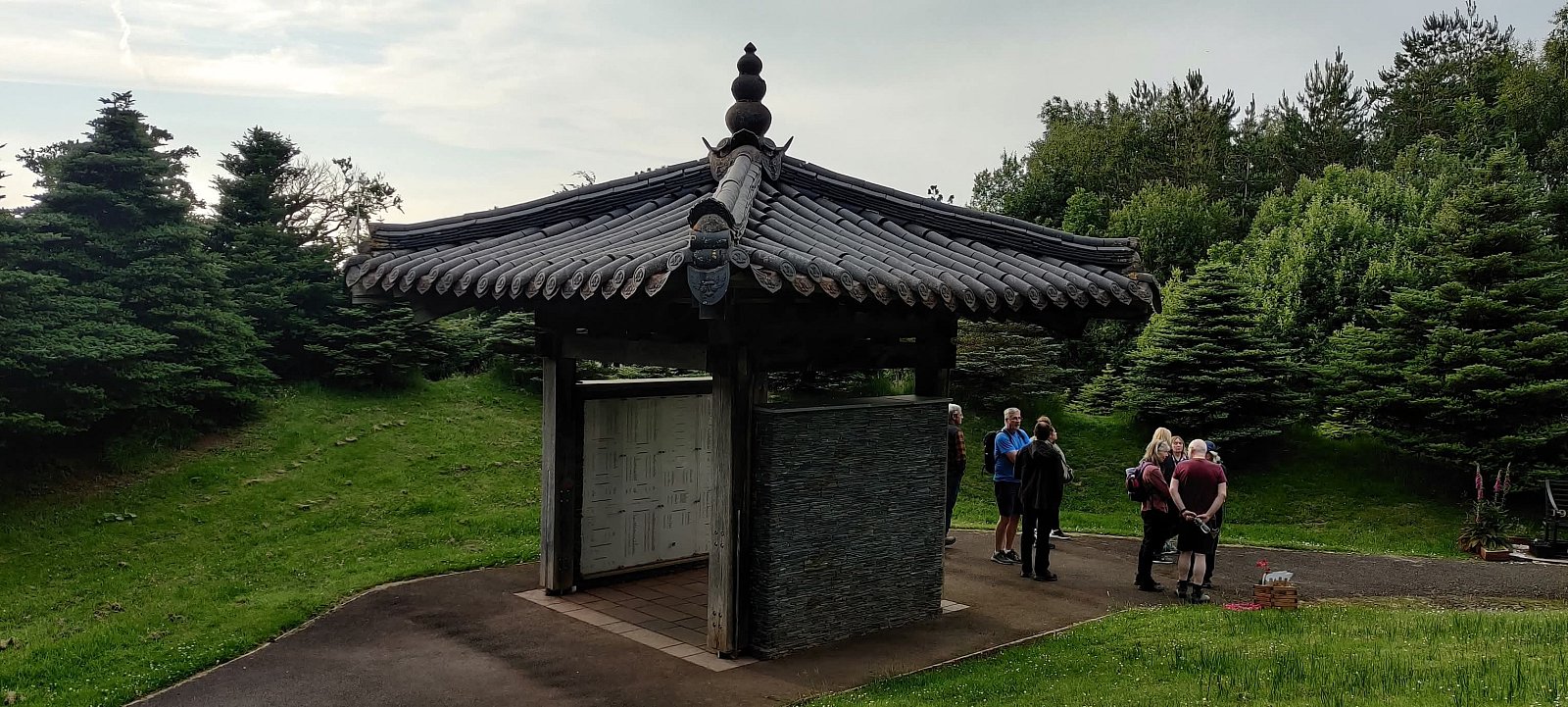
After welcoming Chris and Suzanne on their first evening walk with the group, we set off to visit the nearby Scottish Korean War Memorial. Here, we paused to learn about the conflict and the significance of this poignant site.
The Korean War was one of the most devastating conflicts of the 20th century. North Korea invaded South Korea, backed by China and the Soviet Union. Supported by the United Nations—including the UK and US—South Korea endured a brutal three-year war that left millions of civilians dead and over 1,000 British servicemen lost.
The memorial is a place of deep thought and respect, featuring a Korean-style pagoda standing between two landscaped mounds shaped like the Yin and Yang symbol from the Korean flag. The names of all 1,109 servicemen, two merchant seamen, and four war correspondents are engraved on the memorial. On the mounds, 110 Korean fir trees have been planted, each representing ten men who perished. Surrounding this is an arboretum of 1,100 native Scottish trees.
Built by the Lothians and West of Scotland branch of the British Korean Veterans Association, the memorial was opened in 2000, fifty years after the war began. It stands as a poignant reminder of a conflict often called “The Forgotten War” and is a powerful symbol of international friendship, remembrance, and peace.
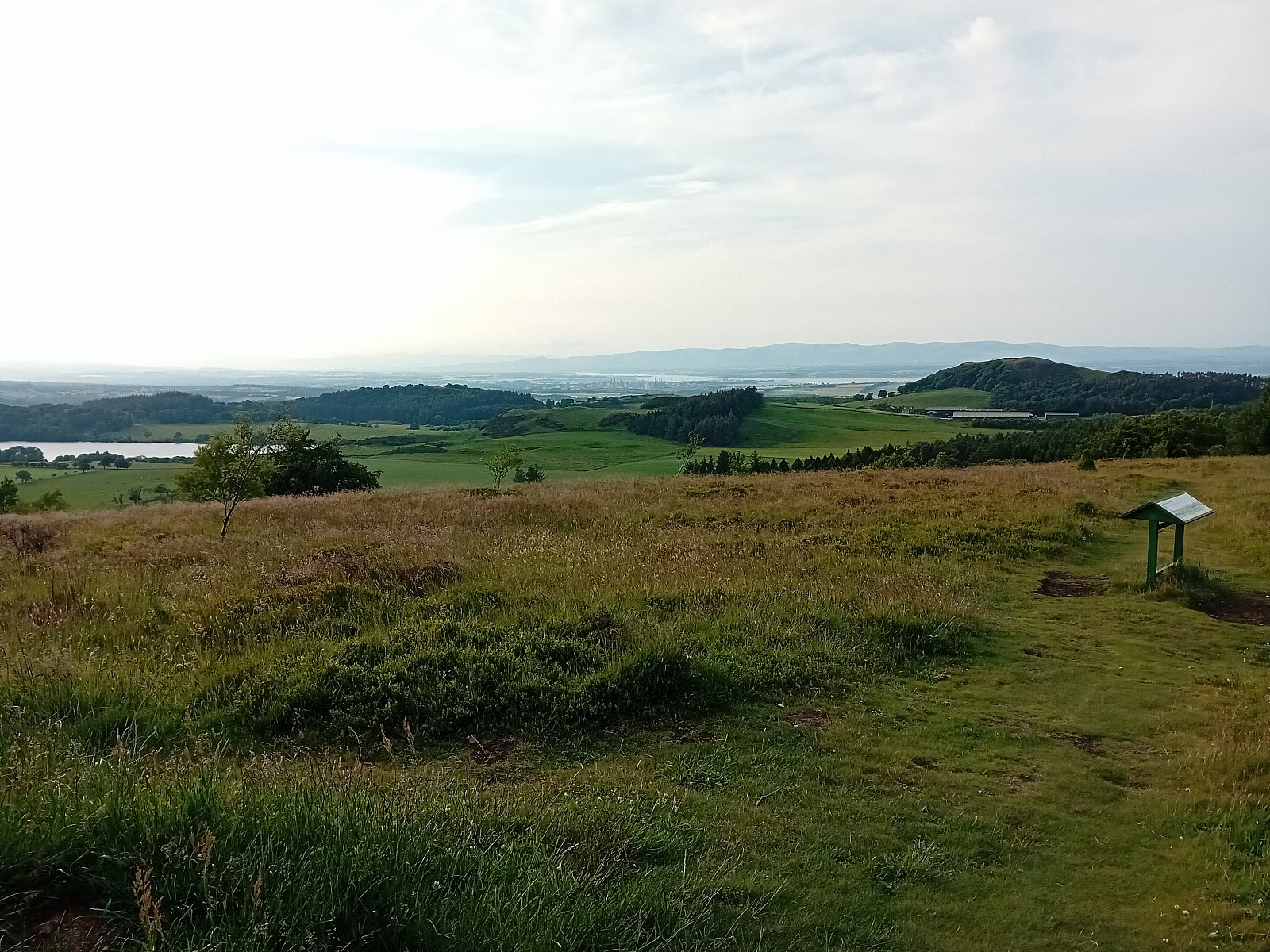
Continuing our walk, we headed uphill to Witchcraig, where we paused to admire the far-reaching views past Cockleroy Hill, which we would be summiting later, and across the Forth to the Campsie Fells and beyond. As we caught our breath after the climb, we discovered how this spot was once, according to legend, a gathering place for witches and warlocks from Torphichen, Bathgate, and Linlithgow. It was said that here they conjured storms and cast curses on the hardy farmers of the land.
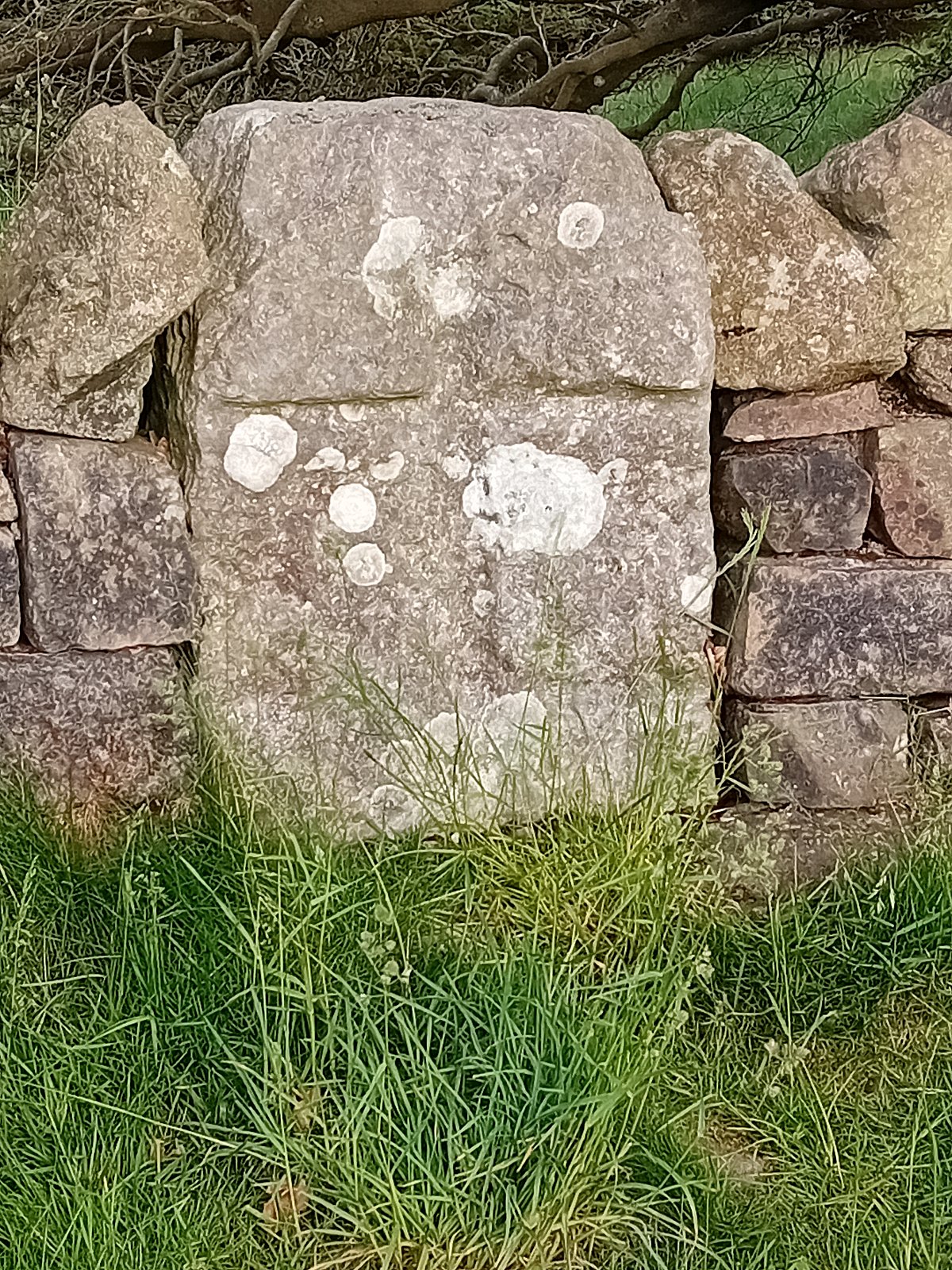
Walking further across the hill, we soon reached the Medieval Refuge Stone, carved with the Cross of Lorraine. This 12th-century cross was one of several that marked the boundary of the Torphichen Preceptory, home of the Knights Hospitaller. It was an early form of medieval legal asylum: fugitives could claim sanctuary within these boundaries.
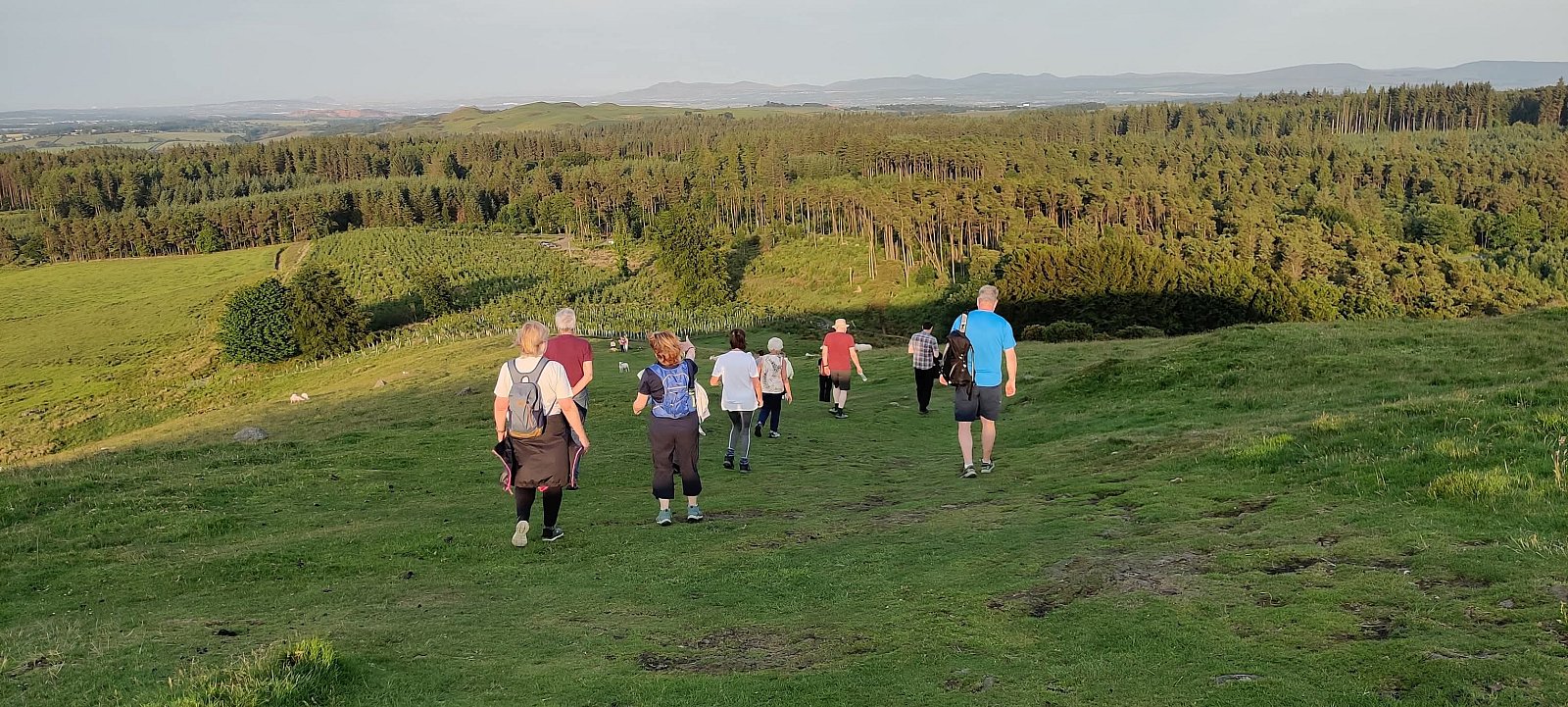
Standing in front of the Refuge Stone is the geological mosaic of Witchcraig Wall, built as a shelter and containing within it 43 different types of stone from across Scotland’s Central Belt, each representing a part of the landscape visible from the spot. After admiring this and trying to identify all 43 stones, we headed downhill along tree-lined paths through Beecraigs Country Park to reach the foot of Cockleroy Hill.
Before climbing this small but prominent hill, which dominates the lowlands at 278 metres, we learned that its name comes from the Gaelic for “Red Hat” or “King’s Hat.” At its summit are the faint remains of an ancient fort. Local tradition says that William Wallace once rested here after the Battle of Falkirk, in a hollow now known as Wallace’s Bed.
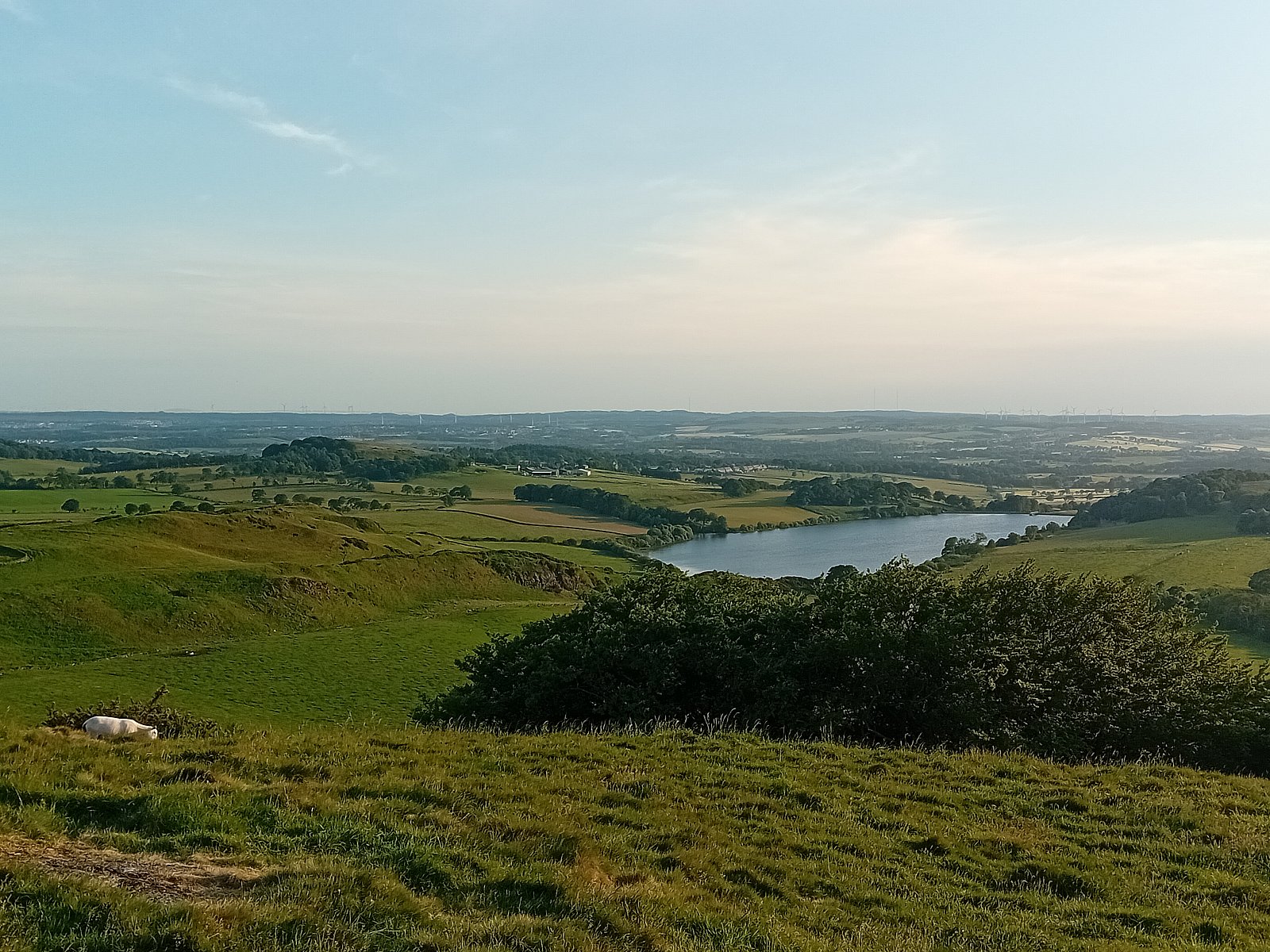
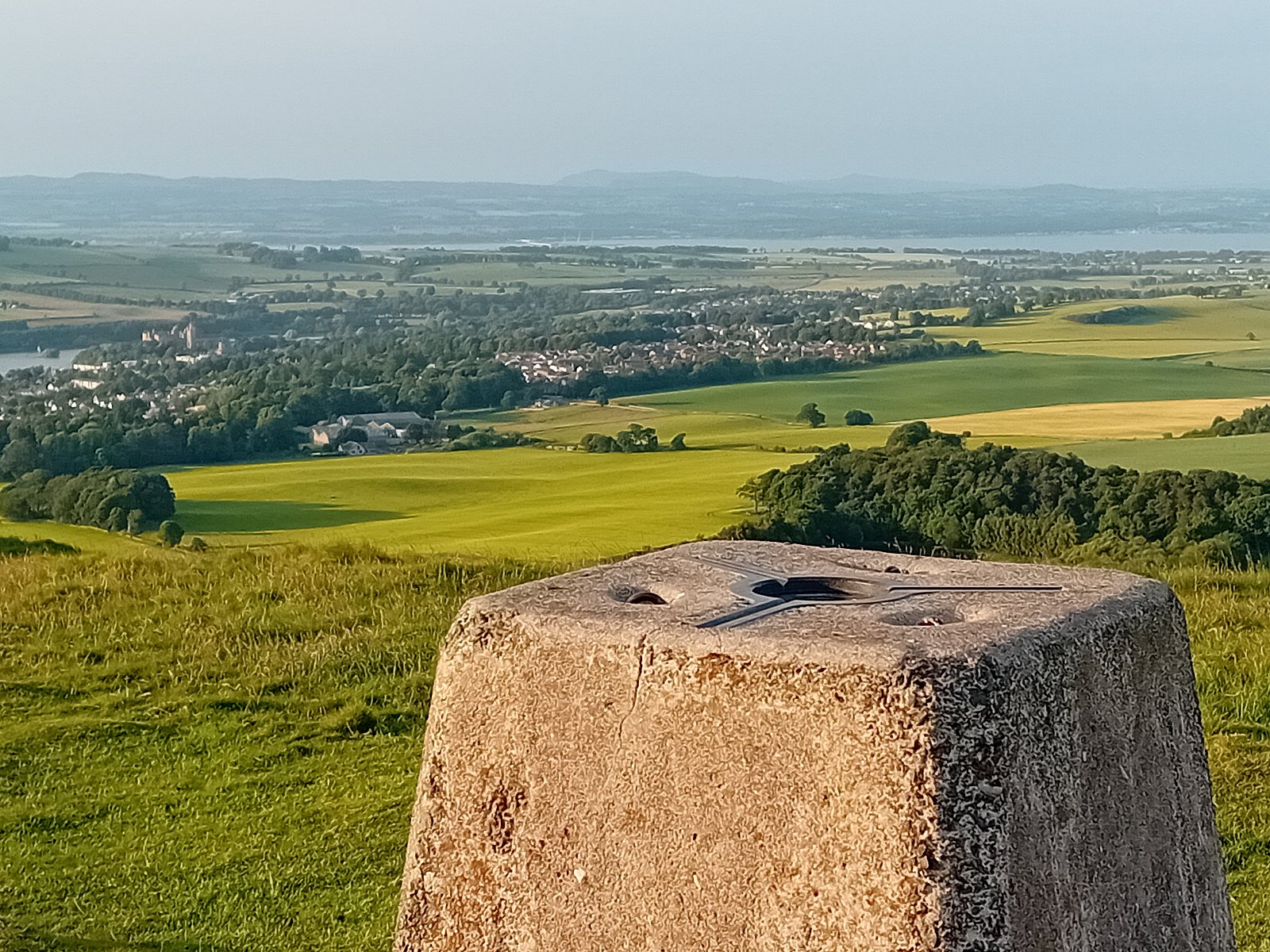
With the humidity high this evening, a few members decided to rest at the base of the hill, while the rest of us climbed to the top to enjoy the views. From the summit, we overlooked Lochcote Reservoir, which replaced the original Lochcote Loch—a natural water source that in the 18th century was famed for supplying Lochcote House with pike, perch, and eel.
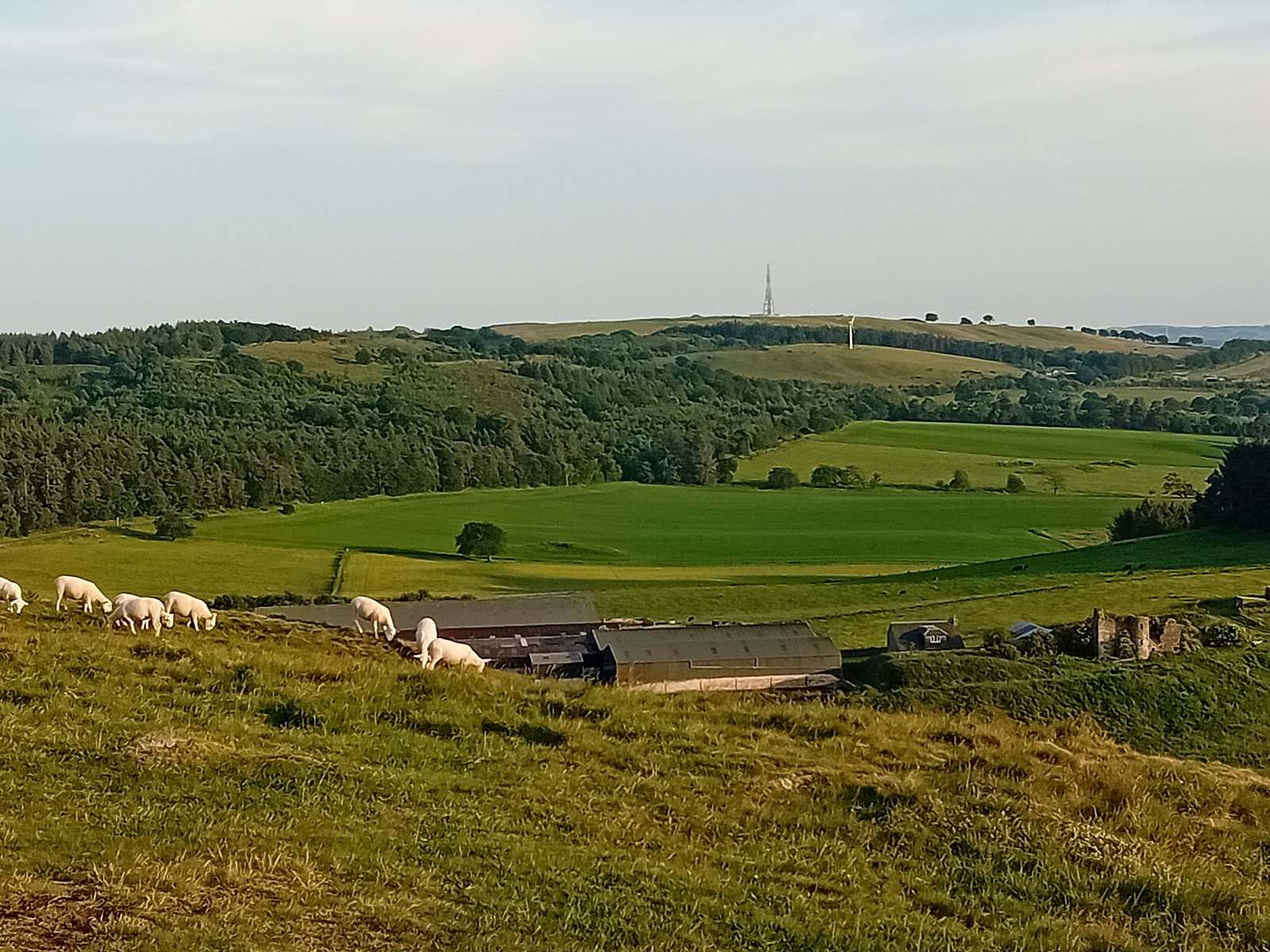
From our vantage point, we could also see the ruins of Kipps Castle, once the home of Sir Robert Sibbald, a pioneering physician who helped found the Royal College of Physicians of Edinburgh and served as physician to King James VII. During the plague of 1645, he wisely moved his family here to escape the disease-ridden city and seek fresh air.
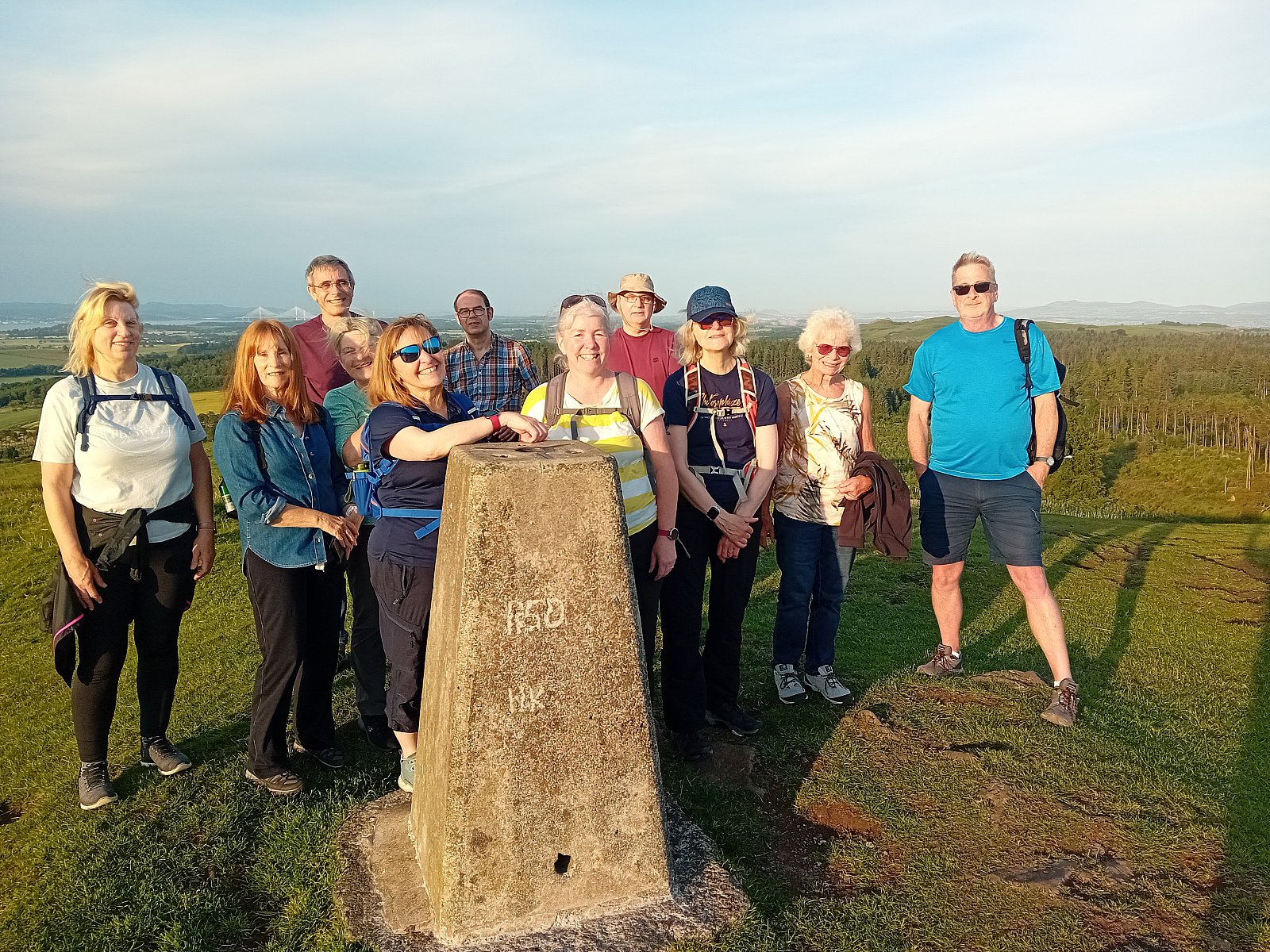
After touching the trig pillar and using the toposcope to identify distant landmarks, we headed back down the hill to rejoin our other members and retrace our steps through the country park to our cars.
Some of us were lucky enough to spot a tawny owl flying through the trees ahead of us, and a small mammal scurried across the path—though too quickly for us to identify.
After an evening full of fresh air, fascinating history, folklore, and moments of natural wonder, it was the perfect way to conclude our walk. Photo credit - Natalie C & Ina G
Our next evening walk is on Thursday 3rd July & details of this can be found in the Walk Programme on our website.
Natalie C