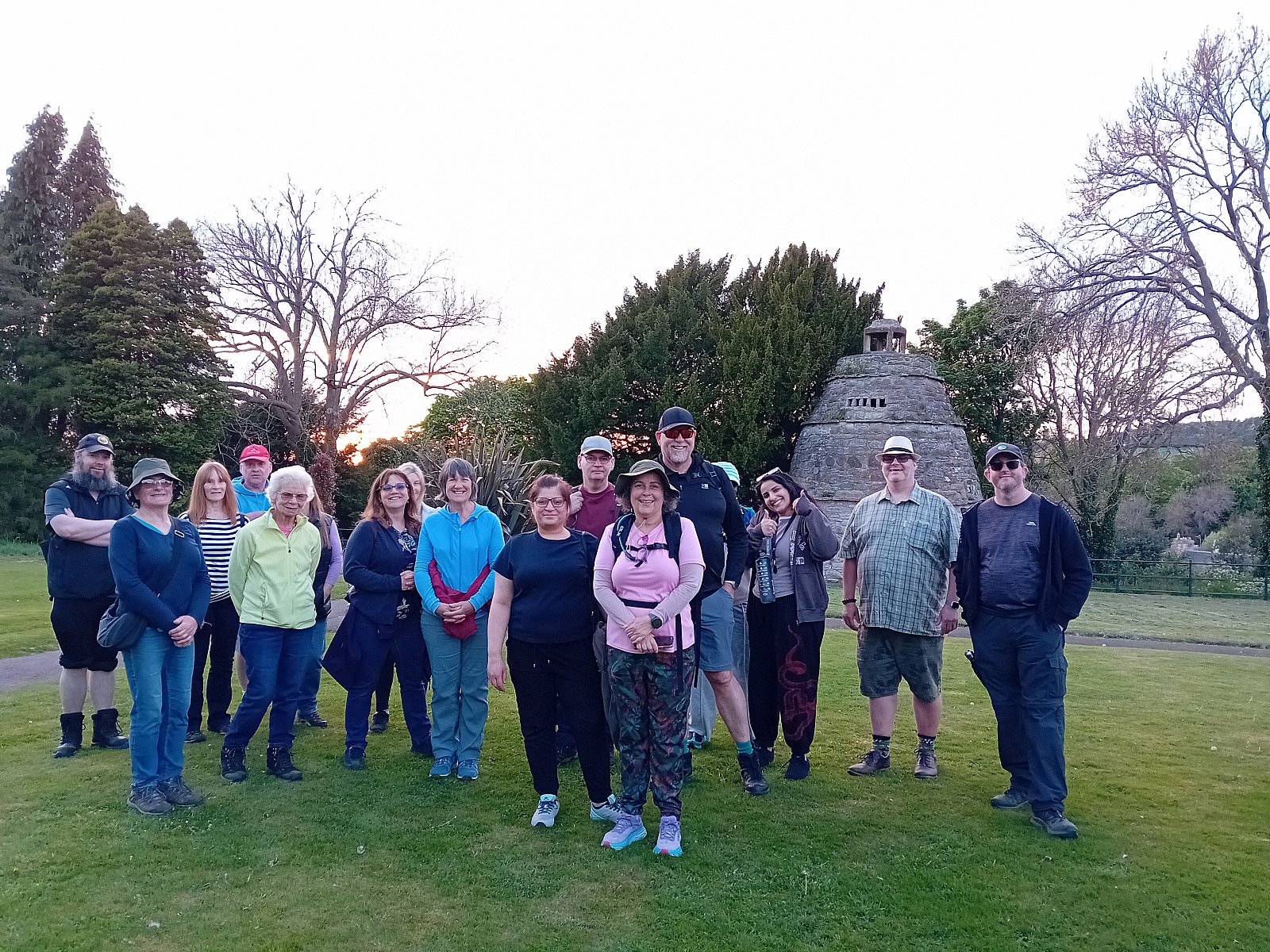
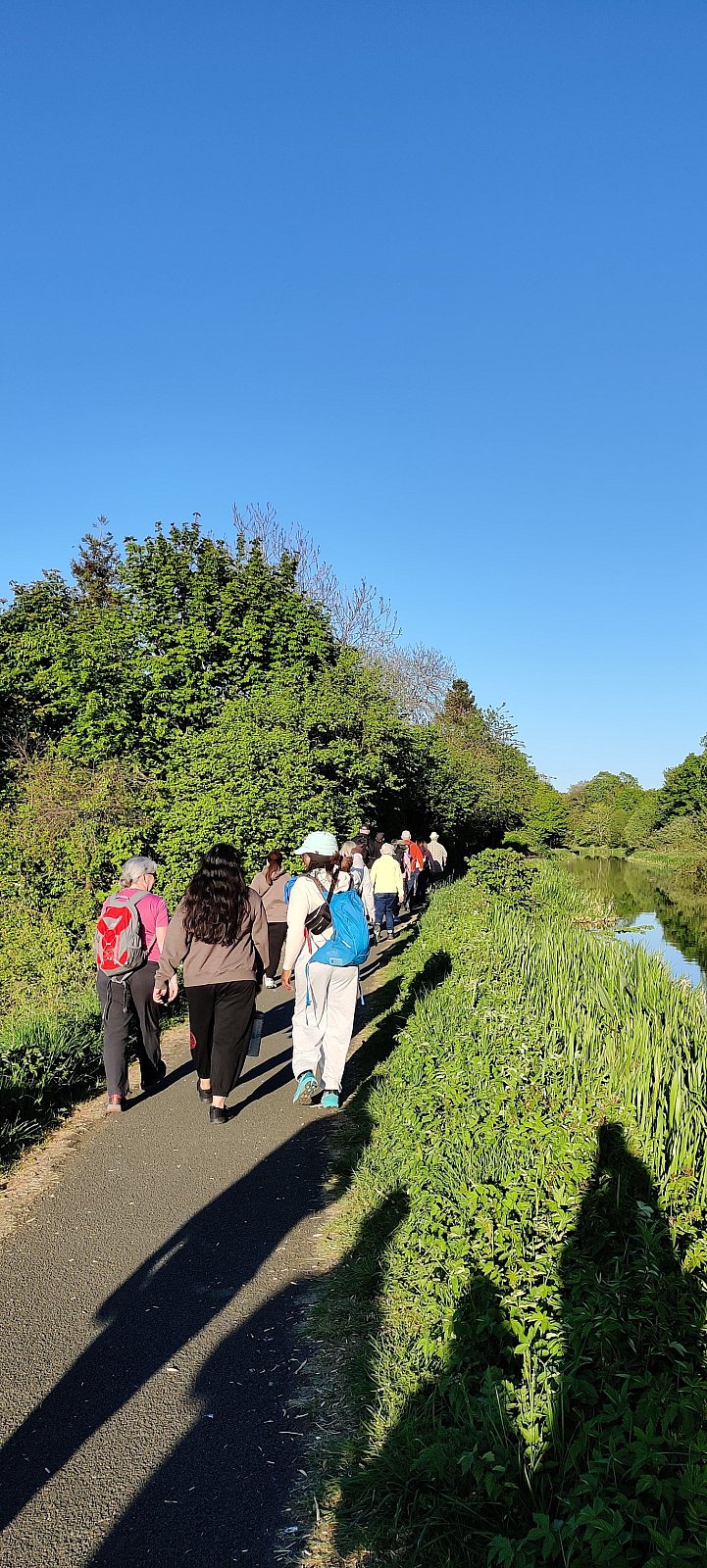
We were delighted to welcome Stephen, Tracy, Mart and Deemah on their first evening walk with the group, and what a beautiful evening it was — warm sunshine and clear skies provided perfect conditions for far-reaching views throughout the route.
Our walk began at the Regent Centre in Linlithgow, where we discovered the car park now occupies the site of the former Regent Works. Named after James Stuart, Regent of Scotland and half-brother of Mary, Queen of Scots, the factory was opened in 1902 by Nobel’s Explosives Company to produce fuses and explosives, initially for mining in South Africa. During both World Wars, production shifted to incendiary bombs. When the factory was demolished 80 years later, a time capsule from the original opening ceremony was found, containing newspapers, documents, and coins. A new capsule was buried with these items alongside artefacts from 1980s Linlithgow — a wonderful piece of preserved local history.
From the Regent Centre, we joined the canal towpath and passed the former site of St Magdalene’s Distillery. Though now converted into flats, the original malting barns and distinctive pagoda roofs remain, preserving its exterior character. The distillery operated from the late 18th century and was once producing around 200,000 gallons of single malt Scotch whisky annually by 1895.
Heading east along the canal, we learned that in the early 20th century it was quicker to travel between Edinburgh & Glasgow by barge than by stagecoach. The comfortable passenger barges took 8 hours compared to over 12 hours in a bumpy stagecoach!
The Union Canal, completed in 1822, was known as ‘Scotland’s Mathematical River’ thanks to its precise, consistent dimensions across all 31.5 miles. Constructed by Irish navvies over four years, the project brought both economic activity and social disruption to towns like Linlithgow. The locals, concerned about the navvies’ rowdy behaviour, went so far as to garrison troops at Linlithgow Palace — the last time it was used in such a way.
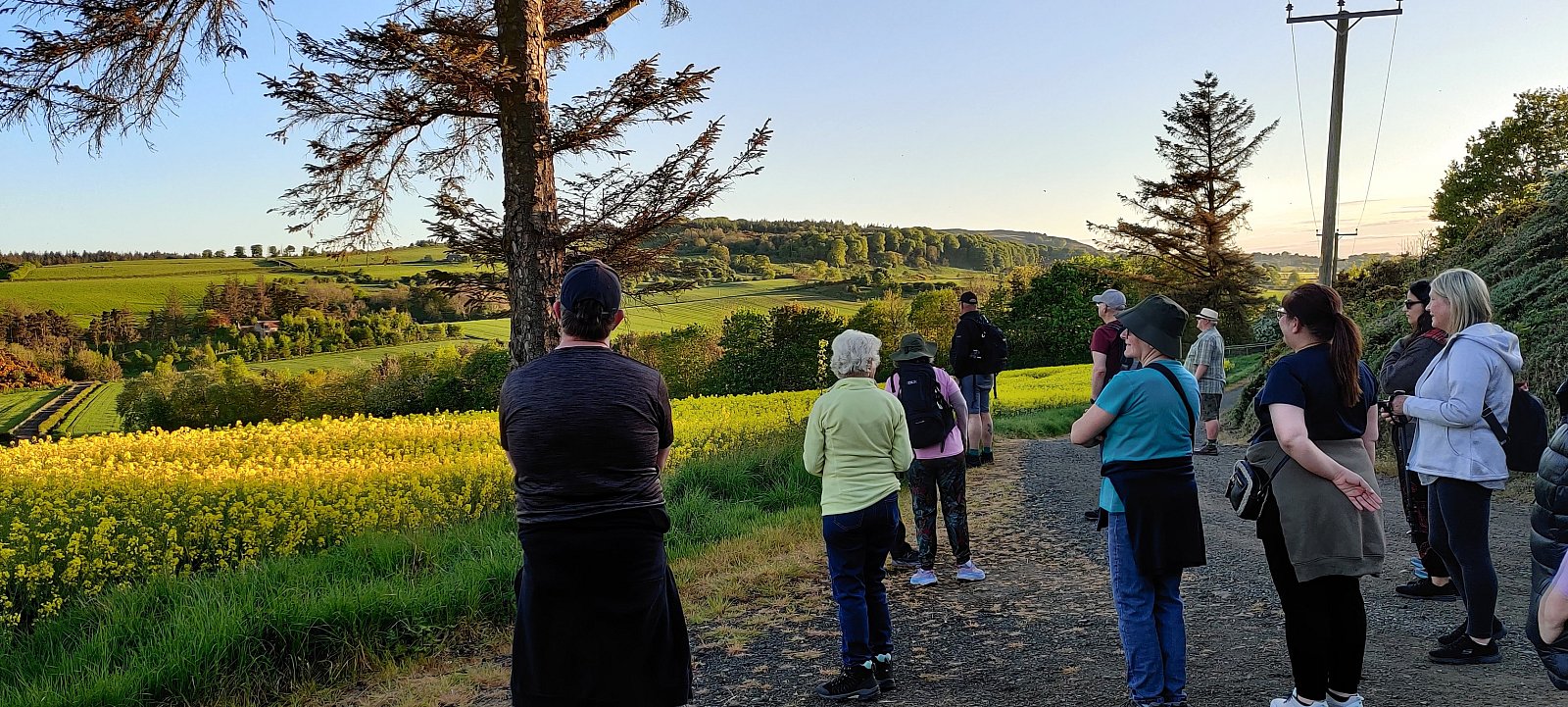
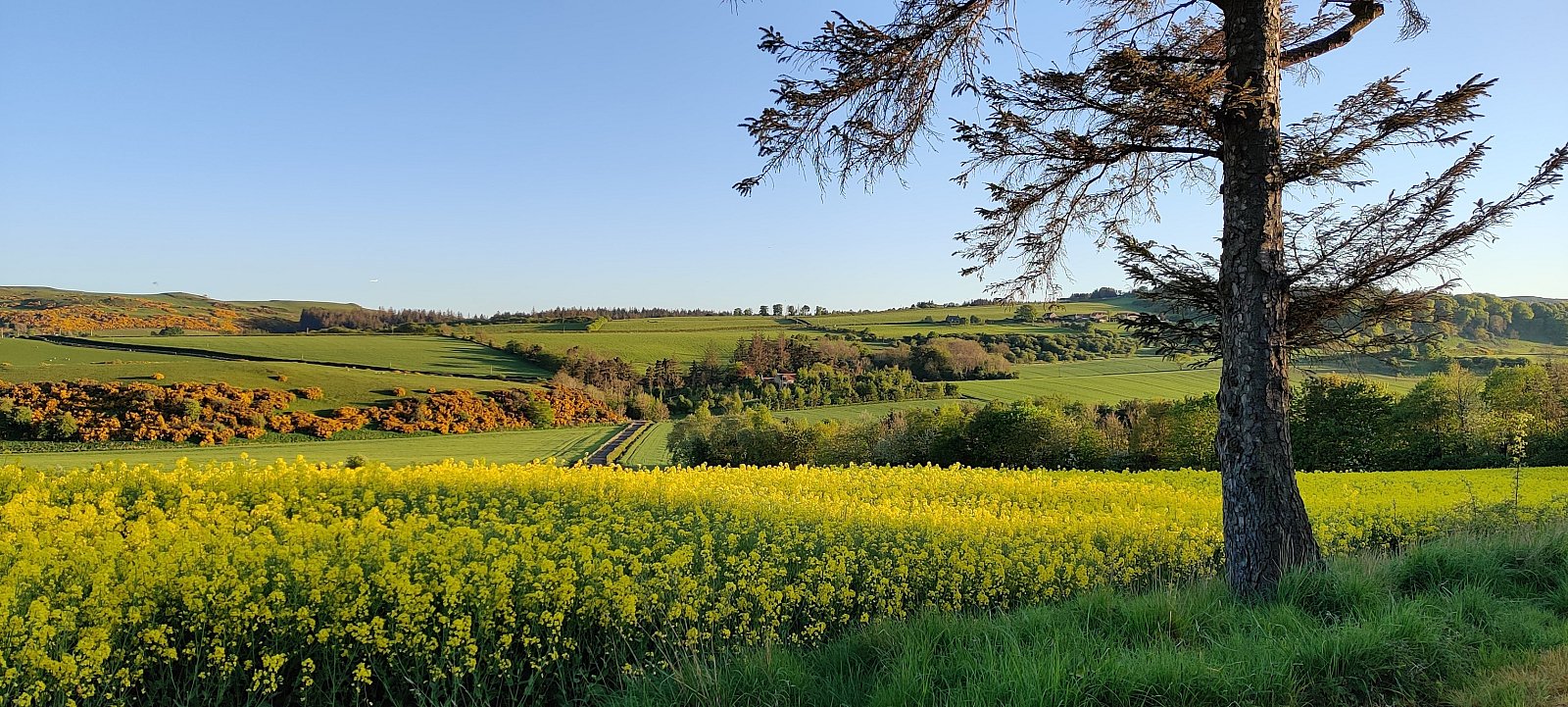
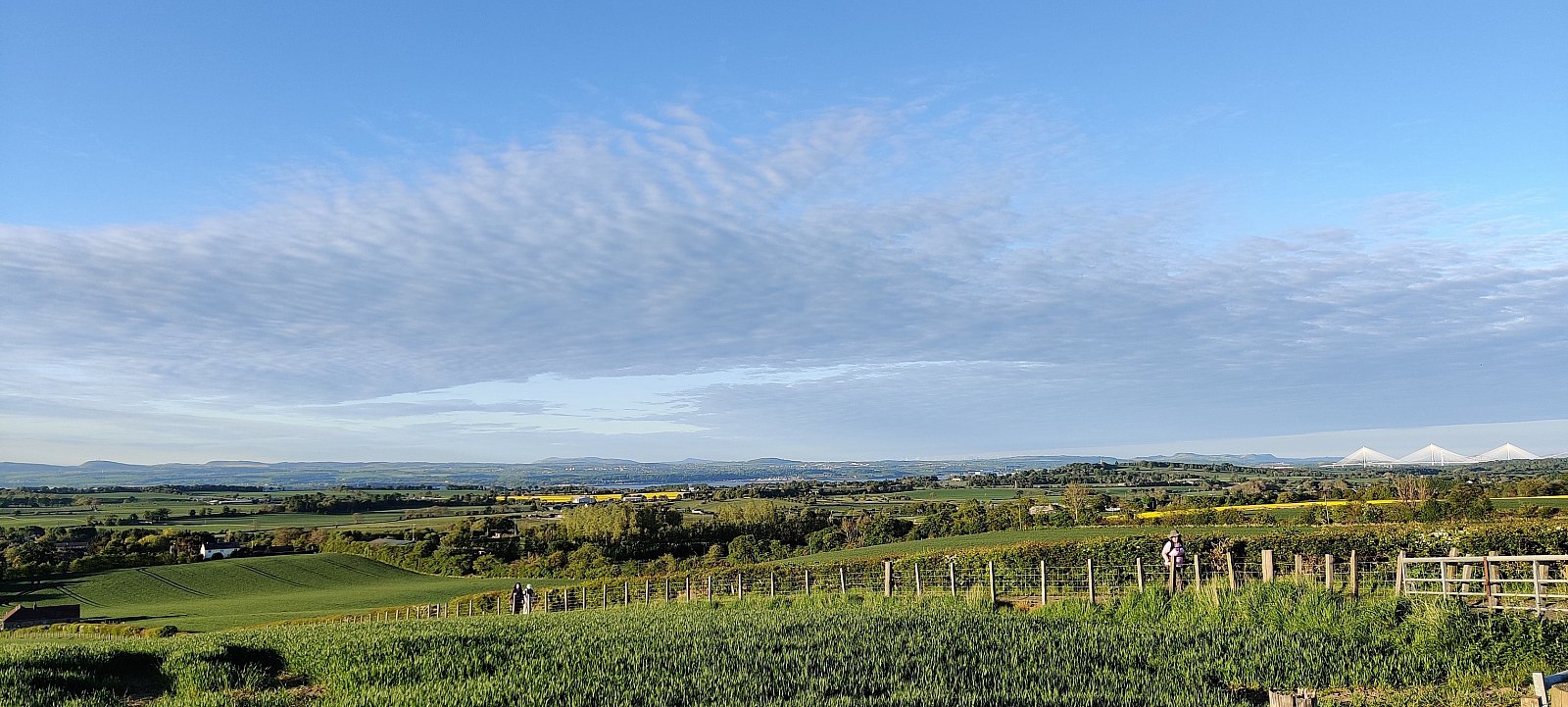
We left the canal to follow quiet farm tracks to our highest point of the walk at Parkly Craigs, where we paused to enjoy panoramic views over the Forth Bridges, Rosyth Dockyard and surrounding farmland. Continuing past holiday cottages and across bright fields of flowering rapeseed, we were treated to fantastic views of Binny Craig and Cockleroy Hill.
Descending from the hills, we rejoined the canal at the Linlithgow Canal Basin and stopped to admire the still reflections of moored barges in the water. From there, we crossed the road to explore Ross Doocot in Learmonth Gardens — the only beehive-shaped doocot in West Lothian, dating back to the 16th century. With 1-metre-thick walls and 370 nesting spaces, the doocot once belonged to Baron Ross, who employed a “Garderer o’ the Does” to tend it.
In a time before turnips were used as winter livestock feed, fresh pigeon would have been a welcome addition to diets dominated by salted meat during the colder months.
Before leaving the site, we heard of a darker piece of local history — a murder and miscarriage of justice that took place here in the winter of 1699. Some say a grey-clad figure still haunts Rosemount and the nearby canal paths, a silent witness to that long-ago tragedy.
As we made our way back past the railway station, we paused one final time to admire a spectacular sunset over Linlithgow Palace and St Michael’s Church — a perfect end to a walk rich in history, scenery and good company. Photo credits Ina G & Natalie C
Our next evening walk takes place on Thursday 22nd May. Full details can be found on our walk programme on the website — we’d love to see you there!
Natalie C